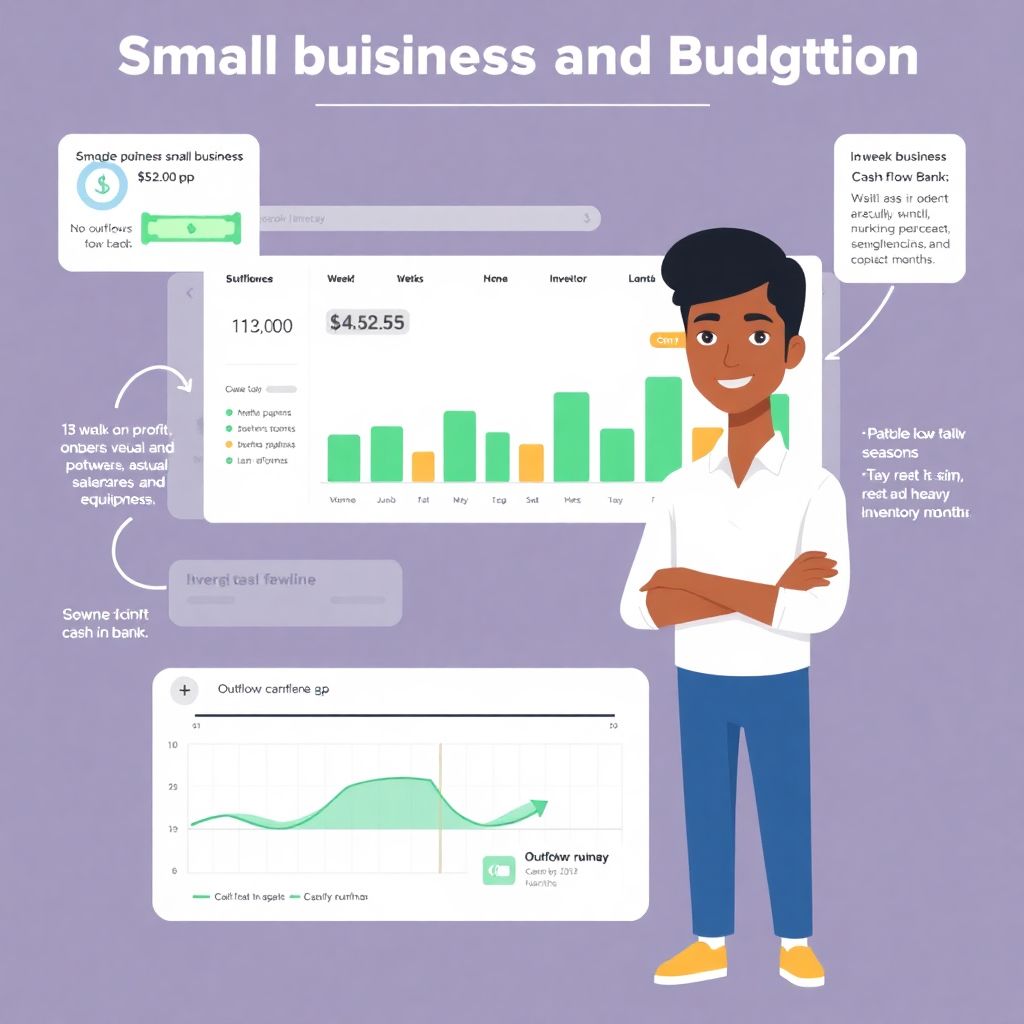
Why Cash Flow Matters More Than You Think
If you’re just starting out, “cash flow” can sound like accountant jargon, but it’s simply the money actually moving in and out of your business bank account. Profit is what looks good on paper; cash flow is what pays rent, salaries and suppliers today. A company can show a profit and still run out of cash if invoices are paid late or inventory swallows your money. That’s why budgeting for a healthy cash flow is less about fancy formulas and more about timing: when exactly cash arrives, when it leaves, и how big the gap is between those two moments. Manage the gap well — you sleep at night; ignore it — you gamble with survival.
What Recent Numbers Say About Cash Flow Risk
Over the last three years картина стала жёстче. According to the U.S. Federal Reserve’s 2024 Small Business Credit Survey, around 59% of small firms reported financial challenges in the prior 12 months, and cash flow issues were the single most cited problem. Intuit QuickBooks research in 2023 показало, что about 61% of small businesses worldwide struggled with cash flow at least once that year, and nearly one in five owners couldn’t pay themselves for at least two months. CB Insights Still lists “ran out of cash” or “could not raise new capital” among the top reasons startups shut down, hovering near 38–40% of failures between 2022 and 2024. These statistics underline: ignoring cash flow isn’t just risky — it’s a leading cause of closure.
Foundations: How to Create a Business Budget and Cash Flow Plan
Before you look at tools or consultants, you need a simple, repeatable process. At its core, a cash flow budget is a calendar of money: what you expect to receive and pay, week by week or month by month. For a beginner, perfection is less important than consistency — you refine as you go. Start with historical data, even if it’s just three months of bank statements; then add your best guesses for sales, taxes and big upcoming expenses. This is how to create a business budget and cash flow plan that actually reflects reality instead of wishful thinking, and it becomes your early‑warning system when numbers drift off course.
Step 1: Map Every Inflow and Outflow
Begin by listing all sources of incoming cash: customer payments, subscriptions, grants, loans, investor funds, even owner contributions. Next, map every regular outflow: rent, payroll, software, marketing, loan repayments, taxes and one‑off purchases like equipment. The aim isn’t a perfect forecast but visibility. When you lay these numbers across a 13‑week or 12‑month timeline, patterns emerge: slow seasons, tax spikes, heavy inventory months. You’ll quickly see where your account balance might dip below zero unless you adjust timing. This exercise also exposes hidden drains — unused tools, over‑generous payment terms or discounts that don’t pay for themselves.
- List all inflows and outflows from bank statements for the last 3–6 months.
- Group them into categories: fixed, variable, seasonal, one‑time.
- Spread them across a weekly or monthly calendar for the next year.
Step 2: Build Buffers, Scenarios and Rules
Once your baseline is mapped, introduce scenarios: What if sales drop 20% for two months? What if a key client pays 30 days late? In 2022–2024, volatility in energy prices and supply chains showed how quickly assumptions can break. A simple “bad case” scenario forces you to decide in advance which expenses you would cut first and where you can delay payments without damaging relationships. Then create basic rules, for example: always keep one to three months of operating expenses in cash, don’t sign long‑term commitments without a clear payback path and renegotiate terms if your cash buffer shrinks below a threshold. These small rules reduce emotional decision‑making when stress levels spike.
Using Tools Without Getting Overwhelmed
Technology can make cash flow budgeting much easier, but only if it fits your stage and habits. For a solo founder or tiny team, spreadsheets might work at first, yet they become fragile once you juggle multiple products, currencies or funding rounds. That’s where the best cash flow forecasting tools for beginners step in, automating data imports from your bank and accounting system, visualizing peaks and dips and letting you test “what if” scenarios without hours of manual edits. The trick is to start simple: one main dashboard, a short list of key metrics and automated alerts when your projected balance crosses a risk line, rather than a forest of colorful but unused reports.
Cash Flow Management Software for Startups
Early‑stage startups, especially those burning investor money, face a different challenge: runway. They must know exactly how many months of cash remain at various spending levels. Modern cash flow management software for startups connects to tools like QuickBooks, Xero or Stripe, consolidates revenue streams and burn rate, and shows how hiring or marketing experiments change your runway. Over 2022–2024, adoption of lightweight FP&A tools grew among seed and Series A companies as investors demanded sharper visibility before extending funding. For founders, the benefit is not just analytics; it’s the discipline of updating assumptions monthly and confronting reality rather than relying on pitch‑deck optimism.
- Choose tools that integrate directly with your accounting and bank feeds.
- Limit dashboards to a few essentials: runway, projected balance, key inflows and outflows.
- Schedule a monthly “cash review” to adjust assumptions and budgets.
Services and Human Advice: When to Get Help

Not every owner wants to become their own CFO, and that’s where specialized cash flow budgeting services for small business come in. These providers combine software with human support: they help you clean up books, design simple dashboards and interpret what the numbers imply for hiring, pricing or debt. For more complex cases — fast‑growing e‑commerce, agencies working with large corporate clients, or firms juggling multiple loans — small business financial planning and cash flow consulting can uncover structural problems like misaligned payment terms or underpriced retainers. Over the last three years, demand for fractional CFOs and virtual controllers has risen, especially among founders who need board‑level reporting but can’t yet justify a full‑time finance team.
Economic and Industry‑Wide Effects of Better Cash Flow Habits
On a macro level, healthy cash flow behavior creates a stabilizing effect. When more firms keep buffers, the overall economy becomes less vulnerable to short shocks in demand or credit. The pandemic hangover in 2022 still showed pockets of fragility: sectors like hospitality and small retail carried higher debt and thinner liquidity, so even modest interest‑rate hikes squeezed them. By 2024, data from several OECD countries indicated incremental improvement in average liquidity ratios for small and medium‑sized enterprises, partly thanks to stricter lending standards and more owner awareness. For industries such as SaaS, logistics and manufacturing, better forecasting also smooths hiring cycles, investment in equipment and supplier negotiations, reducing the boom‑and‑bust pattern that characterized earlier growth waves.
Future Trends: Where Cash Flow Budgeting Is Heading

Looking ahead to 2025–2027, several trends are likely to shape cash management. First, AI‑driven forecasting will mature: tools will increasingly learn from your data and suggest budget adjustments before issues surface, not just report past behavior. Second, integration will deepen — banking, invoicing, tax and analytics systems will talk to each other, lowering the manual effort for even the smallest firms. Third, regulators and lenders are moving toward more real‑time risk assessment, rewarding businesses that maintain transparent, up‑to‑date cash projections. For beginners, this actually levels the playing field: with the right setup, a tiny startup can access financial insights that once required a full finance department, turning cash flow from a constant headache into a strategic advantage.