
Why Budgeting Gets Weird When You Have More Than One Paycheck
Having one salary is simple: money comes in on the same day, bills go out, done.
Once you add freelance gigs, side hustles, bonuses, or rental income, everything gets messy fast.
budgeting for multiple income streams isn’t just “a bit harder” — it’s a different game:
– Your money comes in on random days.
– Some months are fat, some are painfully thin.
– Taxes get confusing.
– It’s easy to feel rich and broke in the same week.
That’s why beginners need a system that handles chaos, not just a pretty spreadsheet.
—
Core Principles Before You Touch Any App
Rule 1: Live on Your “Lowest Normal Month”
Instead of budgeting around your *average* income, use the lowest realistic amount you expect in a normal, non-crisis month.
If your income looks like this:
– January: $4,200
– February: $3,800
– March: $3,000
Make $3,000 your “salary” in your budget. Anything above that becomes a bonus, not something you rely on to survive.
This single mental shift protects you from panic months.
—
Rule 2: Every Income Stream Has a Job
Don’t just throw all money into one big soup.
Give each stream a specific role:
– Main job → rent, utilities, groceries
– Freelance → investments and debt payoff
– Side hustle → learning, travel, fun
– Rental / dividends → long‑term wealth, emergency fund
If the roles are clear, decisions get easier: when you land a new gig, you already know what that money is “for.”
—
Rule 3: Separate “Timing” From “Purpose”
Beginners often try to budget by paycheck: every time money shows up, they manually decide what to do. That quickly leads to overwhelm.
Instead, do this:
– Purpose: Decide your monthly plan once (how much goes to rent, food, savings, etc.).
– Timing: As money arrives, you just fill the plan, like topping up buckets.
You’re not making 10 decisions every week — you’re just filling pre‑defined containers.
—
Comparing Three Main Approaches to Multi‑Income Budgeting
1. Classic Monthly Budget (Spreadsheet or Notebook)
You plan the whole month on paper or in Google Sheets and update it as money comes in.
Плюсы:
– Total flexibility, you see everything line by line.
– Free and customizable.
– Great for understanding your habits in detail.
Минусы:
– Easy to forget to update, especially with many income sources.
– No automation, no reminders.
– For beginners, it can feel like homework, not a tool.
This approach is good if you love details and don’t mind spending 30–60 minutes a week in your sheet.
—
2. Envelope / Bucket System (Digital or Physical)
You create “envelopes” (or buckets): Rent, Groceries, Taxes, Travel, Courses, etc. Each time any money appears, you distribute it by percentages.
Example:
– 40% → fixed bills
– 20% → savings & investing
– 15% → taxes
– 15% → variable spending
– 10% → fun / guilt‑free
Плюсы:
– Very beginner‑friendly.
– Works with irregular income — you just split whatever comes in.
– Easy to automate using multiple sub‑accounts or digital “spaces.”
Минусы:
– Less line-item detail (which some people miss).
– Requires discipline early on to not “steal” from envelopes.
For many people asking how to manage multiple income sources for beginners, this bucket system is the easiest starting point.
—
3. “Pay Yourself a Salary” From a Holding Account
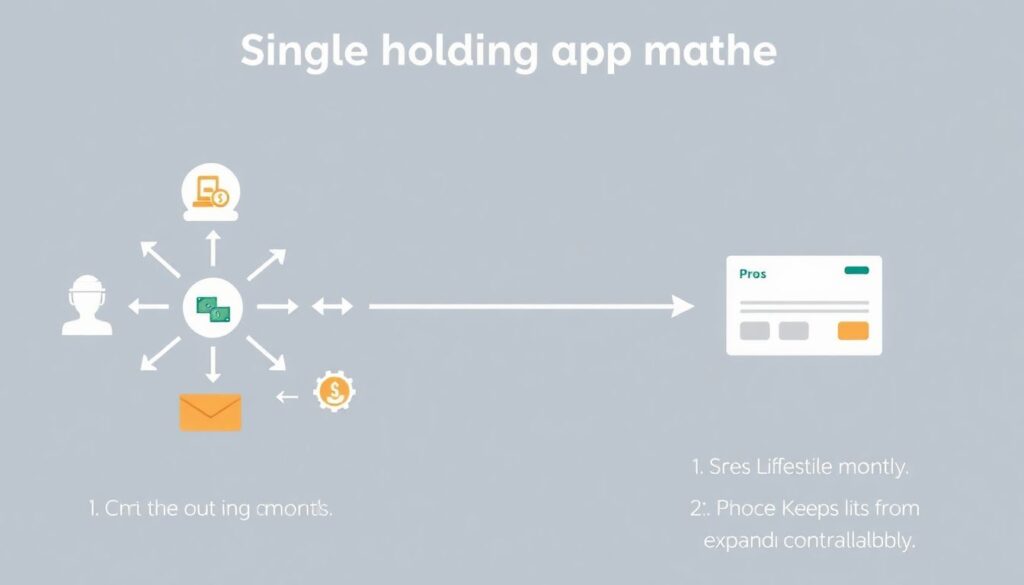
This is a more advanced but powerful approach.
All income from all sources flows into a single holding account.
Once a month, you transfer a fixed “salary” to your daily spending account, like a stable paycheck.
Плюсы:
– Smooths out the ups and downs of unpredictable income.
– Keeps lifestyle from ballooning every time you have a big month.
– Encourages long‑term thinking.
Минусы:
– You need some buffer saved up to start.
– Requires consistent tracking to know how much “salary” you can safely pay yourself.
This approach shines if your income is volatile but trending upward (e.g., freelancers, creators, consultants).
—
Tech: Pros and Cons of Tools for 2025
Best Budgeting Apps for Multiple Income Streams
In 2025, budgeting apps are getting much better at handling irregular cash flow, multiple bank accounts, and side hustles. But they’re not magic.
Typical strengths of modern apps:
– Automatic transaction import and categorization.
– Goal setting (pay off debt, hit a savings target).
– Envelope / bucket features with virtual “pots.”
Typical weaknesses:
– They can confuse inconsistent incomes if you don’t set rules.
– Subscription costs (which can hurt when you’re already tight).
– Overcomplicated dashboards that scare beginners away.
Look for these features specifically if you juggle many incomes:
– Ability to tag income by source.
– Custom rules for automatic allocation (e.g., 20% → taxes).
– Multi‑currency support if you work with foreign clients.
– Easy export to spreadsheet or tax software.
—
Pros and Cons of Using Spreadsheets vs Apps vs Hybrids
Spreadsheets (Google Sheets, Excel)
– Pros: Total control, no subscription, infinite customization.
– Cons: No automation, needs discipline, steeper learning curve.
Dedicated Apps (YNAB‑style, envelope apps, neobanks with “pots”)
– Pros: Automation, reminders, progress tracking, mobile‑friendly.
– Cons: Less flexible, sometimes “too smart” and miscategorize things.
Hybrid Setup (App + Simple Sheet)
– Pros: Best of both worlds: use the app for daily tracking, the sheet for big‑picture planning.
– Cons: Slightly more setup, but worth it once you’re juggling multiple gigs.
For most beginners, a lightweight app plus one simple spreadsheet tab is a sweet spot.
—
Unconventional Budgeting Moves That Actually Work
1. Open a “Chaos Account” for Random Side Income
Instead of trying to assign a job to every $20 payment, open a separate “chaos” account.
All unpredictable money goes there automatically.
Rules:
– Once a month, sweep 70–90% into serious goals (debt, investments, emergency fund).
– Leave a small portion (10–30%) for spontaneous fun so you don’t feel deprived.
It keeps you from mentally counting random cash as stable income.
—
2. Create “Seasons,” Not Just Monthly Budgets
If your income fluctuates by season (student work, tourism, holidays), budgeting month by month is too narrow.
Try this:
– Plan your money in 3–4 month seasons: “Busy Q1,” “Quiet Summer,” “Holiday Peak.”
– During rich seasons, pre‑pay upcoming expenses or build a “Quiet Season Fund.”
This is especially helpful for creators, teachers, and gig workers who know some months will always be slower.
—
3. Use “Red Flag Numbers” Instead of Constant Micro‑Tracking
Instead of checking your accounts every hour, set thresholds:
– If checking account < $X → pause fun spending. - If upcoming invoices < $Y over next 30 days → start prospecting for new work now. - If tax pot < Z% of year‑to‑date income → top it up this week. You don’t need to stare at your budget daily; you just react when you hit a red‑flag number. ---
4. Turn Learning Into a Line Item, Not a Wish
If you want your extra incomes to grow, you’ll probably need new skills. Add a specific category for this and fund it intentionally.
For example:
– 3–5% of all side‑hustle money automatically goes into a “Skill Fund.”
– That money is only for things like a personal finance course for multiple income streams, marketing skills, or tools that make your work more profitable.
This small habit compounds: better skills → higher rates → less stress per dollar.
—
How to Choose the Right Approach (Step‑By‑Step)
Step 1: Map Your Streams in Plain Language
Write down:
– Source name (job, freelance, Etsy, rental, etc.)
– How often it usually pays you
– Whether it’s stable, medium, or unpredictable
Already this gives clarity: you’ll instantly see which streams can be trusted for fixed bills and which belong in the “bonus” category.
—
Step 2: Pick One Main System, Not Three
Don’t overcomplicate it. Start with just one of these:
– If your main job is stable and the rest are small: envelope / bucket system is enough.
– If almost everything is flexible (freelancer, contractor): holding account + pay yourself a salary shines.
– If you’re a detail nerd: spreadsheet + a simple app hybrid.
Commit to that for 90 days before judging if “budgeting doesn’t work for me.”
—
Step 3: Automate What Chaos Allows
You can’t automate everything, but you can automate responses to each incoming payment.
Try rules like:
– Every time I get freelance income → auto‑transfer 25% to taxes, 25% to savings.
– Every time I get rental income → 50% to maintenance fund, 50% to investments.
– Every paycheck from main job → cover fixed bills, then top up envelopes.
This turns chaotic income into predictable behavior.
—
Step 4: Review by Stream, Not Just by Category
At least once a month, review:
– Which stream actually makes you the most money per hour?
– Which stream causes the most stress per dollar?
– Which one is trending up or down over the last 3–6 months?
This is where a simple sheet or app tags by “source” help. Over time, you’ll decide which streams to grow, which to pause, and which to kill.
—
When to Bring in a Professional (And How to Use Them Smartly)
If your head spins from taxes, business vs personal accounts, or you’re scaling your side hustles, consider talking to a financial planner for managing multiple incomes or a tax pro.
Use them for:
– Setting up separate business accounts the right way.
– Creating a clean tax strategy so you’re not surprised in April.
– Designing a system to pay yourself without draining the business.
You don’t have to work with someone forever — even a one‑time strategy session can save you thousands and a lot of nerves.
—
2025 Trends That Make Life Easier (or Trickier)
1. Banking “Spaces” and Real‑Time Buckets
More banks in 2025 let you create multiple named sub‑accounts (“spaces,” “vaults,” “pots”) inside one main account. This is perfect for:
– Taxes
– Emergency fund
– Annual expenses (insurance, subscriptions)
– Side‑hustle reinvestment
This tech finally makes the envelope method painless — no more 12 physical accounts.
—
2. Smarter (But Nosier) AI in Finance Apps
Apps are getting better at:
– Predicting irregular income based on your past patterns.
– Warning you before a cash crunch.
– Suggesting how to reallocate money when your situation changes.
But:
– They sometimes push products you don’t need.
– Their predictions can be wrong if your work changes suddenly.
Treat AI suggestions as hints, not orders.
—
3. Micro‑Education Instead of Huge Courses
Instead of giant 12‑week programs, more people are using short, focused lessons — like a bite‑sized personal finance course for multiple income streams or a 60‑minute workshop on pricing freelance work.
This is ideal when you’re busy juggling gigs. You can:
– Watch a 20–30 minute module.
– Implement one concrete change that same day.
– Move on without information overload.
—
4. “Invisible” Budgeting in the Background
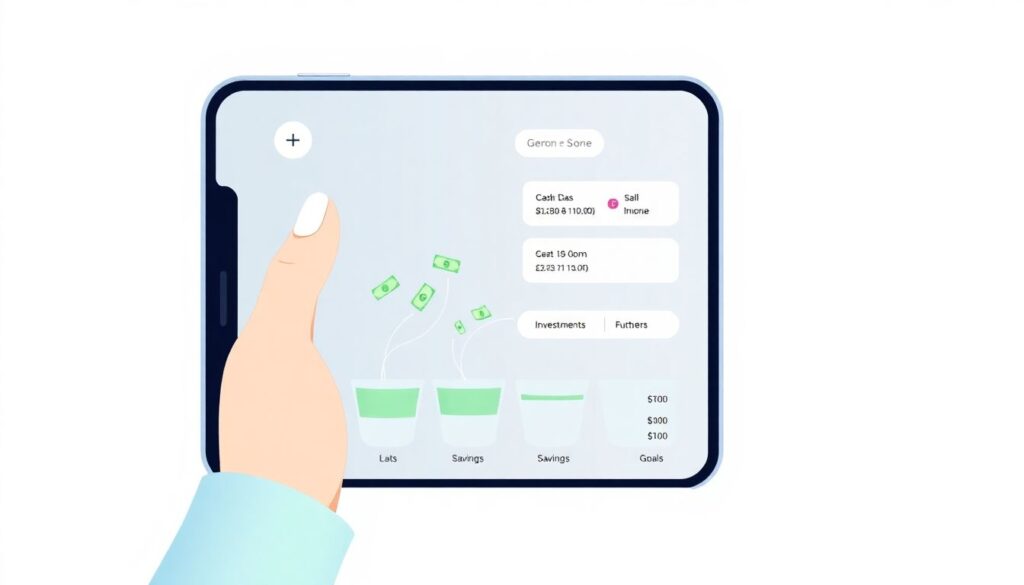
Some of the best budgeting apps for multiple income streams are moving toward near‑invisible experiences:
– They watch cash flow.
– Auto‑sort income into pots.
– Only ping you when something needs your attention.
The trend is clear: less manual effort, more “set it and tweak it” systems.
—
A Simple 7‑Day Starter Plan for Beginners
If you’re starting from scratch, try this one‑week setup:
– Day 1: List all income sources and mark them as stable / medium / unpredictable.
– Day 2: Open 2–4 sub‑accounts: Bills, Taxes, Savings, Fun.
– Day 3: Choose one primary system (envelope, holding‑account salary, or classic monthly).
– Day 4: Set automatic transfers for taxes and savings whenever income arrives.
– Day 5: Track every expense for just one day — not forever, just to see reality.
– Day 6: Adjust your “lowest normal month” number and pretend that’s your salary.
– Day 7: Do a 30‑minute review and tweak percentages if something feels off.
After that, give the system at least two full months before you overhaul it.
—
Final Thought
You don’t need a perfect budget; you need a simple, forgiving structure that survives unpredictable income and inconsistent habits.
Start by:
– Treating each income stream as a tool with a clear role.
– Separating timing (when money comes) from purpose (what it’s for).
– Letting technology handle the boring parts while you handle the decisions.
From there, you can refine, upgrade tools, or even bring in a pro — but the foundation will already be working for you, not against you.