
Why Budgeting Still Matters in 2025
Budgeting sounds boring until you realize it’s basically a permission slip to spend without guilt. Instead of “no lattes ever,” think of it as a map: you decide what matters, then send money there on purpose. In 2025, with prices jumping around and side hustles becoming normal, having at least a simple financial freedom plan for low income or high income is less about perfection and more about clarity. A basic budget helps you answer three questions: what’s coming in, where it actually goes, and what you want your money to do next month. Once вы see those answers in numbers, it’s much easier to cut what doesn’t matter and keep what does, without feeling constantly broke or stressed.
Common Beginner Mistakes (And How To Dodge Them)
Most beginners don’t fail because they’re “bad with money” — they fail because they set the bar in the clouds. Classic mistake: trying to track every cent from day one with five categories for coffee alone. In a week, it feels like a second job and the budget gets abandoned. Another frequent error is ignoring irregular costs — gifts, car repairs, subscriptions that renew once a year. Those “surprises” are predictable, they’re just not monthly. People also mix up “budget” with “punishment”, cutting everything fun, then binge‑spending from frustration. A healthier start: fewer categories, realistic fun money, and a small buffer for things you forgot to plan. Messy but consistent beats perfect for two weeks.
Different Budgeting Approaches: Which One Fits You
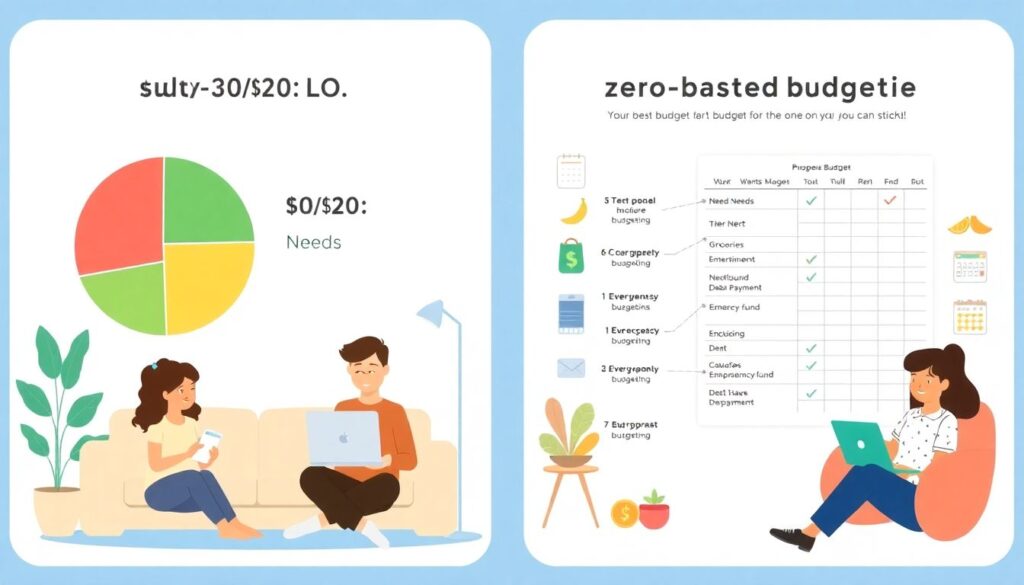
There isn’t one “correct” way to budget; think of it like diets — the best one is the one you can actually stick to. The classic is the 50/30/20 rule: about half of income to needs, some to wants, the rest to savings and debt. Simple, good for a quick reset. Zero‑based budgeting is stricter: every dollar gets a job before the month starts, great for folks asking how to start a budget to get out of debt fast. Envelope or “cash stuffing” budgeting uses physical or digital envelopes for each category, which is very visual and helps overspenders. You can also do a hybrid: rough percentages for most stuff, plus one or two “watched like a hawk” problem categories you track extra closely.
How These Approaches Feel In Real Life
Imagine three people. Sarah hates details, so she uses a loose 50/30/20 split and only tracks a few categories: rent, groceries, fun, savings. She doesn’t care where every dollar goes, just that totals stay in bounds. Leo is paying off credit cards, so he leans into zero‑based budgeting: every paycheck is pre‑divided into rent, food, minimums, extra debt, and a tiny fun line. No “leftover” money that disappears. Maya overspends on eating out, so she uses a digital “envelope” just for restaurants — once it’s empty, she’s cooking at home. All three are budgeting, just at different levels of control. Pick the one that matches your personality, not the one that looks fancy on YouTube.
Tech Tools vs Pen and Paper: What Actually Helps
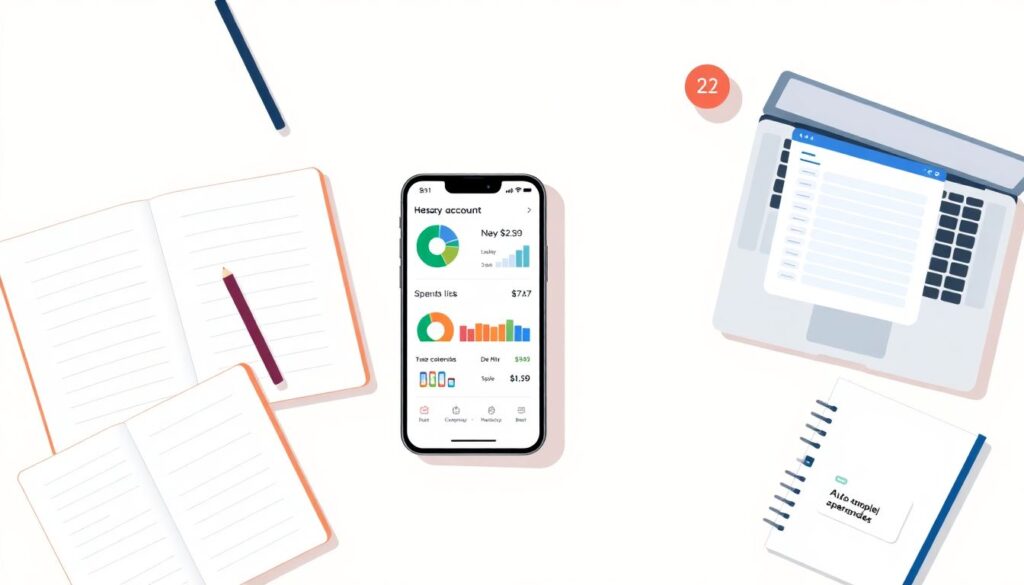
There’s no shortage of tools: spreadsheets, notebooks, apps that ping your phone at 2 a.m. The best budgeting apps for beginners usually connect to your bank, auto‑categorize spending, and show simple charts. Pros: less manual work, reminders, and handy reports that reveal patterns you’d never notice. Cons: subscription costs, data privacy worries, and the temptation to overcomplicate things with 30 categories because the app “lets you.” Old‑school pen and paper or a basic spreadsheet are free, private, and force you to pay attention while you write numbers down. That manual step can be powerful. The real question isn’t “tech or not?” but “does this tool make it easier to stay consistent next month?”
Pros and Cons of Budgeting Technology in 2025
In 2025 budgeting apps are smarter, but they still can’t fix denial. On the plus side, apps can:
– Send alerts when you’re close to overspending in a category
– Auto‑track subscriptions and weird small charges you’d miss
– Sync across partners, making joint budgeting less painful
On the downside, tech can:
– Make you feel “organized” without changing habits at all
– Hide the emotional side of spending behind cute graphs
– Lock key features behind paywalls right when you start to rely on them
Use tech as a spotlight, not as a crutch. If you never open the app, it’s the wrong one — no matter how many influencers rave about it.
How to Actually Start a Beginner Budget (Step by Step)
Instead of designing a perfect system, start with the last 30 days. Log in to your bank, download transactions, and roughly group them: housing, transport, groceries, eating out, debt, random. That’s your “reality budget”. From there, tweak, don’t fantasize. Cap the category that annoys you most and redirect a realistic chunk to savings or debt. That’s how to start a budget to get out of debt without shock therapy. Next, set one or two simple goals for the month — for example, “150 dollars to savings” or “no new debt.” Keep categories under 10 so you don’t drown in data entry. Review once a week, not once a year, and expect to adjust every month at the beginning.
Budgeting Tips to Save Money Fast (Without Hating Life)
Speed matters when you’re stressed, but drastic cuts rarely last. These budgeting tips to save money fast balance urgency with sanity:
– Hit the “lazy leaks” first: unused subscriptions, food delivery, impulse app buys
– Drop one expensive habit temporarily (e.g., bars) and redirect all of it to a micro‑emergency fund
– Time‑box temptation: one planned shopping window a week instead of random scrolling all day
When you see even a few hundred saved in a month, motivation spikes. Use that energy to tackle more structural changes, like renegotiating bills or finding a small side gig, instead of just cutting more and more small joys.
Learning the Basics: Courses and Micro‑Education
If school never taught you money skills, you’re not alone, and it’s not a character flaw. Short, practical personal finance courses for beginners can compress years of trial‑and‑error into a few evenings. Look for classes or online modules that cover budgeting, debt payoff strategies, emergency funds, and basic investing, not just “mindset” talk. Many libraries, nonprofits, and community colleges now offer free or low‑cost options, often with templates you can reuse. The key is applying one idea at a time — set up a starter emergency fund first, then attack high‑interest debt, then learn about investing — instead of trying to master everything in one weekend and burning out.
Budgeting on a Low Income: Making It Worth the Effort
When money already feels tight, budgeting can sound like rearranging deck chairs. But a financial freedom plan for low income situations is less about huge numbers and more about direction and protection. The first goal isn’t early retirement; it’s avoiding disasters: one small emergency fund, paying bills on time to dodge fees, and keeping high‑interest debt from snowballing. Focus on what you can actually control: stabilizing expenses, hunting for recurring savings (rent, utilities, phone), and exploring even tiny income boosts. Progress might be measured in tens, not thousands, at first, but the skill you build — knowing exactly what your money is doing — scales the moment your income goes up.
Trends in Budgeting and Personal Finance in 2025
Budgeting culture in 2025 is less about “never spend on coffee” and more about values‑based choices. People want their budgets to reflect mental health, sustainability, and time freedom, not just net worth. Cash‑stuffing and “budgeting reset” videos are everywhere, making money talk more normal, though sometimes a bit theatrical. Many banking apps now include built‑in spending analysis and round‑up savings features by default, blurring the line between bank and budgeting app. AI‑driven insights suggest where you can cut or negotiate, but you still have to say “yes” to change. The big shift: budgeting is being reframed as a self‑care habit, much like sleep or exercise, instead of a punishment for being “bad with money.”
Final Thoughts: Make Your Budget a Living Document
A beginner’s guide to budgeting shouldn’t leave you with a rigid rulebook; it should leave you with a process you’re willing to repeat. Expect your first few versions to be wrong. Prices move, incomes change, and your priorities will shift too. The real win is building a 20–30 minute monthly ritual: look at where money went, compare it to what you wanted, adjust, move on. If you keep showing up, even with imperfect numbers, you’ll eventually notice something powerful: you feel less surprised, less guilty, and more in control. That feeling — not a specific app or method — is what “budgeting as a path to financial freedom” actually looks like from the inside.