
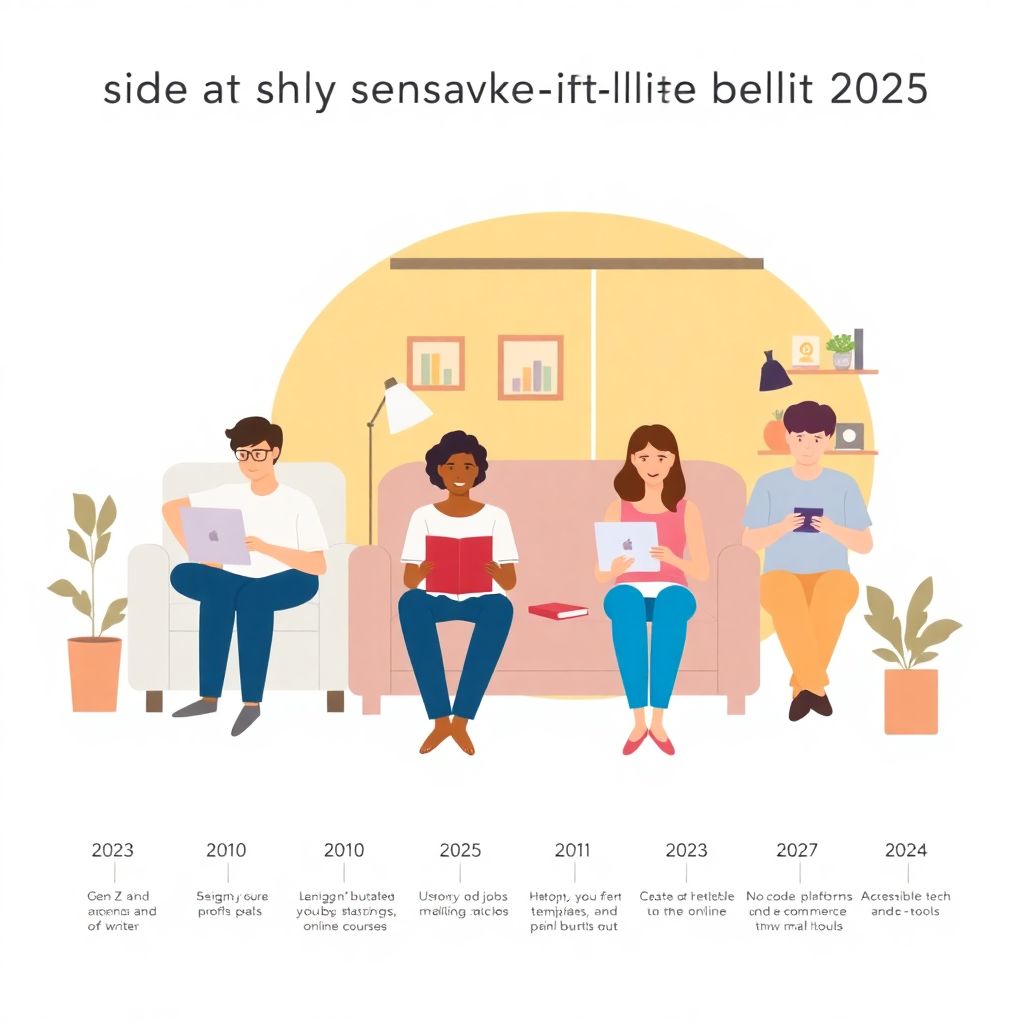
How Side Hustles Became Normal: A Quick Historical Look
Over the past decade, side hustles have shifted from something people hid from their bosses to a mainstream money strategy. Before 2020, freelancing and “gigs” were already growing, but the pandemic dramatically accelerated the trend. In the US, for example, surveys from 2022–2024 by Bankrate and LendingTree consistently showed that about 40–45% of adults had some form of side income. In Europe and parts of Asia, consulting firms like McKinsey noted similar growth as people looked for flexible, remote work options. What used to be called “odd jobs” turned into branded, scalable side hustles, powered by platforms like Upwork, Etsy, YouTube, and online course marketplaces.
The last three years, from 2022 to 2024, brought a new twist: people started worrying not just about earning more, but about mental health and burnout. Reports from 2023 showed that around half of Gen Z and millennials with side hustles felt “often” or “always” stressed about money, even though they were working more hours than in 2019. At the same time, remote and hybrid work made it easier to test side hustles during off-hours, leading to a new category: low stress side hustles to earn extra income that fit around a day job without destroying sleep or relationships. This is where beginner-friendly ideas really took off — simple, flexible projects that could be done from home, without dramatic risk or huge startup capital.
Another big shift in 2022–2024 was tech accessibility. Tools powered by AI, no‑code platforms, and easy e‑commerce infrastructure lowered the barrier to entry. People could design logos, record podcasts, or sell digital products without deep technical skills. As a result, guides to the best side hustles for beginners exploded in popularity, especially content showing how to start a side hustle with no experience and minimal savings. Instead of needing to be a programmer or a professional designer, you just needed wi‑fi, a laptop, and a bit of consistency. This democratization of tools is the main reason you can realistically talk about side hustles to make money online for beginners today, not just for tech insiders.
Basic Principles: Earning More Without Burning Out
Principle 1: Start from your energy, not from trends
When people search for easy side hustles to make extra money, they often chase whatever is trending on TikTok or YouTube — Amazon FBA this month, crypto trading the next, then dropshipping. The more sustainable approach is to map your current energy and schedule first. How many focused hours per week can you realistically give without wrecking sleep, family time, or your main job performance? Data from 2022–2024 indicates that people who limit side-hustle work to about 5–10 hours per week report significantly less burnout than those trying to stack 20+ extra hours on top of a full-time job. The principle is simple: your time and attention are finite, so you pick a model that fits your life, not the other way around.
Principle 2: Think skills and assets, not just quick cash
A side hustle can be purely transactional — trade hours for money and stop. But if you want your effort to compound, you focus on building skills (writing, marketing, design, coding, communication) and assets (content libraries, digital products, client relationships). Surveys of creators and freelancers in 2023 show that those who built repeatable systems and reusable assets (e.g., templates, online courses, niche websites) slowly increased their hourly effective rate over 12–24 months, while pure one‑off gig workers often stayed stuck. Even if you want something beginner‑friendly, it’s worth picking a hustle that teaches useful skills rather than just paying you the fastest pennies.
Principle 3: Protect your health like it’s part of the business
Burnout is not just a feeling; it has measurable economic cost. Studies from 2022–2024 on remote workers found that chronic sleep loss and constant availability significantly reduced productivity and increased error rates. Side hustlers are even more at risk because they often stack late‑night work on top of already intense days. So you bake in rest as a non‑negotiable operating rule: fixed time off each week, clear “no work” windows, and boundaries around notifications. A genuinely sustainable side hustle strategy is one where your physical and mental health are treated as core infrastructure, not as extras you deal with “later.”
Principle 4: Choose clear, narrow goals
Many beginners say, “I just want to make more money,” which sounds reasonable but is too vague to guide decisions. A practical side-hustle plan starts with precise numbers and timelines: “I want to earn an extra $300 per month in six months,” or “I want to replace 20% of my salary within two years.” Research from 2022–2024 in behavior science and productivity shows that specific, time-bound goals are far more likely to be reached than general intentions. With a clear target, you can reverse‑engineer how many clients, how many products sold, or how many views you need, which helps you pick the right model and track your progress without feeling lost.
Principle 5: Make it boringly repeatable
The most profitable side hustles often look boring from the inside. They rely on small, repeatable actions that stack over time rather than heroic all‑nighters. Posting one short‑form video three times a week, sending outreach emails twice a week, writing one article every Sunday — this kind of schedule beats irregular bursts. Data from creator economy platforms between 2022 and 2024 shows that consistent creators grow faster, even with average content, than “genius” creators who publish sporadically. When you design your workflow, ask: “Could I still be doing this a year from now?” If the answer is no, simplify.
Beginner-Friendly Side Hustle Examples You Can Actually Start
1. Freelance micro‑services (writing, editing, simple design)
Offering small, clearly defined services is one of the best side hustles for beginners because it allows you to start with no formal business setup and very little risk. Micro‑services could include writing short blog posts, editing podcast transcripts, designing simple social media graphics, or proofreading website copy. Marketplaces like Fiverr and Upwork reported steady growth in small-ticket gigs between 2022 and 2024, especially in content-related services, as more businesses moved online and needed fresh text, visuals, and social posts. The key is to package something specific — for example, “500‑word SEO blog post” or “10 Instagram post designs” — rather than vaguely saying “I can help with content” and hoping people guess what you do.
This route is especially friendly if you’re wondering how to start a side hustle with no experience. You can begin by doing a couple of free or low-paid projects for friends, nonprofits, or small local businesses in 2025 to build a small portfolio, then gradually increase your rates as you collect reviews and confidence. Because each project is short and well-defined, you can limit your weekly hours and avoid the stress of open‑ended commitments. Over time, you also gain highly portable skills in writing, communication, and basic design, which can pay off in your main career as well.
2. Digital products: templates, printables, and simple tools
Selling digital products is one of the classic side hustles to make money online for beginners because you build something once and sell it multiple times. From 2022 to 2024, platforms like Etsy and Gumroad saw big growth in categories like printable planners, budget spreadsheets, Notion templates, and lesson plans for teachers. These products don’t require advanced programming skills, just a decent sense of organization and basic design. You can start with free tools (Google Sheets, Canva, Notion) and turn solutions you already use in your life into products other people will pay a few dollars for.
The big advantage here for avoiding burnout is that your income is not directly tied to the exact number of hours you work each week. Yes, it takes some upfront effort to create and list products, but once they are live, each sale is mostly passive. In 2023–2024, many small creators shared public income reports showing modest but real results — for example, an extra $100–$500 per month after a few months of consistent uploading and simple marketing. It’s not instant riches, but as a low stress side hustle, it fits very well around a day job, especially if you enjoy organizing information or making attractive documents.
3. Tutoring, mentoring, and micro‑coaching
If you have any skill that is even one step ahead of a total beginner — languages, math, music, basic coding, or even using specific software — you can turn that into a side hustle. Online tutoring saw steady demand from 2022 to 2024, partly because of education gaps after the pandemic and the rise of remote learning infrastructure. Parents, university students, and adult learners are still willing to pay for focused help, especially when it’s personalized and flexible. You don’t need to be a top expert; you just need to reliably help someone get from point A to point B.
For many people, this is one of the most rewarding and human‑connected easy side hustles to make extra money. You can set your schedule, limit the number of clients, and pick session lengths that fit your energy — for instance, two 60‑minute calls per week. Because you get live feedback from students, you quickly see what works and adjust. And emotionally, seeing someone progress tends to reduce the sense of “grind,” which protects you from burnout more than a purely mechanical task might.
Step‑by‑Step: How to Start Without Overwhelm
H3: A Simple 5‑Step Launch Plan
Below is a straightforward roadmap to get your first beginner‑friendly side hustle off the ground while keeping your stress under control:
1. Define your constraint and money target
Decide how many hours per week you can safely give (for most full‑time workers, 5–8 hours is realistic) and how much extra you want to earn within 6–12 months (for example, $200–$500 per month). This constraint first approach helps you reject ideas that look lucrative on paper but would demand 20–30 extra hours, which data from 2022–2024 shows is a prime recipe for burnout when stacked on a full‑time job.
2. Pick a skill‑aligned, beginner-friendly model
List what you’re already reasonably good at: explaining things, writing, design, research, organizing, talking to people, or technical tinkering. Match one or two side hustle types to those strengths — such as tutoring for explainers, micro‑services for writers, or templates for organizers. The goal is to avoid learning an entirely new domain from zero while also trying to earn money fast, a combination that overwhelms most beginners.
3. Design one clear offer
Instead of launching five different ideas at once, package a single, concrete offer like “three 45‑minute math tutoring sessions per week” or “two SEO blog posts per week for small businesses.” Make it easy to describe in one sentence. This clarity reduces decision fatigue and makes it much easier for friends, colleagues, or online strangers to understand how you can help them right now.
4. Get your first 3–5 test clients or sales
For service hustles, start with your warm network: friends, coworkers, local businesses, or online communities you already belong to. Offer a small discount or a free trial in exchange for honest feedback and, if they’re happy, a testimonial. For digital products, launch your first simple item and share it where your target users hang out. Focus your energy on getting to those first 3–5 real transactions, not on building a perfect brand, logo, or fancy website.
5. Review, adjust, and protect your limits
After a month, look at the actual numbers: hours spent, money earned, and your stress level. If your hourly rate is too low, raise your prices or narrow the scope of work. If your stress is too high, cut back the number of clients or simplify the offer. Data from side hustlers in 2022–2024 shows that people who regularly review and adjust are far more likely to stick with their hustle for more than a year, while those who try to “push through” often quit in frustration.
Common Misconceptions That Lead Straight to Burnout
Misconception 1: “More hours automatically = more income”
It’s easy to assume that stacking unpaid hours early will automatically convert into higher income later. However, surveys from 2022–2024 repeatedly found diminishing returns after a certain point: side hustlers working more than 15–20 extra hours per week often reported only slightly higher earnings than those working 8–10 extra hours, but with far greater stress, health issues, and job performance problems. The leverage comes not from hours alone but from choosing the right model, building skills, and creating assets that can be reused or scaled.
Misconception 2: “You need to quit your job to be serious”
The internet has glamorized the “I quit my job to follow my passion” narrative, but for beginners, this is usually the riskiest route. The last three years of economic uncertainty (inflation spikes, tech layoffs, and shifting interest rates between 2022 and 2024) showed the value of having stable base income while experimenting on the side. Keeping your main job gives you financial breathing room, allows you to make better long‑term decisions, and reduces the temptation to say yes to every underpaid gig out of desperation — a common trigger for burnout.
Misconception 3: “Side hustles must be techy or complicated”
Many people picture side hustles as coding apps, running massive e‑commerce operations, or handling complex ad campaigns. In reality, the most sustainable side hustles to earn extra income often involve simple, human‑centric activities: tutoring, editing, organizing, creating small digital tools, or offering basic technical support for non‑technical people. The growth in these categories from 2022–2024 shows that you don’t need advanced tech skills to succeed. What you need is a clear value proposition and the discipline to show up consistently.
Misconception 4: “If it’s beginner‑friendly, it can’t make real money”
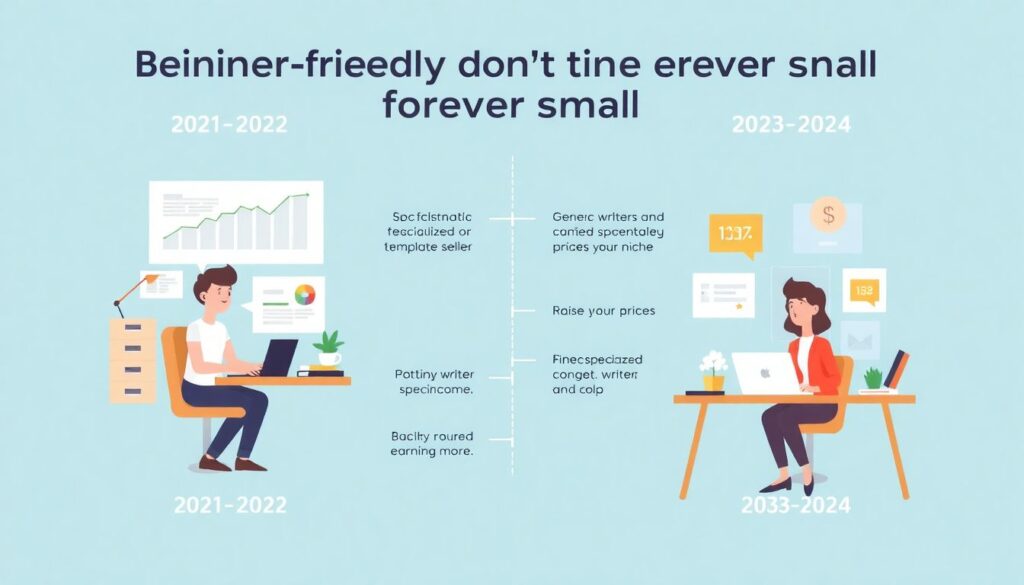
Beginner‑friendly doesn’t mean “forever small.” Many people who started as basic freelancers or template sellers around 2021–2022 reported significantly higher revenues by 2023–2024 after they narrowed their niche and raised their prices. For example, a generic writer who turned into a “real estate blog content specialist” or a “SaaS onboarding email specialist” could charge more per piece with the same skills, simply because clients value domain familiarity. The path often starts with simple tasks but can evolve into a meaningful income stream if you commit to continuous, focused improvement instead of constantly hopping between ideas.
—
If you treat your side hustle less like a frantic scramble for fast cash and more like a small, well‑run experiment, you can absolutely earn more in 2025 without burning out. Choose a beginner‑friendly model that suits your energy, set realistic goals, and protect your limits as if they were part of the business plan — because they are. Over months and years, the compounding effect of consistent, low‑stress effort will almost always beat short, intense sprints that leave you exhausted and back at zero.