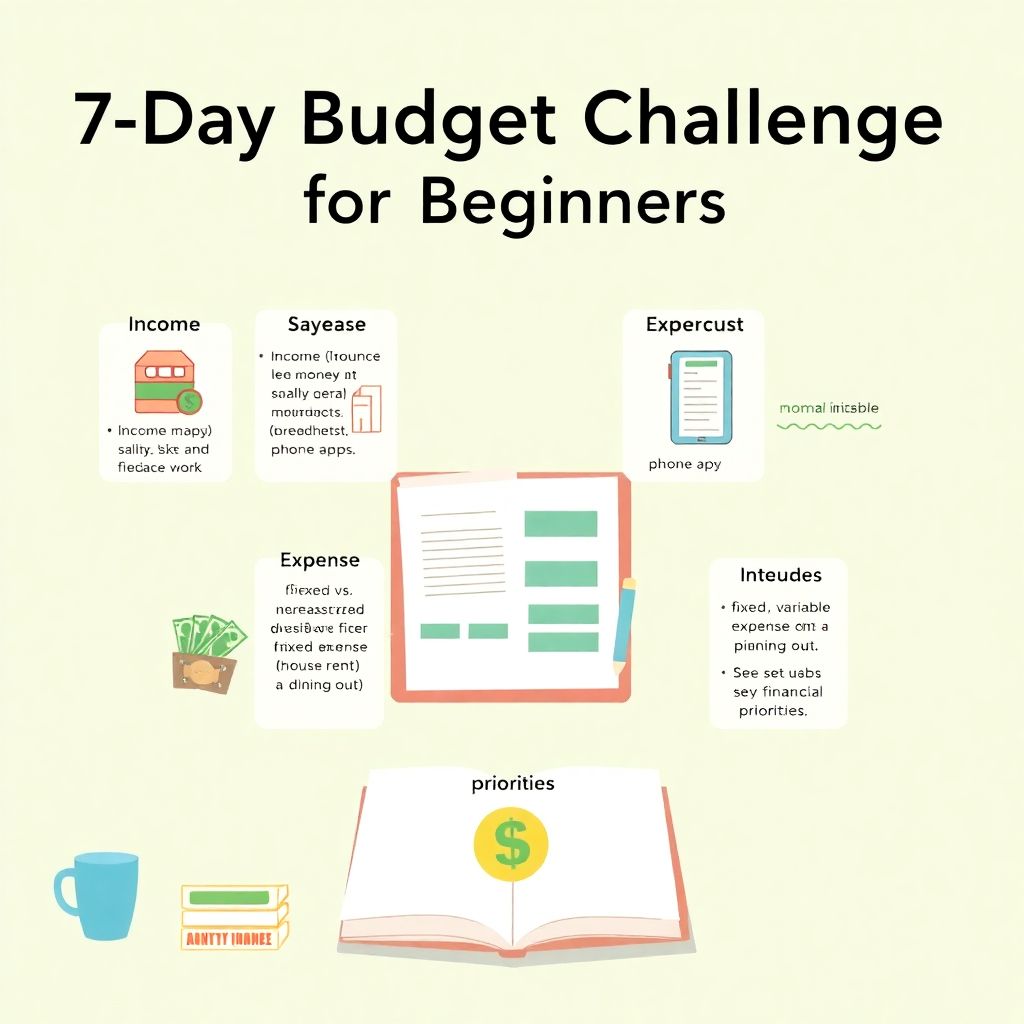
Introduction to the 7-Day Budget Challenge
Effective personal finance management has become increasingly critical in 2025, especially with rising inflation rates, dynamic labor markets, and the proliferation of digital payment systems. The “7-Day Budget Challenge for Beginners” serves as a concise, entry-level framework designed to instill foundational financial discipline. Unlike long-term budgeting plans that can overwhelm novices, this challenge offers a structured and time-bound approach to understanding where money goes and how to control it.
Historical Context and Evolution of Budgeting
The concept of budgeting has roots tracing back to 18th-century England, where households began documenting expenditures in ledger books. However, systematic personal budgeting only gained widespread traction in the 20th century with the rise of consumer credit and mass employment. In the early 2000s, financial literacy initiatives introduced simplified budget models such as the 50/30/20 rule. Fast forward to the early 2020s, the COVID-19 pandemic and subsequent economic disruptions increased the demand for short-term, flexible budgeting systems. The 7-Day Budget Challenge emerged as a response to this need, offering a low-barrier entry point to fiscal awareness for first-time budgeters.
Definition of Key Terms
– Budget: A financial plan that estimates income and expenditures over a specific period.
– Cash flow: The net amount of cash being transferred in and out of a person’s account.
– Expense categorization: The process of classifying spending into defined groups such as food, housing, transportation, etc.
– Discretionary vs. non-discretionary spending: Discretionary refers to non-essential expenses (e.g., entertainment), while non-discretionary encompasses necessary costs (e.g., rent).
Structure of the 7-Day Budget Challenge
Day 1: Income Mapping
Participants begin by documenting all income sources. This includes fixed salaries, freelance earnings, or governmental assistance. The objective is to establish a clear baseline of net monthly income, which serves as the denominator for subsequent ratio calculations.
Day 2: Expense Logging
All expenses from the past week are logged, ideally using a digital expense tracker or spreadsheet. Each entry is categorized into predefined classes. This step is crucial for identifying spending patterns and uncovering impulse purchases.
Day 3: Fixed vs. Variable Analysis
Expenses are divided into fixed (e.g., rent, subscriptions) and variable (e.g., dining out, fuel) components. A diagrammatic flow can be visualized as follows:
“`
Total Expenses
├── Fixed Costs
└── Variable Costs
├── Essential
└── Discretionary
“`
This hierarchy helps in prioritizing reduction strategies.
Day 4: Setting Financial Priorities
Users assess goals such as debt repayment, emergency fund creation, or saving for a specific purchase. These goals are quantified (e.g., save $500 in 3 months) and ranked in order of urgency.
Day 5: Budget Drafting
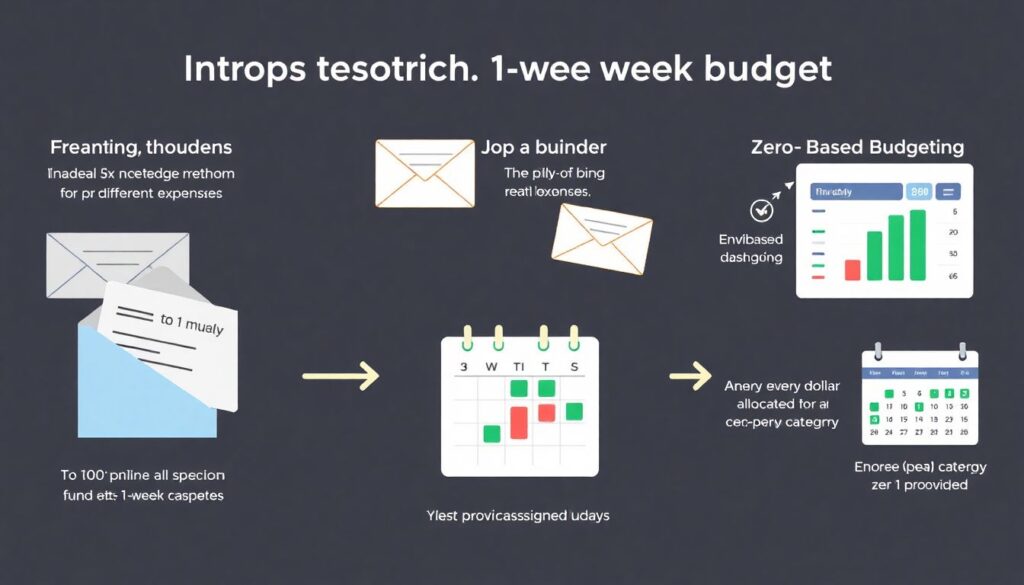
Using data from prior days, a provisional 1-week budget is drafted. Budgeting models like the “Envelope Method” or “Zero-Based Budgeting” can be applied. In Zero-Based Budgeting, every dollar is assigned a role, ensuring zero unallocated funds at the end of the period.
Day 6: Implementation and Tracking
Participants live within their drafted budget for 24 hours, updating actual vs. planned expenses in real time. This promotes accountability and reveals any inconsistencies in expenditure forecasting.
Day 7: Review and Optimization
The final day involves reviewing budget adherence, identifying overspending areas, and adjusting allocations. Users are encouraged to note psychological triggers for non-essential spending and document lessons learned.
Comparative Analysis with Other Budgeting Approaches
The 7-Day Challenge distinguishes itself from traditional models in several ways:
– Duration: Short-term (7 days) versus monthly or annual budgeting frameworks.
– Complexity: Requires no advanced financial tools or knowledge, while models like Investment-Based Budgeting assume understanding of ROI and asset classes.
– Flexibility: Adaptable to individual lifestyles, unlike rigid rule-based systems such as the 50/30/20 split.
Compared to mobile app-based budgeting solutions (e.g., YNAB or Mint), the 7-Day Challenge emphasizes cognitive engagement over automation, making it more educational for beginners.
Benefits and Limitations
The challenge offers the following advantages:
– Rapid learning curve for financial novices
– Immediate feedback on financial habits
– Minimal technical requirements
However, it also presents limitations:
– Lack of long-term financial planning
– Ineffectiveness in tracking investments or complex debts
– Limited scalability beyond personal finance
Illustrative Example

Consider Jane, a 23-year-old recent graduate with a monthly income of $2,500. Over the 7-day challenge, she discovers she spends $150 weekly on food delivery, which translates to 24% of her variable expenses. After reviewing, she caps delivery spending at $50/week by meal prepping, freeing up $100 weekly for her student loan repayments.
Conclusion and Next Steps
The 7-Day Budget Challenge acts as a tactical entry point into broader financial literacy. While not a substitute for comprehensive financial planning, it equips participants with critical skills in budgeting, expense tracking, and decision-making. After completion, users are advised to progress to monthly budget planning, incorporate emergency fund strategies, and explore long-term investment portfolios. As financial ecosystems become more complex in 2025, adaptive and experiential tools like this challenge remain essential for establishing lasting financial habits.