
Why “humble abundance” starts with a clear budget
A humble life of abundance isn’t about minimalism-for-show or luxury-on-credit. It’s about feeling relaxed with money because you know what matters and you fund that first. In 2025, prices jump faster than salaries, and many people Google “budgeting for beginners” only after they’re already stressed. The goal of this guide is to show how a simple structure, a few numbers and some honest self‑observation can turn chaotic spending into a calm, predictable system that quietly supports the life you actually want.
Step one: define what “abundance” really means to you
Before you learn how to create a personal budget, decide what you’re optimizing for. For one person, abundance is travel twice a year and dinners at home with friends; for another — no debt, a quiet flat and time for hobbies. A client of mine, Lena, earning about $2,600 net per month, wrote three priorities: health, learning, and small travels. We benchmarked every expense category against these three words and cut or shrank what didn’t fit, instead of chasing vague “savings” targets.
Map your real numbers: the “no shame” audit
Most people underestimate their spending by 20–30%. For a realistic simple budget plan to save money, you need a brutal but shame‑free snapshot. Pull the last 90 days of statements and sort each payment into 6–8 categories: housing, food, transport, debt, fun, health, other. Ignore “good” or “bad”; just total them. When a couple I worked with did this, they discovered $380 per month on food delivery alone. That single insight later paid for their emergency fund within nine months.
– Housing & utilities
– Food & household
– Transport & subscriptions
– Health, debt, savings
– Fun, gifts, “random stuff”
The 60/30/10 starting template (not a life sentence)
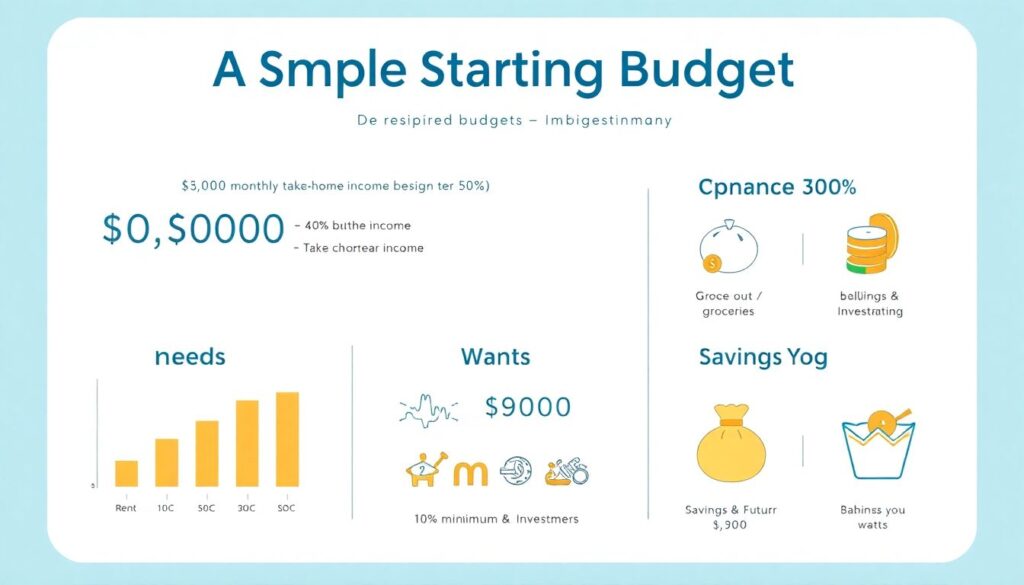
As a beginner, you don’t need a perfect formula; you need a starting lane. One pragmatic template: 60% of net income for “musts” (rent, groceries, basic transport, minimum debt), 30% for “wants”, 10% for savings and investments. On $3,000 take‑home, that’s $1,800 needs, $900 wants, $300 savings. If your rent already eats 50%, don’t panic. Note the gap, keep the structure and gradually nudge the ratios in your favor with each raise or side income, instead of pretending the problem doesn’t exist.
“`text
TECHNICAL BLOCK: QUICK BUDGET SETUP
1. Take home pay (net): 2,400 $ / month
2. Targets:
– Needs (60%): 1,440 $
– Wants (30%): 720 $
– Savings (10%): 240 $
3. Compare with reality:
– Needs now: 1,650 $ → +210 $ over target
– Wants now: 900 $ → +180 $ over target
– Savings: 0 $ → -240 $ under target
4. Plan: cut 200–250 $ from Wants, 100 $ from Needs, redirect 240 $ to Savings.
“`
Cash flow rules that actually survive real life
Knowing how to create a personal budget is pointless if it collapses the first time your car breaks. Build three layers: (1) a buffer for this month, (2) an emergency fund of at least one month of expenses, then (3) long‑term goals. Start by aiming at $1,000–$1,500 as a mini‑cushion, even if you can only put away $50 per paycheck. In practice, people who automate that small transfer on payday stick to it far more often than those who try to “save what’s left” at the end of the month.
– Automate savings on payday, not “later”
– Separate account for emergency fund
– Small, boring transfers beat heroic one‑offs
How to live frugally and save money without feeling poor
Frugality that lasts never feels like permanent punishment. It feels like paying retail only for what you truly value. One practical tactic: pick two categories to protect and aggressively trim the rest. For example, Alex decided to keep quality food and a climbing gym membership, but slashed rideshares, impulse clothes and “random tech”. Result: $260/month saved without touching what made life feel rich. The key is that every cut must have a visible purpose: debt freedom date closer, or investment balance rising every month.
Micro‑optimizations vs big‑ticket decisions
Skipping lattes matters less than fixing the three expensive pillars: housing, transport, and recurring commitments. A move that reduces rent by even $150, ditching a second car that costs $400/month all‑in, or cancelling underused $60 subscriptions has more impact than perfect grocery couponing. In case studies I see, households who tackle at least one “big rock” each year free up between 5–12% of their income. That money then feeds their simple budget plan to save money and accelerates every other financial goal they care about.
“`text
TECHNICAL BLOCK: IMPACT OF ONE BIG MOVE
– Current net income: 3,200 $ / month
– Current savings rate: 5% → 160 $ / month
– You reduce rent by 180 $ / month
– New potential savings: 160 + 180 = 340 $ / month
– Over 5 years at 5% annual return:
– 160 $ / m → ≈ 10,900 $
– 340 $ / m → ≈ 23,200 $
One housing decision nearly doubles your 5‑year capital.
“`
Digital tools: best budgeting apps for beginners in 2025
Manual spreadsheets are fine, but many people stick with a budget only after they see clean visuals and automatic tracking. In 2025, the best budgeting apps for beginners usually have three traits: instant bank sync, category rules, and goal tracking. Apps like YNAB‑style tools, Simple‑style envelope clones, or light dashboards from traditional banks now offer “spend by category” charts and “days until you hit $X” projections. Pick whatever you’ll actually open every week; the “perfect” app unused is worse than a basic one you check on Sundays.
From monthly panic to yearly strategy
Once your month‑to‑month cash flow is under control, zoom out. List the next 12 months and drop in known irregular costs: car insurance, gifts, dental checkups, travel. Divide each by 12 and add that amount to a “sinking fund” line in your budget. Someone putting aside $70/month for travel, $40 for car costs, and $30 for gifts will not greet December with a maxed card. Technically it’s just shifting timing, but psychologically it turns surprise expenses into planned ones, which is the essence of financial calm.
Common beginner mistakes and how to dodge them
New budgeters often fall into three traps. First, they plan for an ideal month, not a realistic one, so the first overspend kills motivation. Second, they track expenses without making decisions (“budget as diary” instead of “budget as steering wheel”). Third, they confuse frugality with self‑denial and then rebel after two ascetic weeks. The antidote is modest targets, weekly check‑ins of 10–15 minutes, and at least one small “joy” line that stays funded so you don’t feel constantly restricted and give up.
Where humble abundance is heading by 2030
Looking toward 2030, budgeting for beginners will be less about manual number crunching and more about setting preferences and boundaries that AI‑driven tools implement automatically. Banks already experiment with “predict‑and‑protect” features that warn you days before you overspend. Expect more: apps that negotiate some bills, adjust savings based on real‑time spending, and simulate trade‑offs (“buy this phone now vs. retire three months later”). The philosophy of a humble life of abundance will likely shift from “own less stuff” to “own fewer obligations and more options” — with smart systems quietly enforcing the rules you chose.
Putting it all together: your next seven days
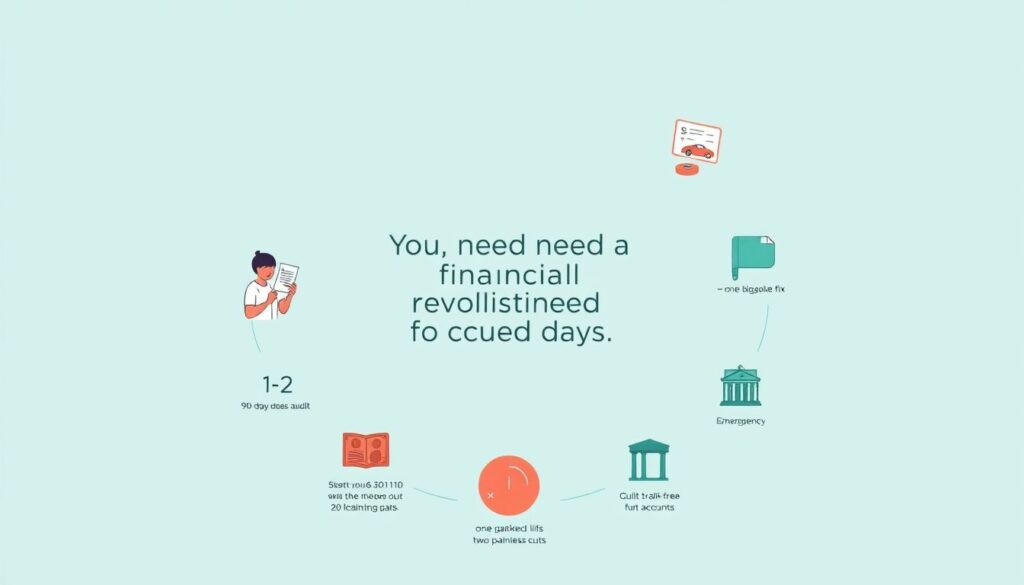
To start, you don’t need a financial revolution; you need seven focused days. Day 1–2: run the 90‑day “no shame” audit. Day 3: sketch the 60/30/10 version of your life and note every gap. Day 4–5: choose one big‑ticket fix and two painless cuts. Day 6: open or re‑label accounts for emergency and sinking funds. Day 7: set up automation and install one budgeting app you actually like. From there, it’s about repeating tiny, boring steps until a humble, abundant life becomes your default, not your distant dream.