
Understanding the Landscape of Personal Finance in 2025

In 2025, personal finance isn’t just about budgeting or saving a few bucks. It’s a dynamic field integrating technology, behavioral psychology, and real-time data. For beginners diving into personal finance reading, the first step is understanding the key components: budgeting, saving, investing, debt management, and financial goal-setting. These concepts have evolved, but their core principles remain the same.
Let’s define a few terms you’ll encounter repeatedly:
– Budgeting: A forward-looking plan assigning every dollar a job, typically using tools like the 50/30/20 rule or zero-based budgeting.
– Compound Interest: The process where interest earns interest, making your money grow faster over time—this is the magic behind long-term investing.
– Net Worth: The difference between what you own (assets) and what you owe (liabilities). Think of it as your financial report card.
Why Reading is Still the Core of Financial Literacy

Even with podcasts, YouTube, and AI-driven apps dominating education, reading remains the most effective way to build a deep, structured understanding of personal finance. Books and articles provide context, historical insights, and expert strategies that short-form content often skips.
Compared to financial apps or video tutorials, reading:
– Encourages critical thinking and reflection
– Covers more nuanced topics like tax strategy or retirement planning
– Builds a solid knowledge base in a logical, progressive format
Imagine trying to learn chess through TikToks alone—it’s possible but painfully inefficient. The same goes for finance.
Visualizing Your Financial Journey
Picture a simple diagram: a ladder with five rungs. Each rung represents a stage of financial literacy:
1. Budgeting and tracking spending
2. Building an emergency fund
3. Paying off high-interest debt
4. Investing for the future
5. Optimizing taxes and estate planning
Each level builds on the previous one. As you read more, you’ll climb higher.
Top Beginner-Friendly Personal Finance Reads in 2025
You don’t need a finance degree to get started—just the right books. Here are a few great entry points:
– *“The Psychology of Money”* by Morgan Housel – Understand how emotions influence your financial decisions.
– *“I Will Teach You to Be Rich”* (Updated 2024 edition) by Ramit Sethi – A practical, no-nonsense guide with scripts and systems.
– *“Stacked”* by Joe Saul-Sehy & Emily Guy Birken – A humorous, approachable book with real-world examples.
Each of these titles blends theory and tactics, making them perfect for someone starting from scratch.
How to Build a Reading Habit Around Finance
Reading about money doesn’t have to be dry or overwhelming. Here are some tips for making it stick:
– Start Small: 10 pages a day is enough to finish a book per month.
– Join a Community: Online forums like Reddit’s r/personalfinance or Discord servers help you apply what you learn.
– Take Notes: Summarize key points in your own words. This reinforces understanding better than highlighting.
Also, don’t shy away from re-reading chapters. Personal finance is like learning a language—you’ll get more fluent with repetition.
Comparing Digital and Traditional Learning Methods
Books and articles remain foundational, but let’s compare them with newer formats:
– Apps like YNAB or Monarch Money help track and automate but don’t always teach the “why.”
– Podcasts are great for stories and expert interviews but often lack structure.
– AI chatbots can answer questions quickly but can sometimes miss nuanced personal context.
Reading excels at giving you the full picture. It’s like learning to cook from a cookbook versus a TikTok—one teaches you the recipe, the other just shows the result.
Real-World Example: The First-Time Investor
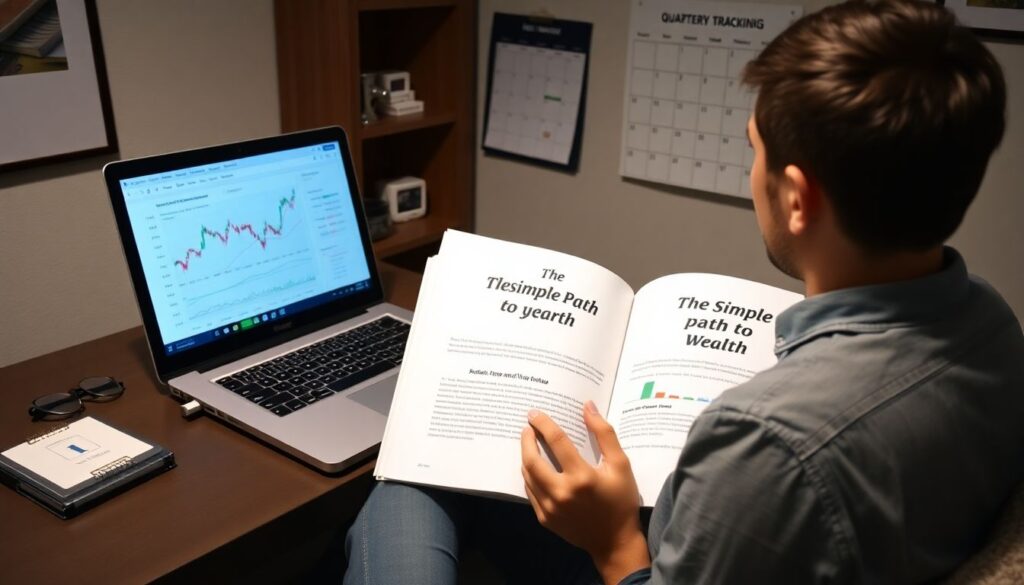
Let’s say you’re 25, earning $50,000/year, with student loans. You read a beginner investment book like *“The Simple Path to Wealth”* by JL Collins and learn about index funds. You open a brokerage account, automate $200/month into a low-cost ETF, and start tracking your net worth quarterly.
Over five years, thanks to compound interest and consistent learning, your confidence grows. This isn’t hypothetical—it’s how thousands of people start.
Future Trends in Personal Finance Reading
Looking ahead, expect personal finance reading to become more interactive and personalized. Think eBooks integrated with AI tutors, real-time financial modeling embedded in reading platforms, and community-driven annotations.
Here’s where the future is heading:
– Gamified Learning: Books and apps that reward you for learning and applying concepts.
– Integrated AI Coaches: Reading a chapter on budgeting? Your AI assistant might build a custom budget in real-time.
– Localized Content: More books tailored to regional tax laws, currencies, and cultural spending habits.
As financial tools become smarter, the need to *understand* them becomes even more critical. Reading will remain the bridge between passive usage and active mastery.
Wrapping Up: Your Blueprint Starts Now
Starting your journey into personal finance reading in 2025 means embracing both classic wisdom and modern tools. Books won’t make you rich overnight, but they will shift your mindset, sharpen your skills, and help you avoid costly mistakes.
To recap, here’s what you can do next:
– Pick one beginner-friendly book and commit to 10 pages a day
– Join a community or book club to stay accountable
– Reflect on each chapter by applying one small action
Mastering money isn’t about being perfect—it’s about being informed, consistent, and curious. And it all begins with the first page.