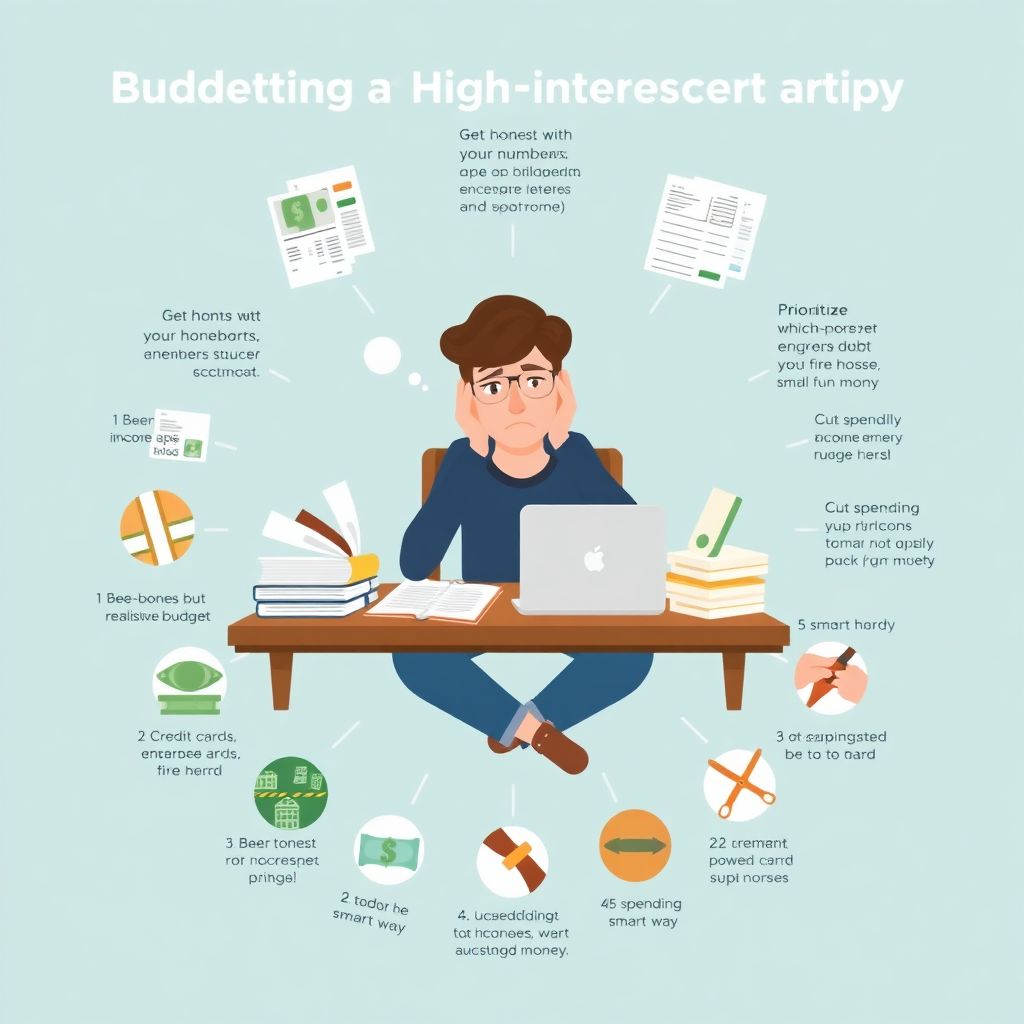
Why budgeting matters so much when your interest rate is sky‑high
When you’re stuck with high‑interest debt, every month feels like trying to run up a down‑moving escalator: you pay and pay, but the balance barely shrinks because the interest keeps growing. That’s exactly why a clear budget isn’t just “being responsible” — it’s your main weapon. Budgeting for high‑interest debt means you decide where every dollar goes instead of letting banks decide for you through fees and interest. It also gives you a reality check: how bad is it really, how long could it take to dig out, and what small changes will actually move the needle instead of just making you feel guilty for buying coffee.
Step 1. Get brutally honest with your numbers
Before you start hunting for clever hacks or asking about the best balance transfer credit cards for high interest debt, you need a simple, complete picture of what you owe and what you earn. Open every app, log into every account, and list: who you owe, total balance, interest rate, minimum payment, and due date. Do this for credit cards, store cards, personal loans, buy-now-pay-later, everything. Then, look at your income: salary after tax, side gigs, child support, any regular cash flow. This isn’t about judging yourself; think of it like taking an X-ray. You can’t fix a broken bone by pretending it’s a bruise, and you can’t build a working budget by guessing you “probably” owe around some random number.
Common mistake: hiding from the worst numbers
A lot of beginners open a couple of accounts, see one ugly balance, panic, and stop digging. The brain says, “If I don’t look, it’s not that bad.” The problem is that interest doesn’t wait for you to be emotionally ready; it keeps compounding whether you open the app or not. If looking at everything at once feels overwhelming, try doing it in tiny chunks: three accounts per day until you’re done. Or ask a trusted friend to sit with you while you go through it; sometimes just having another human in the room makes it less scary. The key is: half the picture = bad budget. You’re building a map, and missing roads will eventually get you lost again.
Step 2. Build a “bare‑bones but realistic” monthly budget
Now that you know your debt situation, you need a spending plan that lets you live like a human, not a robot, while still attacking interest. Start with your take‑home income, then list your non‑negotiables: rent or mortgage, basic groceries, utilities, transportation, insurance, medication, minimum debt payments. Only after that do you plug in the flexible stuff: streaming, eating out, hobbies, subscriptions, “fun money.” Don’t try to create the perfect monk-like budget on day one; if it’s too strict, you’ll rebel in two weeks and end up back in swipe‑now‑worry‑later mode. The goal of a beginner’s budget is simple: make sure spending is less than income and free up a small, consistent chunk every month for extra debt payments.
Unconventional move: budget for tiny joy on purpose
Cutting every pleasure sounds noble but usually backfires. Instead, try setting up a tiny “sanity fund” in your budget: maybe 2–3% of your income that is guilt‑free. That could be one coffee a week, a cheap streaming service, or a low‑cost hobby. When you know you already planned for some enjoyment, you’re less likely to blow up your budget out of frustration. Think of it as emotional interest: you’re paying a tiny cost to keep your motivation alive long enough to actually finish the journey. A joy‑free budget is like a crash diet—it works for a month, then you binge.
Step 3. Prioritize which debt gets the fire hose
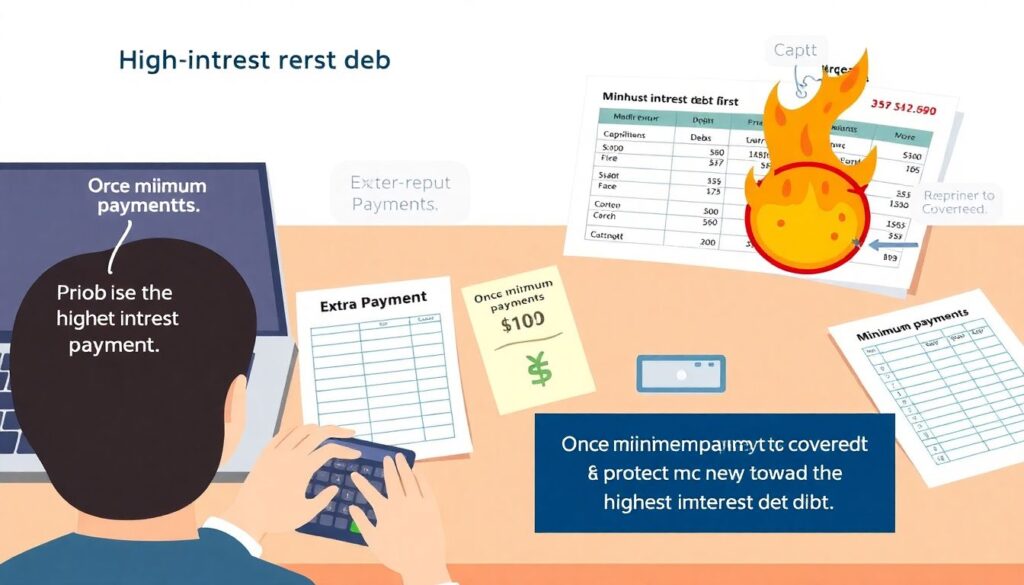
Not all debt deserves the same treatment. When budgeting for high‑interest debt, you want to hit the most expensive stuff first while keeping everything else current so your credit report doesn’t catch fire. Once minimum payments are covered in your budget, take any extra amount you freed up—maybe $50, maybe $500—and aim it at a single target. You can use the “avalanche” method (highest interest rate first) for maximum math efficiency, or the “snowball” method (smallest balance first) if you need quick wins to stay motivated. Both work; the best method is the one you’ll actually stick with for more than three months without quitting halfway.
Unconventional twist: rotate focus debt every quarter
If committing to one card for years feels soul‑crushing, try setting a 3‑month rotation. For three months, all your extra cash attacks Card A. Next quarter, shift focus to Card B, even if A isn’t gone yet, and so on. This sounds weird, but it can help psychologically: you see progress across several accounts instead of just one, which feels less like an endless tunnel. The downside is you’ll pay slightly more interest than pure avalanche, but if it keeps you engaged and consistent, the mental benefit might be worth the small financial trade‑off. You’re not a calculator; you’re a person with feelings that affect your money choices.
Step 4. Cut spending the smart way, not the miserable way
Now comes the part everyone dreads: trimming expenses. Instead of starting with your favorite things, go after the least painful cuts first. Old subscriptions you forgot about, duplicate services, rarely used apps, overpriced phone plans—these are “silent leeches” that can free up $50–$150 a month with almost no change in your lifestyle. Then look at “swaps” instead of pure cuts: cooking two extra dinners at home instead of three nights of takeout, switching from rideshare to public transport a few days a week, sharing streaming with family. You’re looking for habits that can flex, not a complete personality transplant.
Unconventional move: treat every cut like a raise and automate it
Here’s a powerful twist beginners often miss: whenever you cut an expense, immediately redirect that exact amount to your debt payments through automation. Cancel a $12 subscription? Raise your monthly payment on your highest‑interest card by $12 right away. Downgrade your phone bill by $30? Update the automatic payment by $30 the same day. If that money stays in your checking account, it will quietly vanish into random spending. By turning every saving into a scheduled extra payment, you convert tiny decisions into real progress instead of just vague “I should be saving more” energy.
Step 5. Decide if you should restructure your debt
Sometimes budgeting alone isn’t enough, especially when interest rates are brutal. That’s when it makes sense to look at restructuring options instead of just grinding away for years. Tools like debt consolidation loans for high interest debt, 0% balance transfers, or installment plans can help you trade chaos for something simpler and cheaper—if you use them carefully. The question isn’t “Is this product good?” but “Will this structure help me pay everything off faster without tempting me to pile on new debt?” A new loan with a lower rate but a longer term might feel easier month to month while secretly costing more over time, so you have to run the numbers, not just trust the marketing.
Balance transfers, refinancing and personal loans
If your credit is decent, you might qualify for some of the best balance transfer credit cards for high interest debt, which offer a 0% or low‑interest promo period. On paper, this is perfect: your payments finally hit the principal. But you must have a payoff plan before you move a single dollar. Divide the transferred balance by the promo months and see if you can really afford that number in your budget. Similarly, learning how to refinance high interest credit card debt into a lower‑rate option can help, whether through a new card or a fixed‑rate loan. Some people also look at personal loans to pay off high interest debt, turning multiple cards into one predictable payment. The trap: if you keep the cards open and start using them again, you’ll end up with a loan plus fresh card balances, which is how people accidentally double their debt.
Unconventional move: “probation year” for consolidation
If you’re considering any consolidation tool, set a personal rule: for one year after consolidating, the cards you paid off become “emergency only – and emergency = job loss, medical, or safety.” You can even freeze the cards physically by putting them in a block of ice in the freezer or locking them in a box at a relative’s place. Sounds dramatic, but it creates a friction barrier between you and impulse swiping. If you can survive one year without growing new balances, you’ll know the consolidation wasn’t just a band‑aid over a spending habit you haven’t fixed.
Step 6. Use professional help without giving up control
If your budget feels tight even after cuts, or you’re behind on payments, it may be time to bring in professionals instead of suffering in silence. Reputable credit counseling services for debt relief can review your situation for free or low cost, help you build a realistic budget, and sometimes negotiate lower interest rates with creditors through a debt management plan. This isn’t magic, and it’s not the same as debt settlement. You’ll still pay what you owe, just on a structured schedule that’s more manageable. The key is to choose a nonprofit, well‑reviewed agency and stay actively involved in the process rather than handing over your financial steering wheel entirely.
Red flags and misunderstood “solutions”
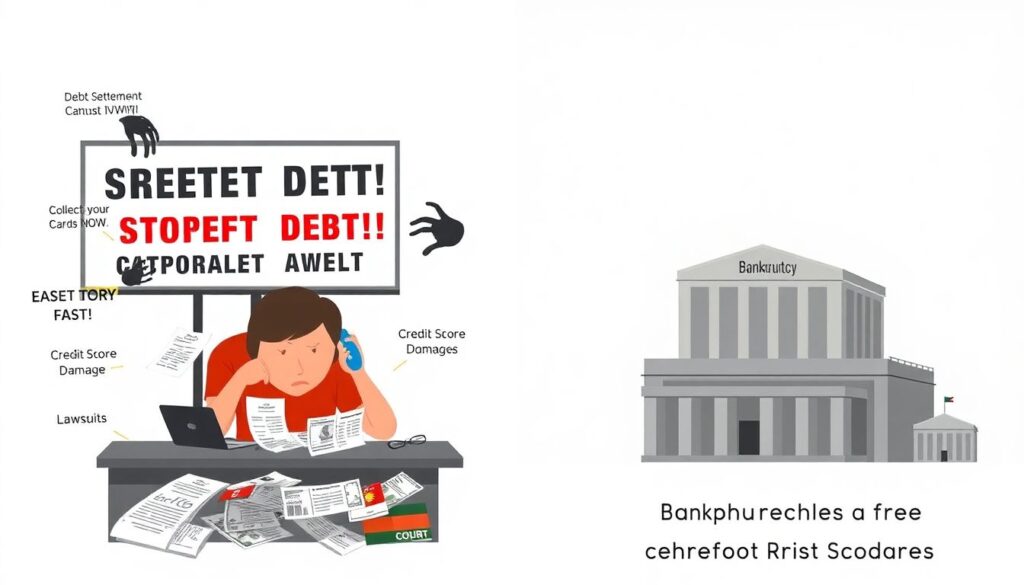
Watch out for companies that promise to “erase your debt fast” or tell you to stop paying your creditors immediately. That often means debt settlement, which can tank your credit score and lead to collection calls and even lawsuits. Bankruptcy is a legal last resort and can make sense in some extreme cases, but it’s not a casual tool, and you should talk to a qualified attorney before going that route. Professional help should feel like coaching, not like a magic trick. If someone is more interested in your fee than your actual numbers, walk away. You’re looking for partners, not saviors.
Step 7. Hack your psychology, not just your expenses
Money behavior is 20% math and 80% emotion. You already know that paying 25% interest is bad; the real challenge is making the right choice on a Friday night when you’re tired and stressed. That’s why psychological hacks are part of a serious beginner’s guide to budgeting for high‑interest debt. Try naming your accounts with motivating labels: “Freedom Fund,” “Future Me’s Rent,” or “Debt Crusher” instead of just “Checking 2.” Set visual trackers on your wall—debt thermometers, progress bars—where you color in each $100 or $500 you pay off. This may sound cheesy, but seeing progress in color triggers the reward centers in your brain and keeps you engaged.
Unconventional move: debt payments as a side hustle challenge
Instead of seeing extra debt payments as punishment, turn them into a game: “What side money can I find this month that my regular budget never sees?” You might sell three items you don’t use, take a weekend gig, pick up a freelance task, or do a short-term seasonal job. Treat anything outside your normal paycheck as “debt‑only money.” The twist: don’t adjust your lifestyle upward with that side income; pretend it doesn’t exist for spending. Watching an extra $80 or $200 hit your debt each month, knowing it came from your creativity, can feel surprisingly satisfying and keep you from giving up when progress slows.
Step 8. Prepare for setbacks so they don’t destroy your plan
Life will not pause while you pay off debt. Tires go flat, kids need school things, you catch the flu. A beginner mistake is to ignore these realities and pretend everything will be smooth. Instead, build a tiny emergency buffer into your budget, even if it’s just $20–$30 a month at first. Park it in a separate savings account named something like “Oh no, not again.” While it feels strange to save money when your interest rate is high, this cushion keeps you from swiping the card for every small surprise, which would drag you backwards. Over time, slowly growing this fund to one month of bare‑bones expenses will make your whole financial life less fragile.
Unconventional move: “damage‑control rules” for bad months
Have a written mini‑plan for when things go wrong. For example: if I can’t make my full plan this month, I will still (1) pay every minimum, (2) avoid adding new subscription or long‑term commitments, and (3) resume the full plan next paycheck without guilt. This sounds simple, but it keeps a bad week from turning into a bad year. One missed extra payment isn’t failure; it’s normal. What ruins people is the “screw it” moment, when one setback makes them abandon the whole strategy. Your rulebook is there to remind you that a detour is not the end of the trip.
Step 9. Measure progress in more than just dollars
Yes, the balance going down matters—but it’s not the only win. Track other signs that your budgeting for high‑interest debt is working: fewer overdraft fees, fewer late payments, less anxiety opening banking apps, arguments about money becoming less frequent or less intense. You might also see your credit score slowly rise as utilization drops and payments stay on time, which can unlock better rates when you’re ready to refinance or move on from this phase. These “soft wins” are important because they show your life is improving, not just your spreadsheet. Motivation rarely comes from numbers alone; it comes from feeling your stress level start to fall.
Unconventional move: write a “debt‑free day” letter to yourself
Sit down and write a letter from the point of view of your future self, on the day you make your last payment. Describe what it feels like, what’s different in your life, what choices you can make now that you couldn’t before. Be specific: where you live, what your routine looks like, how you talk about money. Seal it, or save it in your notes app, and read it whenever you feel like giving up. This isn’t woo‑woo; it’s a way to make the future real enough that today’s sacrifices have a face and a story, not just a number.
Step 10. Turn your new skills into long‑term freedom
Once your high‑interest debt is gone, the story doesn’t end—you just unlocked a powerful set of budgeting muscles. The money that used to disappear into interest can now build your emergency fund, go into investments, fund education, or finally pay for things you want without dread. The same tactics you used—tracking, prioritizing, automating, and using psychology—can protect you from sliding back. Set new goals immediately: saving three to six months of expenses, starting retirement contributions, or putting cash aside for a big purchase so you never need to rely on expensive credit again. Your budget is no longer a life raft; it becomes a launchpad.
Final thought: progress over perfection
You don’t need the perfect spreadsheet, ideal discipline, or zero mistakes to win against high‑interest debt. You just need a basic, honest budget, a clear order of attack, and a handful of practical, sometimes unconventional tools that match how you actually live. Expect slip‑ups, plan for them, and keep adjusting instead of quitting. Every month you stay intentional, even imperfectly, you’re shifting power away from interest rates and back into your own hands. And that’s what this whole guide is really about: not just paying off numbers, but getting your choices and your future back.