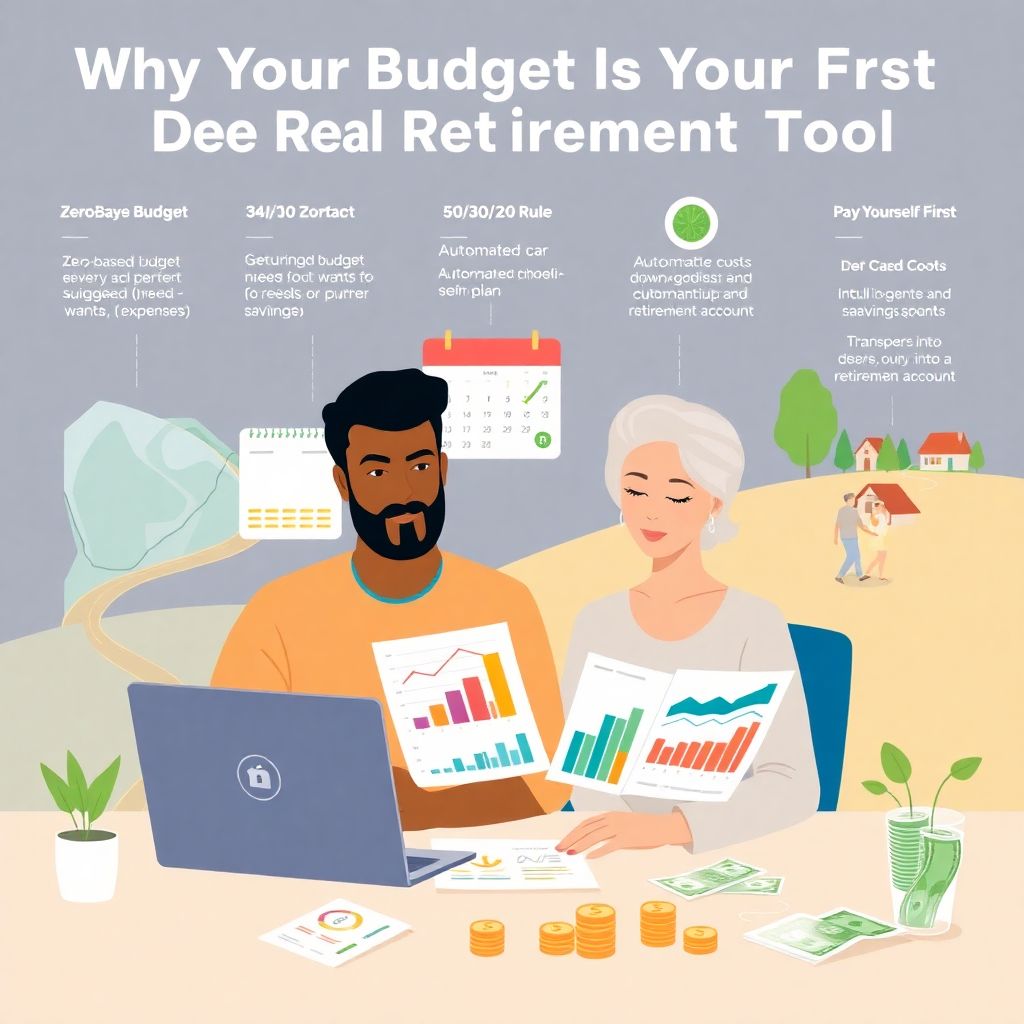
Why Your Budget Is Your First Real Retirement Tool
Budgeting for retirement sounds dry until you realize it’s basically a way to buy yourself future freedom. A budget isn’t just a spreadsheet telling you what you can’t do; it’s a map that shows how each dollar you earn today helps you work less, worry less, and choose more tomorrow. When people talk about a retirement savings plan for beginners, they often jump straight to investments and skip the simple step of figuring out where money actually goes. Without that, even the “perfect” investment strategy leaks cash like a cracked bucket. Your budget is how you patch the cracks and decide—on purpose—what matters now and what matters later.
How We Got Here: A Short History of Retirement and Budgets

The idea of “retirement” is surprisingly new. For most of history, people worked as long as their bodies allowed, living in big families where younger generations informally financed the elders. Only in the late 19th and 20th centuries did pensions and state programs like Social Security appear, along with the first formal advice on how to budget for retirement savings. Later, traditional pensions shrank and moved toward 401(k)-style plans and IRAs, shifting responsibility from employers to individuals. That change quietly made budgeting essential: instead of someone else setting aside money for you, you have to carve it out of your own paycheck and everyday choices.
Core Budgeting Principles for Retirement Saving
At its heart, budgeting for retirement is about three levers: what comes in, what goes out, and what gets invested for later. The tricky part is that retirement has no exact price tag; it depends on where you’ll live, what lifestyle you want, and how long you might live. So basic principles matter more than perfect forecasts. A simple start is paying yourself first—treating retirement contributions as a mandatory bill, not an optional leftover. Another principle is tracking patterns rather than obsessing over every coffee; you want to spot the big, repeat costs you can adjust. Combined with automatic transfers into investment accounts, these ideas turn vague intentions into a reliable savings engine.
Comparing Budgeting Approaches: Which One Fits You?
People love to argue about the “right” budgeting method, but different personalities need different tools. The classic zero-based budget assigns every dollar a job: spending, saving, or debt repayment. It’s powerful for squeezing out waste but can feel rigid. The 50/30/20 rule is looser: 50% of income to needs, 30% to wants, 20% to savings and debt. It’s great for a retirement savings plan for beginners because it sets a clear savings target without micromanaging categories. Then there’s the pay-yourself-first method, where you move retirement money out of your checking account right after payday and let the rest fall where it may. That option trades precision for simplicity; if you struggle with discipline, automation may beat detailed planning.
Zero-Based vs 50/30/20 vs Pay-Yourself-First
Zero-based budgeting shines if your income is tight or irregular, because it forces you to plan every dollar and deliberately protect retirement contributions, even when life gets noisy. It exposes where your money leaks—subscriptions, impulse buys, expensive habits—and turns those leaks into savings. The 50/30/20 approach works better if you want guardrails, not rules; by locking in that 20% for retirement and debt, you know you’re moving forward, even if categories drift month to month. Pay-yourself-first flips the question entirely: instead of “Can I afford to save?” you set a fixed retirement amount and let your day-to-day spending adapt. This can feel harsh at first, but psychologically it’s far easier than trying to save from what’s left at the end of the month.
Step-by-Step: Turning a Budget into Retirement Savings
Turning good intentions into action starts with clarity. First, figure out your monthly net income and average spending for the last three months. You don’t need perfection; ballpark numbers beat guesswork. Next, pick a target savings rate—10% might be a starting point, but 15–20% is a more robust goal over the long run, especially if you start later in life. Then rearrange your budget so this contribution becomes a fixed “bill.” If your employer offers a 401(k) match, prioritize at least enough to capture the full match, because that’s an instant, risk-free return. Finally, automate transfers so your plan doesn’t depend on willpower after a long day.
Practical Things to Cut (and What Not to Touch)
You don’t have to live like a monk to retire comfortably, but you do need to choose sacrifices. Focusing on recurring expenses creates more room for savings than obsessing over rare splurges. For example, renegotiating insurance, downsizing a car, or cooking at home more often can free hundreds per month. Try to protect things that support your long-term health and skills—sleep, basic fitness, and education. Those keep future medical costs and career risk lower, indirectly boosting your retirement outlook. As your budget improves, bump your retirement contributions by 1–2 percentage points per year; the gradual increase is barely noticeable day to day, but powerful over decades.
- Start with recurring costs: subscriptions, memberships, pricey phone plans, premium apps you barely use.
- Limit lifestyle creep: when income rises, direct part of the increase straight into retirement instead of upgrading everything.
- Use “found money” like tax refunds and bonuses for extra retirement contributions instead of one-off splurges.
Choosing Accounts: Where Your Budgeted Money Should Go
Even the best budget falls flat if savings just sit in a low-yield checking account. For long-term goals, the best retirement accounts for beginners usually include employer-sponsored 401(k) or 403(b) plans, traditional or Roth IRAs, and in some countries, tax-advantaged individual savings plans. The right choice depends on tax rules where you live, but the logic is consistent: favor accounts that offer tax breaks and automatic contributions. A Roth-style account tends to be helpful if you expect to be in a higher tax bracket later, while traditional accounts defer taxes until withdrawal. The key is not waiting until you “know everything”; get started in a simple index fund, then refine your strategy as you learn.
DIY Budgeting vs Professional Help
Some people love building spreadsheets and running retirement calculators; others would rather do almost anything else. If you enjoy tinkering with numbers, a DIY approach plus low-cost index investing can work very well. But there’s no shame in wanting backup. Searching for “retirement planning services near me” often reveals local advisors, nonprofit counseling, and workplace financial wellness programs. A good financial advisor for retirement planning doesn’t just pick investments; they help you connect your budget, debt payoff, insurance, and tax situation into a coherent plan. The trade-off is cost and the need to check their incentives; fee-only planners tend to align better with your interests than those paid by commission.
- DIY route: budget apps, online calculators, index funds, and occasional check-ins to adjust your plan.
- Hybrid route: you manage the budget, but consult an advisor at key milestones—marriage, house purchase, kids, nearing retirement.
- Advisor-heavy route: useful if your finances are complex or you know you’ll never consistently handle this on your own.
Real-Life Examples of Budget-Driven Retirement Saving
Consider two coworkers with the same salary. Alex decides to wait “until things calm down” before saving. Years pass, expenses expand to fill income, and retirement stays theoretical. Jordan, meanwhile, picks a simple 50/30/20 budget, sets a 15% retirement contribution, and automates it. Jordan trims recurring costs—switches phone plans, drops unused subscriptions, cooks more—and never touches the retirement line item. Over a decade, Jordan’s investments grow not only from contributions but from market returns, while Alex must save much more later to catch up. The difference isn’t intelligence or luck; it’s that Jordan made retirement saving the default outcome of the monthly budget.
Adjusting the Plan When Life Happens
Life rarely follows a smooth curve. Job loss, childbirth, illness, or caring for parents can wreck even a carefully crafted budget. The trick is not to abandon retirement saving entirely when things get rough. Instead, temporarily scale contributions down rather than hitting zero. Revisit large fixed costs—housing, transport, childcare—looking for creative, sometimes temporary changes: roommates, remote work, car-sharing, or part-time freelancing. When things stabilize, treat your first raises or new income as an opportunity to restore and then increase retirement contributions. Flexibility in your budget is what lets your long-term plan survive short-term chaos.
Common Myths That Sabotage Retirement Budgets
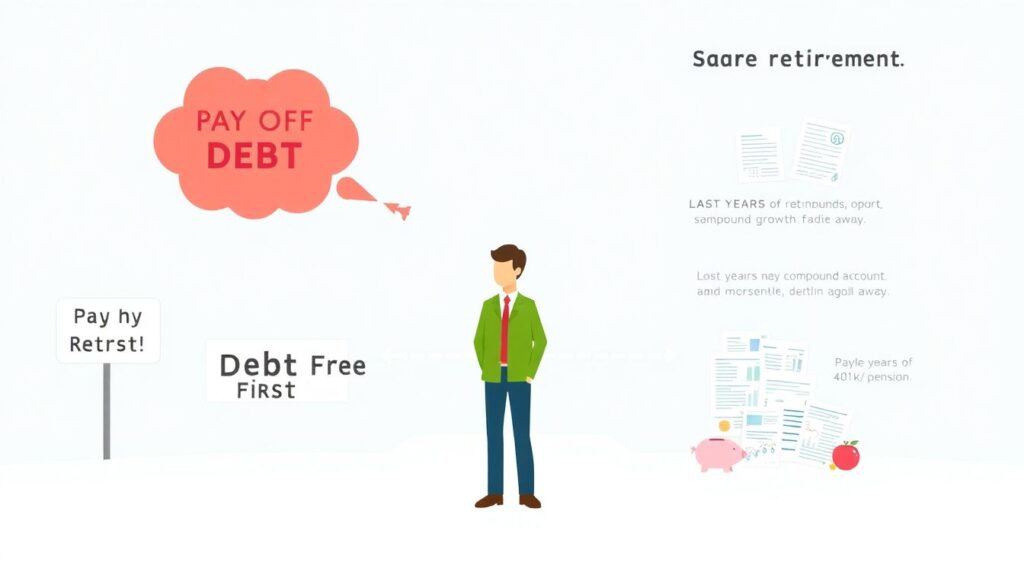
Several persistent myths quietly wreck retirement saving. One is the belief that you need to be debt-free before you save a cent; in reality, combining moderate retirement contributions with a smart debt payoff plan often beats waiting, because you can’t recover lost years of compounding. Another myth says that small amounts are pointless. Mathematically, starting early with modest sums can outrun starting late with much bigger ones. People also underestimate how their expenses might change: some costs drop in retirement, but healthcare, housing maintenance, and leisure can rise. Budgeting helps you test these assumptions instead of relying on vague optimism.
- Myth: “I’ll just work forever.” Health or job markets may disagree; your budget should plan for a time when you can’t or don’t want to work.
- Myth: “Investing is only for experts.” Simple index funds, used consistently, already put you ahead of many.
- Myth: “I’m too late.” You can’t rewrite the past, but you can aggressively prioritize the next decade.
Pulling It All Together
Using a budget to save for retirement isn’t about perfection; it’s about designing a money system where your default behavior nudges you toward future security. Choose a budgeting style that matches your personality, automate retirement contributions into tax-advantaged accounts, and revisit the plan at least once a year. If you’re unsure, blending DIY tools with occasional retirement planning services near me or a trusted financial advisor for retirement planning can keep you on track without overwhelming you. The earlier you start, the more gentle the required sacrifices. But even if you’re starting late, a clear, honest budget is the first lever that turns anxiety about the future into concrete, controllable steps today.