
Why Long-Term Goals Make Budgeting Worth It
Most people don’t quit budgeting because they can’t do the math.
They quit because the short-term effort doesn’t feel connected to anything meaningful.
Long-term goals fix that.
When you know you’re saving for a home, a child’s education, or financial independence, skipping a random online purchase stops feeling like “restriction” and starts feeling like “progress”.
In this guide we’ll walk step by step through how to create a budget for long term financial goals — in a way that’s realistic, flexible and doesn’t require you to become a spreadsheet maniac.
Along the way you’ll see small case stories from real-life style situations, so you can recognize yourself and avoid common traps.
—
Step 1: Get Clear on Your Long-Term Goals (No, “I Want to Be Rich” Doesn’t Count)

Before touching numbers, you need an honest list of what “long term” actually means for you.
H3: Turn Vague Dreams Into Concrete Targets
Replace fuzzy wishes with specific targets:
– “I want to own an apartment” → “I want a $250,000 apartment in 7 years.”
– “I want to retire early” → “I want the option to stop full-time work at 55.”
– “I want less stress” → “I want a 6‑month emergency fund within 3 years.”
Keep the list short at first: 2–4 long-term goals you genuinely care about.
Mini Case: Anna’s Apartment Dream
Anna, 28, said she wanted to “be good with money and buy something eventually.”
Nothing changed for years, because “eventually” doesn’t have a price tag or a date.
Once she turned it into: “I want $60,000 for a down payment in 6 years,” her monthly target became clear: $60,000 ÷ 72 months ≈ $830/month. That number finally gave her a reason to cut back on non-essentials and negotiate a raise.
H4: Prioritize Instead of Trying to Do Everything
You probably can’t max out every dream at once. That’s normal.
Ask yourself:
– If I could achieve only ONE long-term goal in the next 5–10 years, which would it be?
– Which goals have a deadline I can’t move? (e.g. kids’ college timelines)
– Which goals can be scaled up or down? (e.g. retire at 62 instead of 60)
Order your goals by importance and urgency. Your budget will reflect those priorities, not everything equally.
—
Step 2: Know Your Real Numbers (Not the Ones in Your Head)
You can’t build a serious plan on imaginary figures.
This step is boring but crucial.
H3: Track One Month of Spending (Properly)
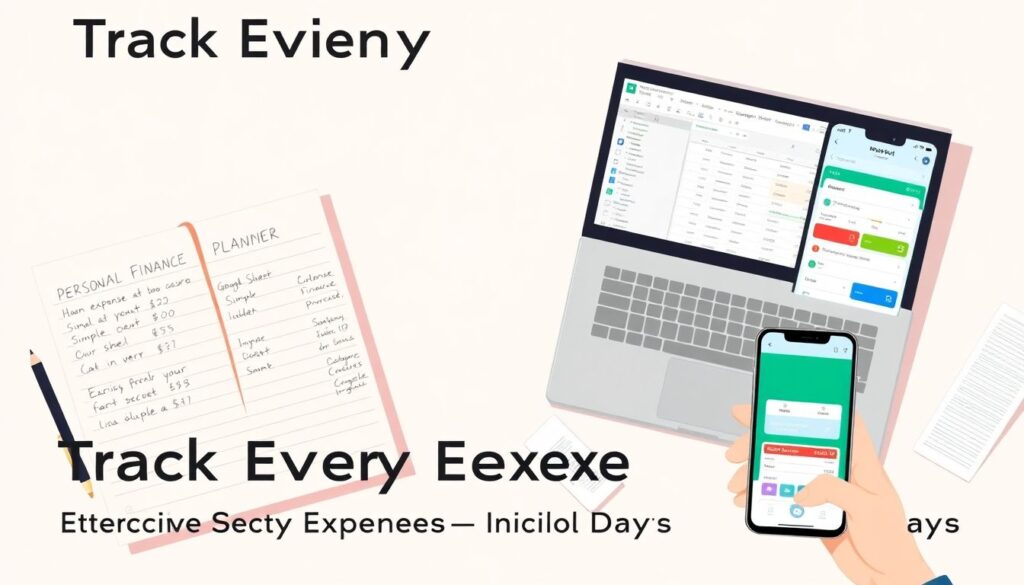
For at least 30 days, track every expense. Every. Single. One.
You can:
– Use a simple personal finance planner for beginners (a notebook or Google Sheet is fine).
– Use one of the best budgeting apps for beginners (YNAB, EveryDollar, Monarch, or even a bank app if it has categories).
– Or take photos of receipts and log them once a day.
Common Mistake to Avoid
People often track one week and then “estimate” the rest. Weekly patterns are not monthly patterns. Bills, subscriptions, and social events rarely align neatly.
Commit to a full month. If your life is very irregular, track for three months and use an average.
H4: Sort Spending into “Fixed, Flexible, Future”
To connect budgeting to long-term goals, think in three buckets:
– Fixed: Rent, utilities, minimum loan payments, basic insurance.
– Flexible: Groceries, eating out, shopping, entertainment, travel.
– Future: Savings, investing, extra debt payments, sinking funds (e.g. annual insurance, car repairs, holidays).
Most people underestimate flexible spending and overestimate their ability to save “what’s left”. Seeing actual numbers breaks that illusion.
Case: Mark’s “Where Did My Money Go?” Problem
Mark earned decent money but never had more than a few hundred in savings. He swore he “didn’t spend that much.”
After tracking, he discovered:
– $420/month in takeaway coffee, lunches and taxis.
– $150/month in forgotten subscriptions.
– $200/month in “small” online purchases.
That’s $770/month he thought “didn’t exist”. When he redirected even half of that into future-focused categories, his long-term savings rate quadrupled.
—
Step 3: Design a Simple Long-Term-Friendly Budget
Now you’ve got goals and real numbers. Time to connect them.
H3: Start With the 50/30/20 Rule (Then Customize)
As a beginner, you don’t need a complex “budgeting for beginners course” to get started. Use this as a baseline:
– 50% of take-home pay → Needs (fixed essentials)
– 30% → Wants (non-essential flexible spending)
– 20% → Future (savings, investments, debt beyond minimums)
If your numbers are far from this, don’t panic. The rule is a starting reference, not a moral scorecard.
How to Aim the “Future” Slice at Long-Term Goals
Let’s say your monthly take-home is $2,500 and you want 20% for the future → $500.
Instead of “generic savings”, split that $500 into named goals:
– $250 → Down payment fund
– $150 → Retirement investing
– $50 → Kids’ education fund
– $50 → Annual vacation fund
When you know exactly how to create a budget for long term financial goals—by naming the buckets—you’re far more likely to stick with it.
H4: Use Sinking Funds for Big Irregular Costs
Irregular expenses can destroy a budget and push you off your long-term track. Prevent that with sinking funds.
Examples:
– Car maintenance
– Holidays and birthdays
– Annual subscriptions and insurance
– Medical expenses not covered by insurance
Estimate yearly costs, divide by 12, and set that aside monthly.
Case: Sara’s “Surprise” Bills
Sara wanted to save for a master’s degree in 5 years, needing about $25,000.
She set aside $400/month… until car repairs and a wedding trip wiped out her savings twice.
Once she created specific sinking funds for car costs and travel, “emergencies” stopped raiding her education fund. She still saved $400/month for the degree, but also $90/month for car costs and $60/month for travel. Progress became stable.
—
Step 4: Choose Tools That Match Your Personality
You don’t have to love spreadsheets. But you do need a system that you’ll actually use.
H3: Paper, Apps, or Hybrid?
There is no single right tool, only what you’ll maintain consistently.
Options:
– Old-school: Notebook + calculator. Great for people who think better on paper.
– Simple digital: A personal finance planner for beginners in Google Sheets or Excel.
– App-based: Tools that connect to your bank, auto-categorize, and show trends.
Some of the best budgeting apps for beginners help you:
– Connect accounts and track spending automatically
– Create goal-based savings buckets
– Get alerts when you’re overspending a category
Try a couple for one month each; pick the one that feels easiest to keep up with on a bad day.
H4: When to Consider Professional Help
If your situation is complex—multiple debts, business income, or planning for retirement, college, and a home at the same time—professional guidance may be worth it.
You can use financial planning services for long term goals to:
– Build a full strategy for investing, debt, insurance, and taxes.
– Test different timelines (retire at 60 vs. 65; buy a home in 5 vs. 8 years).
– Avoid big mistakes with investment products you don’t fully understand.
Look for fee-only planners who are paid for their advice, not commissions.
—
Step 5: Build Your Monthly Routine (This Is Where Most People Fail)
A beautiful plan is useless if you never look at it again.
H3: The 20-Minute Weekly Check-In
Once a week, sit down with your money for 20 minutes:
– Update your spending for the week.
– See which categories are running hot.
– Move money if needed (e.g. reduce “eating out” to boost “savings”).
– Check progress toward each long-term goal.
Make it a mini ritual: same time, same place, low drama. You’re not judging yourself; you’re adjusting the ship’s direction.
H4: The Monthly Reset
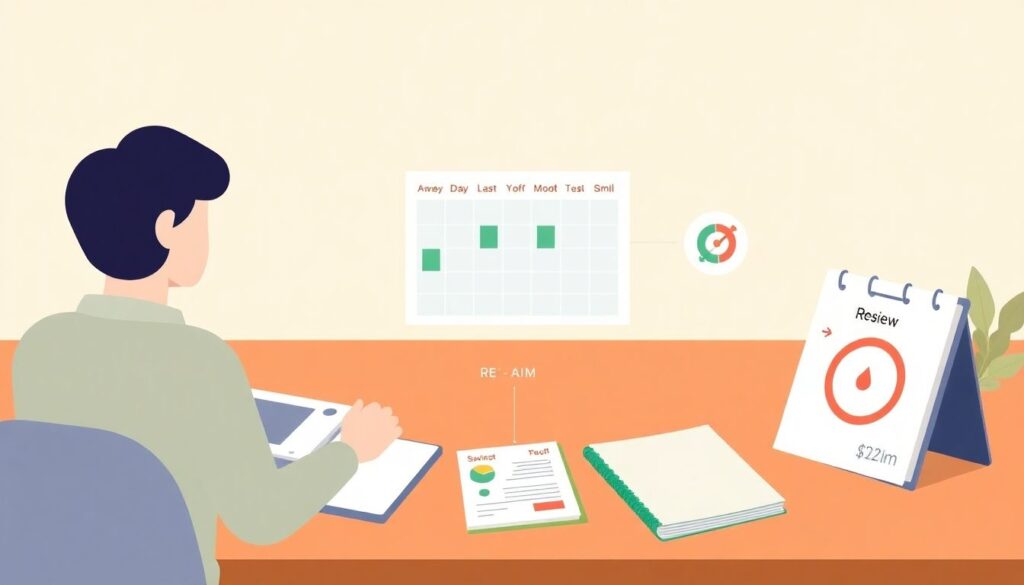
At the end of each month:
– Review: Did you hit your savings and debt payoff targets?
– Adjust: Were your estimates realistic? Any categories obviously too low or high?
– Re-aim: If your income or priorities changed, tweak the plan.
Case: Daniel’s “All or Nothing” Mindset
Daniel would start a budget on the 1st, overspend by the 10th, and give up until next month.
When he switched to weekly check-ins, he caught issues earlier. Overspent on dining out? He would trim entertainment, not abandon the entire budget.
Result: Instead of “perfect for 10 days, then chaos,” he became “good enough 12 months in a row”—which is what actually builds long-term wealth.
—
Step 6: Common Beginner Mistakes (and How to Dodge Them)
Learning to budget is like learning to drive: you will mess up, but most mistakes are fixable if you know what to watch for.
H3: Mistake 1 – Making a “Fantasy Budget”
Signs of a fantasy budget:
– You cut groceries to half of what you’ve ever spent… with no plan to change habits.
– You assume you’ll “barely go out” despite a busy social life.
– You list “side hustle income” that doesn’t exist yet.
Fix: Base your budget on actual past numbers, then make small, specific changes. For example: “Cut food delivery from $250 to $180 and cook at home twice more per week.”
H3: Mistake 2 – Ignoring Irregular Income
If your income fluctuates (freelancer, commission-based, tips), avoid planning as if you always earn your best month.
Instead:
– Use your 3–6 month average as a “baseline income.”
– Build a bare-bones version of your budget that fits that baseline.
– When you earn more, split the extra between long-term goals and short-term enjoyment.
H3: Mistake 3 – No Emergency Buffer
Without an emergency fund, every problem becomes debt—derailing long-term plans.
Aim for:
– First step: $500–$1,000 as quickly as possible.
– Next step: 1–3 months of essential expenses.
– Long-term: 3–6 months (or more if your income is very unstable).
Think of it as armor for your long-term goals.
—
Step 7: Adjusting Your Budget as Life Changes
Your first budget is not your last. It’s a working draft.
H3: When Your Income Grows
Most people let lifestyle creep eat the entire raise. Instead, use the “50% rule”:
– When you get a raise or bonus, allocate at least 50% to long-term goals (savings, investing, debt payoff).
– Enjoy the other 50% guilt-free.
This keeps your life improving while your future accelerates.
H4: When Your Goals Evolve
You might start out obsessed with buying a house and later decide you want more freedom to travel, or even move countries.
Once a year, sit down and ask:
– Do my long-term goals still match who I am and what I want?
– Is any goal there just because it’s “what people do”?
– If I had a clean slate, would I plan the same way?
Real planning means adapting, not staying locked into a decision you made five years ago.
—
Step 8: Putting It All Together – A Simple Action Plan
Here’s a streamlined path you can start this week:
– Week 1: Write down 2–4 long-term goals with rough amounts and timelines.
– Weeks 1–4: Track every expense. No judging, just data.
– Week 5: Sort your spending into fixed, flexible, and future. Compare to the 50/30/20 rule.
– Week 6: Create a basic budget that:
– Covers essentials
– Allocates a fixed monthly amount to each long-term goal
– Includes sinking funds for big, irregular costs
– Ongoing: Do weekly 20-minute check-ins and a monthly reset.
– Within 3–6 months: Refine your system, try tools (apps, spreadsheets, paper), and consider professional advice if your situation is complex.
You don’t need to master every tool or enroll in a huge budgeting for beginners course to start. Begin with real numbers, honest goals, and a simple system you’ll actually use.
From there, every month you stick with the plan is another step toward the long-term life you’re actually aiming for—not just the one your bank balance drags you into.