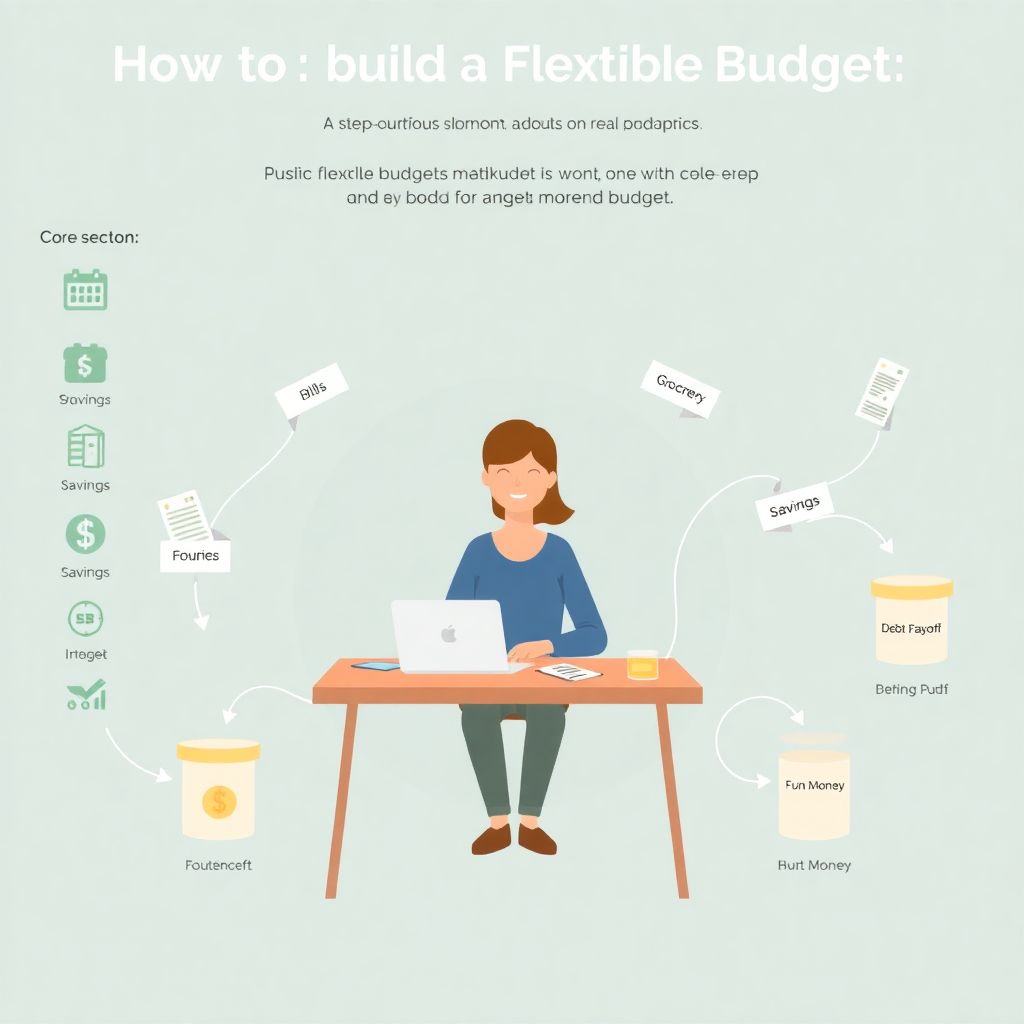
Most people are never taught how to build a budget that actually bends with real life instead of breaking the first time something unexpected happens. A flexible budget is less about perfection and more about control: you design a system that absorbs surprises without derailing your goals.
Below is a structured, technical walkthrough of how to build that kind of system from scratch, with expert-level recommendations built in.
—
Core Concepts Behind a Flexible Budget
Before touching tools, it helps to define some key budget mechanics. A flexible budget is a cash‑flow management system that adjusts to changing income and expenses while still enforcing your priorities. In practice, this means you continuously allocate every unit of income to a “job” (savings, bills, discretionary spending, debt payoff) and then reallocate as new information appears during the month.
Flexibility does not mean “spend whatever happens.” It means your plan is dynamic: you review and edit it weekly, using feedback loops and basic variance analysis (comparing planned vs actual) to tweak categories, not abandon the whole system.
—
Necessary Tools: What You Actually Need (and What You Don’t)
For a beginner, budgeting infrastructure should be lightweight but precise. You only need three components: a transaction log, a planning framework, and a review mechanism.
A transaction log can be a spreadsheet, paper notebook, or software. Many experts suggest starting with a simple digital format (Google Sheets, Excel, or a notes app) because it forces you to see cash flow clearly without distracting features. Over time, you can migrate into the best budgeting apps for beginners once you know what data you actually care about.
You’ll also want a planning framework: either a custom sheet or a flexible monthly budget planner template that you update each month. The template should separate fixed expenses (rent, insurance, subscriptions) from variable expenses (food, transport, entertainment) and from financial objectives (emergency fund, sinking funds, debt reduction). Finally, a review mechanism is just a recurring calendar event reminding you to reconcile transactions and adjust your plan.
—
Recommended Digital and Analog Tools
You can implement this with minimal friction using a small tool stack.
– Spreadsheet tool (Excel, Google Sheets, LibreOffice)
– Banking apps with transaction export (CSV or PDF)
– Calendar or reminder app for weekly reviews
– Optional: notebook for quick manual tracking on the go
If you prefer structured guidance, many people combine a spreadsheet with one of the budgeting courses for beginners online to learn the core techniques and then customize from there. Paid apps are useful later, but early on, complexity can hide overspending instead of clarifying it.
—
How to Create a Personal Budget Step by Step
Now to the operational process. The most reliable way to build a flexible system is to set it up in layers: data, plan, execution, and iteration.
Start with data. Pull the last 2–3 months of bank and card statements. Categorize each transaction manually into broad buckets: Housing, Utilities, Groceries, Transport, Debt Payments, Savings, Miscellaneous. This one‑time audit builds a baseline spending profile and exposes structural leaks like frequent takeout or recurring subscriptions you don’t use.
Next, compute your average net income per month (after tax, after payroll deductions). Compare that against your categorized spending. This is your starting cash‑flow picture, not your ideal. From here you can design a target allocation that corrects for overspending without becoming unrealistic.
—
Building Your First Monthly Plan
Using your baseline, construct a prototype monthly budget:
– List all income sources with conservative estimates
– List fixed obligations with exact due dates
– Set realistic caps for variable categories based on prior months
– Reserve line items for savings and debt reduction
At this stage, the objective is feasibility, not optimization. If the math doesn’t balance, adjust variable spending first, then examine fixed costs (could you renegotiate a bill or cancel a subscription?). The budget must hit zero: income minus all allocations (including savings and debt payments) should equal zero. This is the essence of zero‑based budgeting, but you’ll run it flexibly by revisiting numbers during the month.
—
Implementing a Simple Budgeting Method to Pay Off Debt
Debt repayment is often the primary driver for beginners, and your budget should prioritize it explicitly. A simple budgeting method to pay off debt combines the “debt snowball” or “debt avalanche” with category caps.
The snowball method focuses on paying off the smallest balances first for psychological wins; the avalanche attacks the highest interest rate debts first to minimize total interest. Experts frequently recommend the avalanche mathematically, but note that the snowball increases adherence because early victories build momentum. You can hybridize: start with a small balance to get a quick win, then switch to highest‑interest targeting.
—
Allocating Surplus and Structuring Sinking Funds
Within your plan, define a fixed “debt overpayment” line item—an amount above the minimums dedicated to your current target debt. Any surplus after covering essentials should be routed into that line until the target debt is cleared.
To keep your budget flexible while still aggressive on debt, implement sinking funds—sub‑accounts (real or virtual) for predictable but non‑monthly costs like insurance premiums, annual subscriptions, or car maintenance. Every month you send a small, planned contribution into each sinking fund, so when the expense arrives, it doesn’t blow up your cash flow and sabotage debt payments.
—
Using Templates and Apps Without Losing Control
A prebuilt flexible monthly budget planner template can accelerate setup, but templates are frameworks, not rules. Customize:
– Rename categories to match your actual life
– Add or remove rows so you’re not forced into irrelevant labels
– Adjust formulas so every dollar gets an assignment
Apps can automate categorization and reports, but experts warn about “dashboard illusion”—the feeling of control that comes from charts without behavioral change. Use the best budgeting apps for beginners as data capture devices and alert systems, not as substitutes for regular decision‑making sessions.
—
Weekly and Monthly Review Cycles
A flexible budget lives or dies based on your review cadence. Define a weekly 15–20 minute session where you:
– Import or check transactions
– Reconcile your log with bank balances
– Compare category spending against budgeted amounts
– Decide whether to reallocate within the month
Then, run a longer monthly close‑out where you evaluate variance: which categories went over, which stayed under, and why. Instead of labeling overspending as “failure,” treat it as diagnostic data. If groceries exceed the cap every month, your assumption was wrong; update the plan rather than relying on willpower alone.
—
Expert Recommendations for Building Flexibility
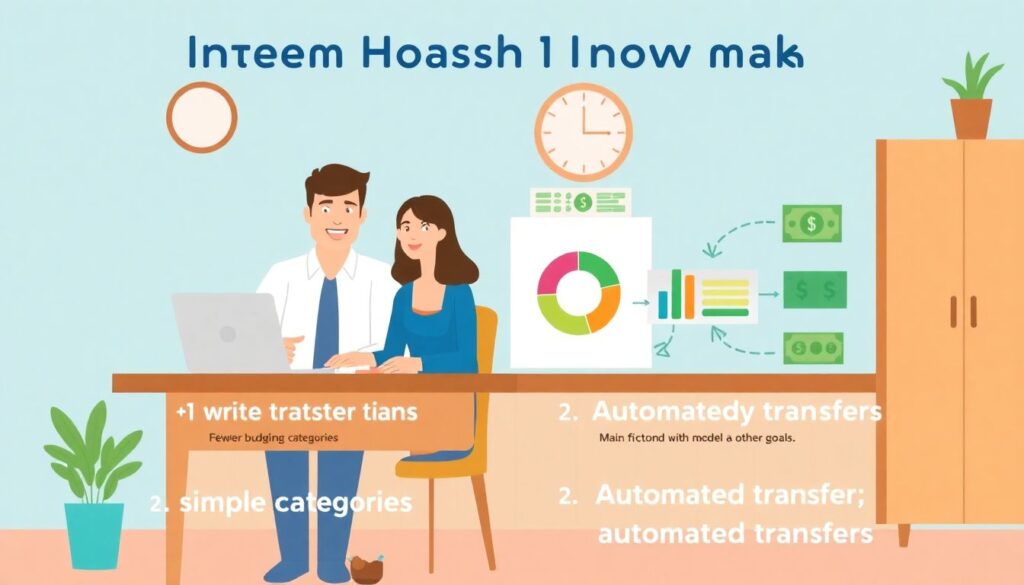
Financial planners who specialize in household cash‑flow management tend to converge on a few principles for beginners. First, they advise starting with fewer categories, not more; micro‑categorization increases friction and decision fatigue. Second, they stress that automated transfers—to savings, debt, and key sinking funds—should occur immediately after payday, implementing the “pay yourself first” principle at the system level.
They also emphasize behavioral safeguards: set “tripwires” such as alerts when card spending passes a threshold, or when your checking balance drops below a defined floor. These triggers prompt you to open the budget and consciously reallocate, which is the core of flexibility. The budget changes, but only through deliberate decisions.
—
Common Failure Modes and Troubleshooting

Even a well‑designed system will encounter friction. The most common failure modes are: over‑complexity, inconsistent tracking, and unrealistic constraints. Over‑complexity usually appears as too many categories, multiple overlapping apps, and a template that no one in the household wants to touch. If you stop updating the data, the plan decays.
Inconsistent tracking is often solved not with more discipline but with process engineering. For example, experts frequently recommend a “daily three‑minute check‑in” at the same time each day, where you log any cash transactions and confirm yesterday’s card charges. This micro‑habit reduces backlog and eliminates the dread of a giant reconciliation session.
—
Specific Fixes for Typical Problems
When your budget stops matching reality, use targeted interventions:
– If variable categories are always blown: raise them to a realistic average, then reduce somewhere less critical, or extend your timeline for goals.
– If irregular expenses keep ambushing you: create or expand sinking funds; list known irregulars for the next 12 months and divide by 12.
– If you “forget” to check the budget: tether the habit to an existing routine (morning coffee, end of workday), and keep the file or app pinned and easy to open.
If income is volatile (freelance, commissions), build your plan on a conservative baseline—use your lowest recent monthly income as the planning figure—and treat any amount above that as a “bonus pool” you allocate at mid‑month or month‑end.
—
When to Seek Structured Learning or Advice
Some people prefer guided learning instead of assembling the system alone. In that case, targeted budgeting courses for beginners online can provide a structured curriculum, homework, and sometimes live Q&A with practitioners who see hundreds of household budgets. Look for programs that teach underlying principles (cash‑flow management, prioritization, habit design) rather than just app tutorials.
If your situation includes complex debt structures, irregular income, or legal issues, consider a session with a fee‑only financial planner or accredited credit counselor. Their role is to help you build a sustainable framework, not just to hand you a generic spreadsheet.
—
Making Your Budget a Living Document
Ultimately, a flexible budget is a living document: it evolves as your income, goals, and constraints change. At the outset, expect the first 2–3 months to feel messy; you are calibrating assumptions and discovering your real spending patterns.
Over time, the combination of a clear plan, regular reviews, and intentional adjustments will turn your budget from a restrictive “diet” into an operational dashboard. You’ll know exactly how to create a personal budget step by step that can absorb surprises, fund your priorities, and, with deliberate pressure on debt categories, accelerate your progress toward financial stability and independence.