
Why budgeting in 2025 looks very different from 2015
Budgeting used to mean an Excel sheet, a calculator, and a lot of guesswork.
Вut in 2025, your financial life is a data stream: subscriptions, tap-to-pay, BNPL (buy now, pay later), crypto wallets, side gigs, micro‑investing.
Ignoring this complexity is exactly why many “beginner budgets” collapse after a month.
Modern budgeting is less about “don’t buy coffee” and more about building a system:
– Automated data collection
– Realistic spending limits
– Clear debt payoff logic
– Simple reporting you’ll actually look at
Let’s break down how to build a clear financial path from zero — using tools and methods that actually match how money works today.
—
Step 1. Map your current money streams like a system engineer
Track cashflow, not just “income and expenses”
Instead of listing random bills, treat your money as cashflow:
– Inflow: salary, freelance, bonuses, cashback, refunds
– Outflow (fixed): rent, utilities, insurance, subscriptions, loan payments
– Outflow (variable): food, transport, fun, impulse buys
– Outflow (irregular): gifts, repairs, medical, travel
This structure is how finance teams work, and there’s no reason you can’t copy it for personal use.
To see the real picture in 2025, manual notes aren’t enough. Banking is too fragmented: multiple cards, payment apps, online wallets.
That’s where personal budgeting software for beginners actually shines: it pulls data from all your accounts, auto‑labels transactions, and shows real patterns instead of guesses.
Look for tools that support:
– Auto sync with banks and cards
– Subscription detection (and reminders)
– Category rules (once set, auto‑apply in future)
– Multi‑currency (if you travel or use foreign services)
—
Use a 30‑day “financial snapshot”
Before changing anything, observe first.
1. Connect your main cards and accounts to one app.
2. Track all transactions for 30 days without forcing yourself to “be good”.
3. At the end, look at:
– Top 3 spending categories
– Number of subscriptions
– Amount of irregular “surprise” expenses
4. Save this as your baseline.
This 30‑day snapshot is your “before photo” — every improvement will be measured against it.
—
Step 2. Choose tools: apps and services that do the heavy lifting
Modern budgeting apps that actually help, not annoy
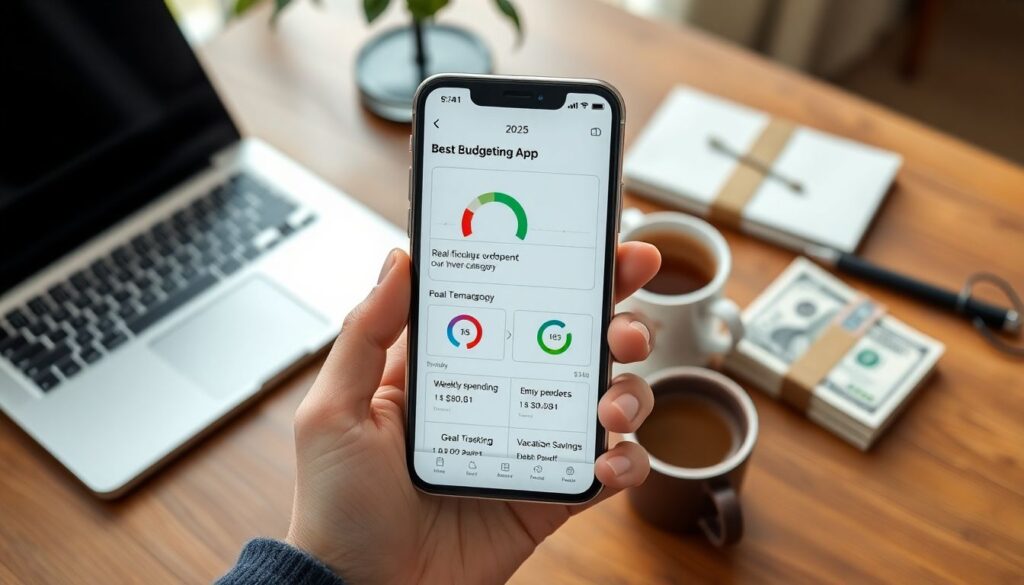
In 2025, the best budgeting apps to manage monthly expenses have three common features:
– Real‑time notifications when you overshoot a category
– Simple visuals: daily/weekly spending “thermometers”
– Goal tracking integrated with savings and debt payoff
You don’t need a perfect app. You need one you’ll open twice a week.
Check for:
– Dark mode and clean UI — yes, UX matters for discipline
– Web + mobile sync
– Simple export (CSV or similar) in case you switch later
– Local bank support (important outside US/EU)
Pick one within 24 hours and start. Analysis-paralysis over apps is just a sophisticated way to procrastinate.
—
When to consider professional help

If you’re a high‑earning beginner (for example, in tech, consulting, medicine), the complexity jumps quickly: stock options, bonuses, RSUs, taxes in several jurisdictions.
In that case, financial planning services for young professionals can be more cost‑effective than trying to reverse‑engineer everything yourself.
They can help you:
– Design a budget that considers vesting schedules and variable income
– Estimate safe saving and investing rates
– Prioritize debt payoff vs. early investing
– Plan for tax bills before they surprise you
Think of this like hiring a personal trainer for your finances — to set up the system, not to babysit you forever.
—
Step 3. Build a budget that survives real life
Forget “perfect”, build “robust”
A robust budget tolerates:
– Late invoices
– Occasional overspending
– Unexpected doctor visits
– A broken phone or laptop
To do that, you need three layers:
– Operating budget (month‑to‑month)
– Emergency buffer (short‑term shocks)
– Long‑term goals (investments, big purchases)
Let’s start with the operating budget, because without it, the rest is theory.
—
Use a simple allocation framework, not a rigid rule
Classic rules like 50/30/20 are useful as a reference, not a law. In expensive cities, 50% on needs may be unrealistic; for remote workers, it might be 30%.
A more flexible logic for beginners:
– Core obligations (needs): 45–60%
– Housing, utilities, basic food, insurance, minimum debt payments
– Personal lifestyle (wants): 15–30%
– Leisure, restaurants, subscriptions, non‑essential shopping
– Financial progress: 15–25%
– Extra debt payments, savings, investing, big goals
Adjust based on rent, family situation, and income volatility.
—
How to create a budget plan to pay off debt
Debt kills flexibility. The earlier you control it, the faster your budget becomes powerful.
A practical 5‑step algorithm:
1. Inventory all debts
– For each: balance, interest rate (APR), minimum payment, due date.
2. Sort by interest rate
– Technically optimal: pay extra on the highest APR (“debt avalanche”).
– Psychologically easier: pay off smallest first (“debt snowball”).
3. Assign a fixed “extra debt” amount
– Example: an additional 10–15% of your income into the “Financial progress” bucket.
4. Automate payments
– Minimums on all debts + extra on target debt, scheduled right after payday.
5. Freeze debt growth
– Disable one‑click credit card payments in apps.
– Remove cards from online stores where possible.
– Treat BNPL as a loan, not a trick for “free money”.
The key is consistency. A mediocre plan executed for 18 months beats an “optimal” plan abandoned after 2.
—
Step 4. Automation: let the system be stricter than your willpower
Set up a “pay yourself first” pipeline
In 2025, automation is not a luxury; it’s your main defense against decision fatigue.
A simple setup right after salary hits:
1. Automatic transfers to savings/investment account
2. Automatic extra payments to priority debt
3. Automatic allocation to a “bills account” for fixed expenses
4. What’s left is your spendable budget for the month
Order matters. If you save “what’s left at the end of the month”, the amount is usually very close to zero.
—
Create firewalls between your money buckets
Instead of one big account:
– Use a separate account for bills
– Keep a daily‑spend card for food, transport, small purchases
– Hold an emergency fund in a savings account that’s slightly inconvenient to touch
This “firewall” architecture prevents accidental overspending of rent money on weekend trips.
—
Step 5. Learn the basics properly (without a finance degree)
Online micro‑learning beats random TikTok advice
Short viral tips rarely provide structure. You need a framework, not just hacks.
That’s where online budgeting courses for beginners can be useful, especially if they:
– Include practical worksheets and templates
– Cover both psychology (behavior) and mechanics (numbers)
– Touch on modern tools: apps, automation, digital banks, investing platforms
– Show how to adapt a budget when income changes
Pick courses that show concrete case studies: variable-income workers, gig economy, remote workers, small business owners.
Treat it like learning a productivity system — low time investment, high lifetime ROI.
—
Step 6. Integrate modern trends instead of fighting them
Subscriptions and “invisible spending”
In 2025, a big part of overspending isn’t big purchases — it’s small, recurring ones.
To control them:
– Once a quarter, use your app to list all subscriptions by cost.
– Mark each as:
– Critical (work, must‑have)
– Quality‑of‑life (optional, but valuable)
– Dead weight (unused / barely used)
Cancel dead weight immediately. For quality‑of‑life services, set a max total (for example, “entertainment subscriptions ≤ 5% of income”).
—
Contactless, BNPL, and micro‑transactions
Tap‑to‑pay and BNPL create low-friction spending. Behavioral finance shows: the less friction, the more impulsive the decision.
Counter‑measures:
– Turn on per‑transaction alerts over a chosen threshold
– Limit BNPL strictly to planned big purchases
– In your app, create a dedicated category for BNPL to track total monthly obligation
– Once a week, scroll through your micro‑transactions (coffee, snacks, small digital items) and note the total
You’re not banning small joys — you’re making them visible.
—
Side income and the “lifestyle creep” trap
Side hustles, freelance gigs, and creator income are normal in 2025. They can accelerate your financial path or just inflate your lifestyle.
Adopt a simple policy:
– Baseline lifestyle funded by your primary stable income
– Side income split, for example:
– 50% to savings/investments
– 30% to faster debt payoff
– 20% to guilt‑free fun
This stops every new dollar from turning into a new fixed expense.
—
Step 7. Review loops: monthly, quarterly, yearly
Monthly: quick diagnostics, not self‑criticism
Once a month, spend 20–30 minutes:
– Check each category vs. budget
– Note 2–3 anomalies (both good and bad)
– Adjust next month’s limits slightly if needed
– Confirm automations are still correct (no expired cards, no failed transfers)
Use questions like:
– Did any category surprise me?
– Which expense would I definitely repeat?
– Which expense wasn’t worth it at all?
This is not about blaming yourself; it’s a post‑mortem to improve the system.
—
Quarterly: structural changes
Every 3 months:
– Re‑evaluate subscriptions and recurring payments
– Re‑check insurance, rent, commuting costs
– If your income changed, re‑balance:
– Needs / Wants / Financial progress
– Review your debt payoff trajectory: are you on schedule?
This is the moment to tweak the architecture, not just category caps.
—
Yearly: long-term path check
Once a year, zoom out:
– Total income vs. previous year
– Total net worth (assets minus debts)
– Progress on big goals (house, relocation, education, early retirement)
– Whether your current budget still reflects your actual values and priorities
If you use financial planning services for young professionals, an annual session with a planner is perfect for this level of review.
—
Putting it all together: your clear financial path
Here’s a condensed implementation sequence you can follow over the next 30 days:
- Pick and connect a budgeting app; run a 30‑day snapshot without changes.
- Classify expenses into fixed, variable, irregular; identify top three leak categories.
- Inventory all debts and decide on avalanche or snowball; set a fixed extra payment amount.
- Design a simple allocation: Needs / Wants / Financial progress, adjusted to your reality.
- Automate: transfers to savings, investments, and extra debt payments right after payday.
- Split money into at least three buckets: bills, daily spending, emergency fund.
- Schedule monthly and quarterly reviews in your calendar; treat them as non‑negotiable.
Budgeting for beginners in 2025 isn’t about extreme restriction. It’s about designing a clear, automated, and data‑driven system that supports your goals with minimal daily effort.
Once that system is running, every raise, bonus, or side gig doesn’t just disappear — it moves you forward along a path you can actually see.