
If you’ve ever opened a budgeting app, stared at all the numbers, and thought, “How is this supposed to make me rich?”, this guide is for you. A wealth‑focused budget doesn’t just track where your money goes; it deliberately pushes more of it toward investments and long‑term goals, so future‑you has options instead of panic.
Below is a practical, conversational, step by step guide to creating a wealth focused budget you can actually stick to, even if you’re just starting out in 2025.
—
Why a Wealth-Focused Budget Is Different
A regular budget asks, “Can I afford this month?”
A wealth‑focused budget asks, “Will this help me build the life I want five, ten, twenty years from now?”
That shift changes everything. You’re not just cutting lattes; you’re designing a personal finance budgeting strategy for wealth building. Your income, spending, and saving are all rearranged to prioritize:
– Increasing your net worth
– Reducing and eventually eliminating bad debt
– Consistently investing, even with small amounts
Instead of feeling like punishment, a wealth‑focused budget becomes a roadmap. You know why you’re saying “no” to some things, and “yes” to others.
—
The Essential Tools You Need

You don’t need a fancy finance degree or a Wall Street mentor. But you do need a simple toolkit that matches your personality and habits, especially if you’re using a beginner budget planner to grow wealth.
Digital Tools (For People Who Love Their Phone)
If your phone is always in your hand anyway, let it work for you.
Look for tools that make it easy to see your whole money picture at a glance, and that allow you to automate as much as possible. Automation is like future‑you setting traps for present‑you’s bad impulses.
Some useful options:
– Budgeting apps (YNAB, EveryDollar, Monarch, etc.) to assign every dollar a job
– Spreadsheets (Google Sheets, Excel templates) if you like tweaking formulas and custom views
– Brokerage & investing apps (Vanguard, Fidelity, Schwab, robo‑advisors) where your “wealth line” actually grows
Try one or two tools; don’t load up on five apps and then abandon all of them.
Analog Tools (For People Who Think Better on Paper)
For some, screens are distracting. If that’s you, going analog can make your budget “click” in a way apps never will.
You might use:
– A dedicated money notebook or binder
– Printed budget worksheets
– A whiteboard for monthly “money map” planning
Paper makes your decisions feel more intentional. You literally see your choices take shape in ink.
Mental Tools (Mindset You Can’t Skip)
The most powerful tools aren’t digital or paper. They’re mental.
Short list, but crucial:
– Honesty about your current situation (debt, impulses, income volatility)
– Patience with the process; wealth building is measured in years, not weeks
– Flexibility to adjust as life changes rather than quitting when the plan breaks
Think of these as the operating system under every decision. Without them, even the best budgeting methods to build wealth won’t stick.
—
Laying the Groundwork: Your Money Snapshot
Before you decide how to budget for building wealth, you need to know where you’re starting from. You can’t improve a situation you’re guessing about.
Step 1: Map Your Income
Write down all sources of money coming in:
– Paychecks (after tax)
– Side hustles or freelance work
– Rental or business income
– Government benefits or stipends
Keep it realistic. If your side hustle income jumps around, use an average of the last 3–6 months. Conservative numbers protect you from overcommitting.
Step 2: List Your Real Expenses (Not the Fantasy Version)
Most people underestimate their spending because they only think in “monthly bills.” Wealth‑focused budgets include the weird and irregular stuff too.
Break it into:
– Fixed costs – rent/mortgage, utilities, minimum loan payments, insurance
– Variable costs – groceries, transport, eating out, shopping, subscriptions
– Irregular costs – car repairs, gifts, medical bills, annual fees, vacations
That last category usually ruins budgets. Plan for it from day one instead of pretending it won’t happen.
—
Designing Your Wealth-Focused Budget
Now we move into the heart of this step by step guide to creating a wealth focused budget: turning your money snapshot into a plan that builds wealth on purpose.
Step 3: Choose a Simple Budgeting Framework

You don’t need a complicated system. Pick a structure you can remember when you’re tired after work.
Three popular frameworks that work well as best budgeting methods to build wealth:
– Pay Yourself First
You decide how much goes to wealth building (investing, extra debt payments, savings) first. Bills and lifestyle get what’s left, not the other way around.
– 50/30/20 (or a custom split)
– 50% Needs
– 30% Wants
– 20% Saving & Debt Payoff
Adjust the percentages to match your goals and cost of living; what matters is that “wealth” gets its own slice.
– Zero-Based Budgeting
Every dollar of income is assigned a specific job: spending, saving, or investing. Nothing is left “unassigned”. This is powerful, but can feel intense if you hate detail.
Pick the one that feels least intimidating. You can always evolve later.
Step 4: Set Clear Wealth Targets
A wealth‑focused budget is goal‑driven. Without targets, you’re just shuffling numbers.
Decide what “wealth building” means for you this year:
– Paying off a specific debt balance
– Hitting an emergency fund target (e.g., 3–6 months of expenses)
– Investing a consistent amount monthly
– Saving for a house deposit or business startup fund
Turn each goal into a number and a deadline, even if it’s approximate. “Invest $300/month” is more useful than “invest more”.
—
Turning Goals Into Monthly Numbers
Here’s where your plan gets real and starts to feel practical instead of theoretical.
Step 5: Decide Your Monthly Wealth Contribution
From your income, carve out a monthly amount for wealth‑building actions. This might include:
– Retirement accounts (401(k), IRA, workplace pension)
– Brokerage investments
– Extra mortgage or debt payments
– Emergency fund and sinking funds
Treat this like rent: non‑negotiable. Adjust lifestyle spending before you cut this line, as long as essentials are covered.
Step 6: Allocate What’s Left to Living
With your “wealth cut” removed and fixed bills listed, assign the remaining money to:
– Groceries
– Transport
– Eating out
– Fun money
– Miscellaneous buffer
This is where the friction lives. You’ll probably discover there isn’t enough to fund every wish. That’s normal. This is the point: your budget exposes trade‑offs so you can make choices consciously.
—
Automating and Tracking (Without Losing Your Mind)
A budget that depends 100% on willpower is already in trouble. Use systems, not heroic self‑discipline.
Step 7: Automate Everything You Can
Automation is your best friend:
– Automatic transfers to savings and investment accounts on payday
– Auto‑pay for fixed bills to avoid late fees
– Scheduled transfers to “sinking funds” (travel, car, medical)
The more your plan happens without you thinking, the more consistent your wealth building becomes.
Step 8: Quick Weekly Check-Ins
You don’t need to obsess daily, but once a week, spend 10–15 minutes checking:
– Account balances
– Upcoming bills
– Whether you’re within your spending limits for key categories
A simple weekly rhythm is enough:
– Adjust if you overspent in one category by tightening another
– Move small leftover amounts into savings or investments
– Note any patterns (e.g., “Fridays are my spendy day”)
This is where your personal finance budgeting strategy for wealth building turns into a habit rather than a once‑a‑year resolution.
—
Troubleshooting: When Your Budget Isn’t Working
Even the best plan will glitch. Troubleshooting early keeps you from giving up.
Common Problems and Fixes
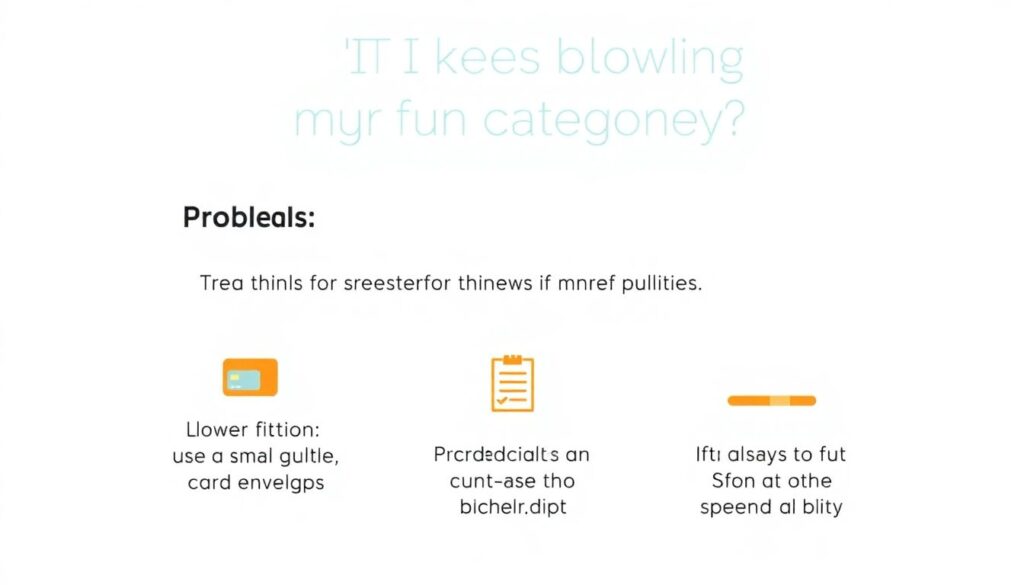
You’ll likely run into at least one of these:
– Problem: “I keep blowing my ‘fun money’ category.”
– Lower the friction: separate a small “guilt‑free” card or cash envelope.
– Pre‑decide what counts as fun spending and what doesn’t.
– If it’s constantly not enough, increase it *slightly* and cut somewhere less important.
– Problem: “Unexpected expenses wreck everything.”
– Rename them “unplanned but inevitable.”
– Create a catch‑all buffer category and multiple sinking funds (car, health, gifts, home).
– Start tiny if you must; consistency matters more than the amount.
– Problem: “My income is irregular.”
– Base your budget on your *minimum* realistic income.
– When you earn more, use the surplus for extra saving, investing, or one‑off treats.
– Hold 1–2 months of “buffer cash” in your checking account.
Short version: if your budget fails, don’t throw it out. Tweak it. The failure is data, not a verdict on your willpower.
Emotional Pushback and Money Guilt
Money is never “just math.” It’s stories, childhood patterns, and social pressure.
If you feel:
– Ashamed of past decisions
– Overwhelmed by debt
– Resentful about cutting back
You’re normal. Acknowledge the emotion, but don’t let it run the numbers. Go back to your why: freedom, options, less stress. Those are worth some short‑term discomfort.
—
Evolving Your Budget as Your Wealth Grows
Your first wealth‑focused budget is a starting point, not a life sentence.
When to Adjust Your Plan
Review and update your setup when:
– Your income changes significantly
– You pay off a major debt
– You hit a big savings goal
– Your life situation shifts (move, kids, career switch)
As your net worth grows, your priorities will change too. For example, you might:
– Reduce aggressive debt payments once loans are gone
– Increase investing and long‑term savings
– Add more “quality of life” categories without slowing wealth growth
This is the fun part: watching your budget gradually shift from survival to stability to abundance.
—
Where Wealth-Focused Budgeting Is Headed (2025–2035)
Since it’s 2025, we’re already seeing big changes in how everyday people interact with money. Wealth‑focused budgeting is going to look different over the next decade.
Tech and AI: Smarter, More Personalized Budgets
Over the coming years, expect:
– AI‑driven budgeting assistants embedded in banking apps that categorize, forecast, and suggest real‑time spending adjustments for you
– Automated “wealth rails” where a fixed percentage of every paycheck is instantly split across retirement, brokerage, savings, and bills without manual setup
– Behavior‑based nudges that learn your patterns and intervene before you overspend (“You usually regret big online purchases after 10 p.m. Want to wait until tomorrow?”)
The practical result: it will become much easier for a complete beginner to follow a beginner budget planner to grow wealth without needing to be a spreadsheet nerd.
Financial Education: From Optional to Standard
We’re also seeing:
– More employers offering financial literacy programs alongside 401(k) matches
– Governments and schools gradually embedding personal finance basics into curricula
– Influencers and creators shifting from quick‑fix hacks to long‑term wealth frameworks
The topic of how to budget for building wealth is moving from niche blog posts to mainstream conversation. Over the next decade, not having some kind of wealth‑focused budget will feel as unusual as not having a bank account.
The Human Factor Won’t Go Away
Even with better tools and education, one thing won’t change: you still have to decide what you value.
Tech can:
– Suggest where to cut
– Auto‑invest for you
– Warn you when you drift off plan
But it can’t define your version of “enough,” your risk comfort level, or what freedom looks like. That part will always be yours.
—
Putting It All Together
You don’t need perfection. You need:
– A basic understanding of your income and expenses
– A simple framework that gives wealth its own line in the budget
– Automation and weekly check‑ins
– Willingness to adjust rather than quit
If you start today, even with tiny amounts, your 2035 self will look back at 2025 as the year you stopped hoping for wealth and started building it on purpose.