
Budgeting sounds boring until you realize it’s basically a user manual for your money. Once you have that manual, you stop guessing, stop stressing, and start telling your cash exactly what to do. This guide “Budgeting for Beginners: 12 Simple Rules to Follow” is written for real life: fluctuating income, unexpected bills, and zero desire to stare at spreadsheets all weekend.
We’ll walk through tools, a clear process, and what to do when the plan inevitably breaks. Think of this as a budgeting for beginners course in article form — you can start today with just a phone and 30 minutes.
—
Understanding What a Budget Really Is
Rule 1: Treat Your Budget as a Money Map, Not a Prison
A budget is not punishment; it’s a spending plan. It’s just a map that shows:
– How much money comes in
– Where it needs to go
– What’s left for saving and fun
A short test: if your budget feels like a diet you keep “cheating” on, it’s too strict or unrealistic. A good budget is flexible, adjusts when life changes, and helps you spend with less guilt.
Rule 2: Work With Monthly Cash Flow, Not Just Numbers on Paper
Don’t only look at “income vs expenses” as total amounts. The timing matters.
If you’re paid twice a month but your big bills (rent, loan payment) hit in the first week, your cash flow is lopsided. Map out when money comes in and when it leaves. That’s how you avoid being “broke till payday” even with a decent income.
—
The Essential Tools for Beginner Budgeting
Rule 3: Pick One Main Tool and Actually Stick to It
You don’t need fancy software to start. You need one system you’ll actually open. Your options:
– Notebook + pen – super low-tech, great for people who remember better when writing
– Spreadsheet (Google Sheets, Excel) – more flexible, good if you like formulas and structure
– Apps – the best budgeting apps for beginners connect to your bank, categorize spending, and send alerts
Online services and online budgeting tools for personal finance can sync across devices, generate reports, and show you trends without manual number-crunching. Choose what fits your personality, not what looks coolest on TikTok.
Rule 4: Automate Wherever You Can
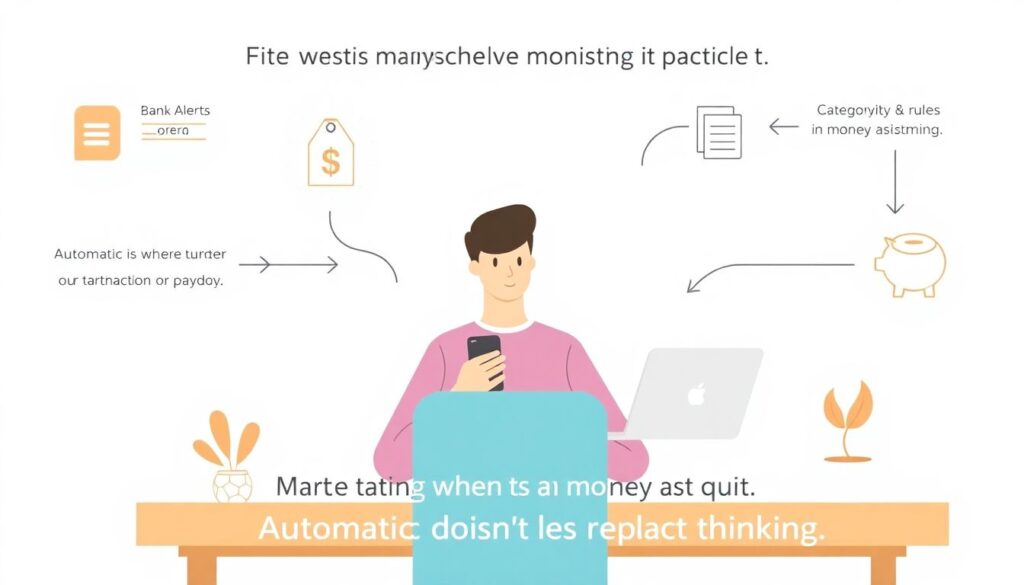
Manual tracking is where most people quit. Use tech as a money assistant:
– Turn on bank alerts for large or unusual transactions
– Set up automatic transfers to savings on payday
– Use category rules in apps so they auto-tag groceries, rent, and subscriptions
Automation doesn’t replace thinking, but it removes repetitive tasks so you can focus on decisions instead of data entry.
—
How to Start a Budget Step by Step
Rule 5: Know Your Real Income (Not the Number on Your Contract)
Before any categories, you need a clean income number. That means take‑home pay, after:
– Taxes
– Mandatory contributions
– Insurance premiums pulled from your paycheck
If your income is irregular (freelance, shift work), calculate a three- to six‑month average, then base your budget on a slightly lower “safe” number. This is the first step in how to start a budget step by step without setting yourself up to fail.
Rule 6: List Your Fixed and Variable Expenses Separately
Next, map outgoing money into two groups:
– Fixed: rent, mortgage, minimum debt payments, insurance, subscriptions
– Variable: groceries, gas, eating out, personal spending, entertainment
Start with a long, honest list — check your last 1–3 bank statements and card statements. Do not trust memory; humans are terrible at recalling small, frequent purchases.
Rule 7: Give Every Dollar a Job Before the Month Starts
Now you assign each unit of currency (dollar, euro, etc.) to a task: bills, savings, debt, fun. This is often called zero‑based budgeting. Income minus expenses (including savings and debt paydown) should equal zero on paper.
That doesn’t mean you spend everything; it means everything is allocated. If you have 50 left over, you don’t leave it as “extra” — you tell it where to go (savings, debt, upcoming expense).
—
The 12 Simple Rules (Practical Version)
Rule 8: Start Tiny With Savings and Debt Paydown
If you’re new, don’t try to be a hero on month one. Start with:
– A very small emergency buffer (even 100–300 is a win)
– Minimum debt payments plus a small extra amount on the highest‑interest debt
You’re building behavior, not showing off. Once the habit sticks and you’ve proven you can follow the plan, then you scale up your savings and extra payments.
Rule 9: Cap Your “Leak” Categories
There are always categories where money “leaks”: typically groceries, eating out, and online shopping.
Pick one or two leak categories and put hard caps on them. For example:
– Groceries: 300
– Eating out: 120
– Online shopping: 60
Track these closely for one month. You’ll immediately see whether the cap is realistic or needs adjusting. The goal is awareness plus a ceiling, not perfection.
Rule 10: Use Weekly Check‑Ins, Not Monthly Autopsies
Waiting until the end of the month is like checking your GPS after you miss three exits. Instead, do a 10–15 minute weekly money check‑in:
– Open your app or spreadsheet
– Update any missing transactions
– Compare actual vs planned in each category
– Decide on corrections: pause eating out, reduce non‑essential spending, move money between categories
This is where having a personal finance coach for beginners (even for just a few sessions) can help you create a routine and hold you accountable until the habit becomes automatic.
Rule 11: Build in Fun Money So You Don’t Rebel
If your budget has zero space for joy, your brain will sabotage it. Add a “fun” or “personal” category on purpose. It can be small — even 20–40 — but it must be guilt‑free.
The psychology is simple: if your system always says “no,” you’ll eventually ignore it completely. If it sometimes says “yes, within limits,” you’ll keep using it.
Rule 12: Adjust the Budget, Don’t Abandon It
Unexpected car repair? Medical bill? Invitation to a last‑minute trip? That doesn’t mean “budget failed.” It means “time to re‑allocate.”
When a surprise hits:
– Reduce non‑essentials (eating out, entertainment)
– Temporarily shrink your extra debt payment or savings for that month
– Move money between categories in your app or spreadsheet and note why
The key mindset: the budget is a living document. It exists to be updated as reality changes.
—
Step‑By‑Step Workflow You Can Use Each Month
Rule 13: Run a Simple Monthly Budget Cycle
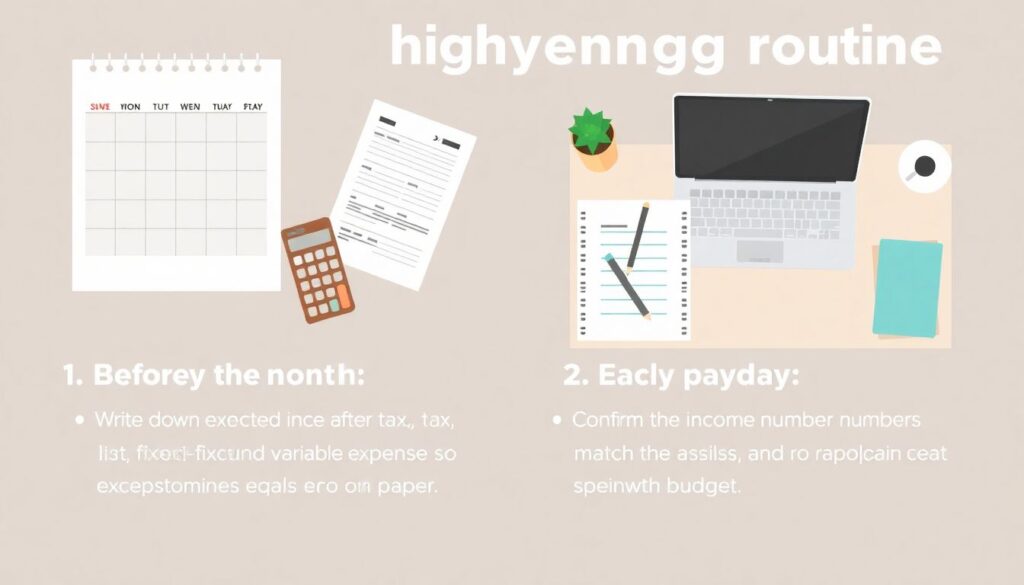
Here’s a practical monthly routine combining everything above:
1. Before the month starts
– Write down expected income (after tax)
– List fixed and variable expenses
– Assign amounts and make sure income minus expenses equals zero on paper
2. Each payday
– Confirm income number matches the plan
– Trigger or check automatic transfers and bill payments
3. Weekly
– Log into your main tool (app, sheet, notebook)
– Update transactions and category balances
– Adjust category limits if needed
4. End of month
– Compare planned vs actual
– Note 2–3 lessons (e.g., “groceries always higher than I think”)
– Apply those to next month’s plan
If you want more structure, an online budgeting for beginners course or a workshop can give you templates and walkthroughs, but this basic cycle is enough to get started and see results.
Rule 14: Use Tech as a Dashboard, Not as a Crutch
Popular apps and online budgeting tools for personal finance can:
– Pull in transactions automatically
– Create charts of where your money goes
– Send reminders before bills are due
But no tool can decide your priorities. Use them like a dashboard in a car: they show speed, fuel, and warnings — you still choose where to drive.
—
Troubleshooting: When Your Budget “Doesn’t Work”
Rule 15: Diagnose the Problem, Don’t Blame Yourself
When people say “budgeting doesn’t work for me,” usually one of these is true:
– Income was overestimated
– An expense category was underestimated (often groceries or transport)
– No buffer for irregular expenses (gifts, repairs, annual fees)
– The system was too complex, so it was abandoned
Instead of “I’m bad with money,” ask: Which assumption was wrong? Then adjust the numbers, not your self‑worth.
Rule 16: Simplify If You Keep Dropping the Habit
If you keep “forgetting” to track, your system is probably too heavy. Simplify:
– Fewer categories (e.g., combine all non‑essentials into one “flex” category)
– One weekly check‑in instead of daily tracking
– Rely more on automatic imports from apps instead of manual logging
And if you’re stuck, even a short call with a personal finance coach for beginners can help you customize a setup that fits your personality and attention span.
—
Final Thoughts: Make Your Budget Boring and Your Life Exciting
A solid budget feels boring in the best way: money in, money out, few surprises, steady progress. The excitement shows up outside the spreadsheet — less stress, more options, and the freedom to say “yes” to the things you actually care about.
Start with one tool, one month, and these 12 simple rules. Don’t chase perfection; chase consistency. Your future self will be very glad you did.