
Managing money in 2025 isn’t just about “being good with cash” anymore; it’s a basic survival skill in a world of subscriptions, fintech apps, and constant price changes. Think of this as your starter kit for basic personal finance for beginners: we’ll walk through what actually matters, how to avoid common traps, and what the next 5–10 years are likely to look like for your wallet.
Why Personal Finance Matters More Than Ever in 2025
In 2025, personal finance has turned into a kind of “life infrastructure”: you either manage it actively, or it quietly manages you. According to OECD and national statistics in the last few years, household debt in many developed countries has hovered around 90–100% of disposable income, while inflation shocks from 2021–2023 still affect rent, food, and energy prices. At the same time, digital payments and online banking are almost universal among younger adults, and financial literacy surveys repeatedly show that more than half of respondents cannot correctly answer three basic questions about interest, inflation, and diversification. That gap between easy financial tools and weak financial skills is exactly where beginners get hurt, turning small mistakes into long-term problems like persistent credit card debt or underfunded retirement.
Core Building Blocks: Cash Flow, Budget, and Emergency Fund
Before thinking about stocks, crypto, or “passive income”, you need a stable base: positive cash flow, a realistic budget, and a cash buffer. Cash flow is simply the net result of your inflows (salary, freelance, side gigs, benefits) minus outflows (rent, subscriptions, debts, lifestyle expenses). If it is negative for several months, no investment strategy will rescue you. A practical approach for beginners is to track every expense for 30 days with any simple app or even a spreadsheet, then categorize and cut obvious leakage like unused subscriptions or high-fee services. In 2025, the market for consumer finance tools is saturated, and choosing the best budgeting app for beginners usually means prioritizing three things: clear visuals, automatic sync with your bank accounts, and behavioral nudges like alerts or spending limits, rather than advanced features you will ignore.
Goal Setting and Time Horizons
Your money strategy should start with goals, not with products. Financial planners usually break goals into short-term (1–3 years), medium-term (3–7 years), and long-term (7+ years). Short-term goals include building an emergency fund of 3–6 months’ basic expenses and paying off high-interest consumer debt. Medium-term targets may be a home down payment or a career-related education program, while long-term goals are often retirement or financial independence. This structure isn’t just motivational; it directly affects asset allocation and risk tolerance. Cash or high-yield savings accounts usually fit short-term goals, while diversified portfolios of equities and bonds suit longer horizons. A good personal finance course for beginners in 2025 typically spends a lot of time on this “goals and horizons” framework before ever recommending specific investment vehicles, because product-first thinking often leads to misalignment between risk and reality.
Banking Fundamentals and the Rise of Digital Accounts
The basic financial engine room is your bank account. As neobanks and digital-first institutions scale, the competition for the best online bank account for beginners has intensified. For a novice, the key parameters are fee transparency, deposit insurance, mobile usability, and integration with budgeting tools. In most developed markets, digital accounts are pushing fees toward zero on standard operations, while monetizing extras like overdrafts, premium support, or investment add-ons. From an economic perspective, this compresses traditional banking margins, but broadens access: lower-income or previously unbanked consumers can open accounts in minutes instead of days. For individuals, the optimal move is to separate a “transaction account” for bills and everyday spending from a dedicated savings account with higher interest and no debit card attached, which reduces the temptation to treat savings as a second checking account.
Credit Cards, Credit Scores, and Risk Management
Credit can be a useful tool or a very expensive habit. In 2025, algorithms heavily influence who gets loans, at what interest rate, and with what limits. For a newcomer with no credit history, a typical entry point is secured or student-oriented credit cards for beginners with no credit, where you provide a cash deposit or prove enrollment, and the issuer reports your responsible usage to credit bureaus. The key behavioral rule: treat a credit card as a payment instrument, not as extra income. Paying the full statement balance every month avoids interest and builds a positive credit score, which later reduces the cost of mortgages, car loans, or even some insurance products. On the macro side, large-scale use of revolving credit at high interest rates acts as a drag on consumption and increases systemic vulnerability during downturns, which is why regulators have been tightening disclosure rules and stress-testing consumer loan portfolios.
Getting Started With Investing on a Small Budget
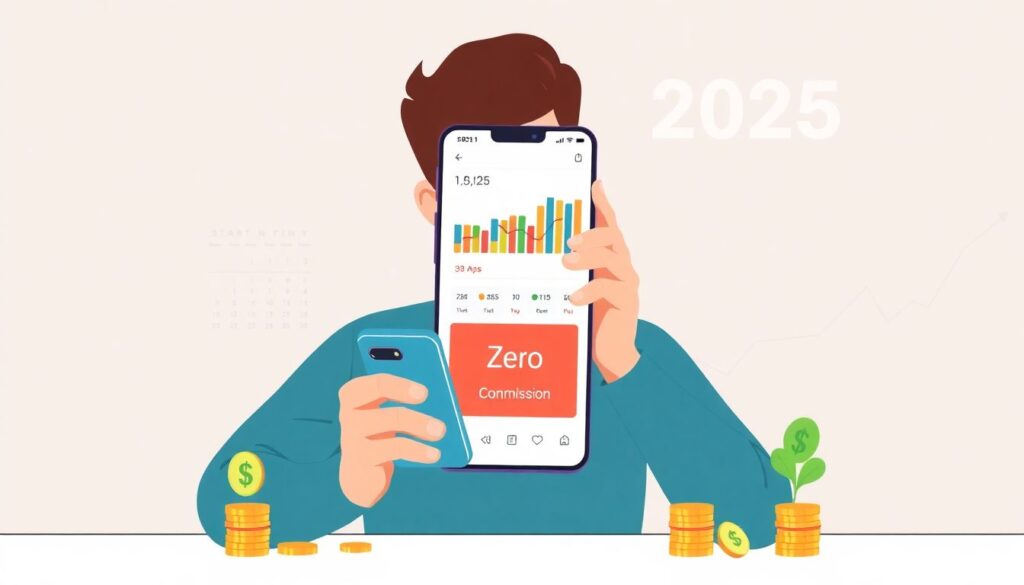
Many beginners think investing is only for people with thousands of dollars lying around. In reality, how to start investing with little money has become one of the most-searched finance questions since trading apps introduced fractional shares and zero-commission trades. In 2025 you can open a brokerage account with minimal or no initial deposit and buy fractions of diversified index funds tracking the global equity market or specific regions. A pragmatic approach is: automate a fixed monthly contribution (even $25–$50), choose low-cost index ETFs, and leave day-trading and complex derivatives alone. Statistically, broad-market index investing has outperformed most active traders over long horizons, especially after fees and taxes. As robo-advisors grow and use more AI-based asset allocation, the industry is moving further toward low-cost, automated, diversified portfolios for beginners, reducing the knowledge barrier but not eliminating the need to understand risk and volatility.
Simple Priority Framework for Beginners
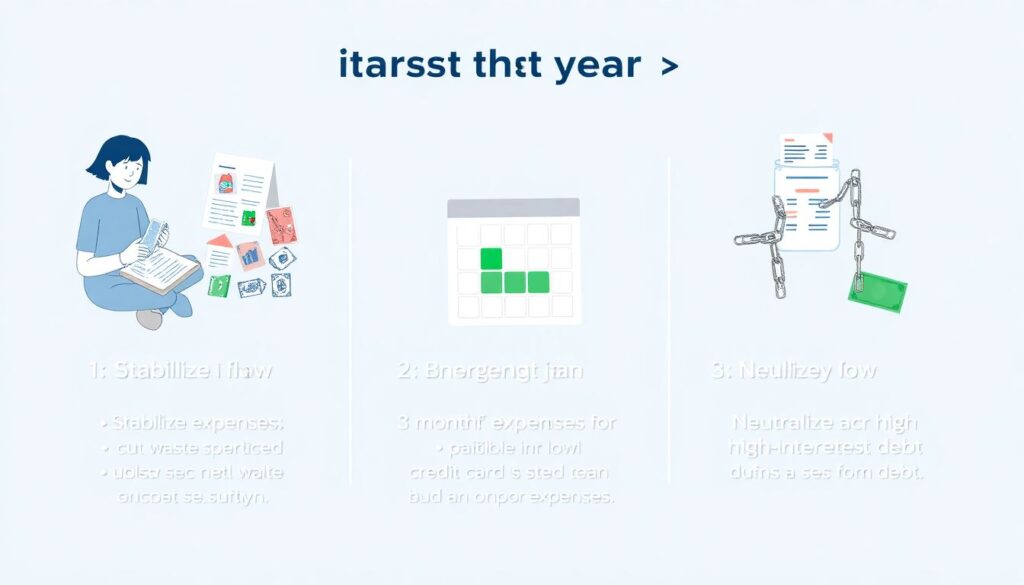
To avoid paralysis, you can structure your first year of financial clean-up and growth in a very concrete way.
1. Stabilize cash flow: track expenses, cut waste, and ensure monthly surplus.
2. Build an emergency fund: at least one month of expenses to start, then grow to three.
3. Neutralize high-interest debt: aggressively pay anything above roughly 15–20% APR.
4. Formalize your goals: write down targets with amounts and deadlines.
5. Automate savings and investing: use automatic transfers on payday.
This ordered framework might sound basic, but in behavioral finance terms it leverages “default effects”: by making good decisions automatic (automatic transfers, standing orders, autopay on full card balances), you reduce reliance on willpower and avoid decision fatigue. That is the same principle many digital banks and apps use to increase user retention and improve outcomes, which in aggregate affects savings rates and capital formation in the wider economy.
Industry and Economic Impact of Beginner-Friendly Finance Tools
The rapid growth of beginner-friendly financial products has measurable macro effects. Globally, assets under management in robo-advisory services have been growing at double-digit annual rates and are projected to exceed several trillion dollars by the early 2030s. This channel funnels small recurring contributions from millions of novice investors directly into capital markets. As a result, market participation rates among younger cohorts are rising, which broadens the shareholder base and can moderate wealth inequality over time—assuming fees remain low and portfolios are diversified. Simultaneously, legacy banks and brokers have had to cut fees and redesign interfaces, shifting from commission-based models to subscription or asset-based pricing. From an industry standpoint, the “beginner segment” is no longer a low-value afterthought; it is a strategic pipeline, and companies invest heavily in education content, embedded analytics, and user-friendly onboarding flows.
Statistics and Trends Shaping Personal Finance to 2030
Several empirical trends are likely to shape beginner finance for the rest of the decade. Surveys from 2023–2024 showed that over 60% of Gen Z and younger millennials used at least one financial app monthly, and digital wallet usage has continued to expand in 2025. At the same time, the retirement funding gap—what people will need versus what they are on track to have—remains substantial in most developed economies, driven by longer life expectancy and under-saving. Forecasts by global institutions suggest that, without higher contribution rates or later retirement ages, public systems will face mounting pressure by 2035–2040. This structural challenge is pushing policymakers to emphasize financial literacy in schools and to incentivize auto-enrollment in retirement plans. For beginners today, this means two things: starting earlier is more critical than in previous generations, and relying solely on state pensions or employer plans is increasingly risky.
Forecast: What Personal Finance for Beginners Will Look Like by 2030
Looking ahead from 2025, several directions are fairly clear. First, personalization: AI-driven advisors will deliver near-instant, low-cost recommendations adjusted for your income, risk profile, and behavior patterns, reducing entry barriers that previously justified hiring human planners. Second, regulation: as more novices enter markets via gamified apps, expect stricter rules on disclosure, leverage, and risk warnings to curb speculative excesses. Third, embedded finance: financial features will be built directly into non-financial platforms—social networks, e-commerce, productivity tools—making the line between “financial app” and “everyday app” increasingly blurry. By 2030, a typical “beginner journey” may involve automatically opening a micro-investment account with the same provider as your salary, receiving dynamic saving suggestions based on real-time spending, and being nudged into long-term assets whenever surplus cash accumulates. Economically, if adoption is broad and fees stay low, this could raise aggregate savings rates, deepen capital markets, and create a more resilient middle class, though it also concentrates significant power in large fintech ecosystems.
Learning Path and Education Options for Starters
Finally, education remains the leverage point with the highest long-term payoff. While content is everywhere, a structured personal finance course for beginners can accelerate your progress by packaging core topics—budgeting, debt, investing, taxes, and risk management—into a coherent sequence. In 2025, many courses blend video modules, interactive calculators, and simple simulations to show compounding, inflation, and portfolio volatility. The key is to prioritize sources that are product-neutral, disclose conflicts of interest, and base recommendations on evidence rather than hype. Combined with a solid app for tracking and a low-cost brokerage account, a few weeks of systematic learning can replace years of trial and error. Over time, mass adoption of even moderate financial literacy can influence macro outcomes: households become less vulnerable to shocks, demand for predatory products weakens, and capital flows more efficiently to productive investment instead of servicing excessive consumer debt.
If you start now with a clear budget, a small but consistent saving rate, and basic diversified investing, you are not “late to the game”. In the context of the economic and technological shifts of the 2020s, you are exactly on time—and the habits you build in the next 12–24 months will intersect with industry and policy trends that are increasingly designed to support beginners rather than exploit them.