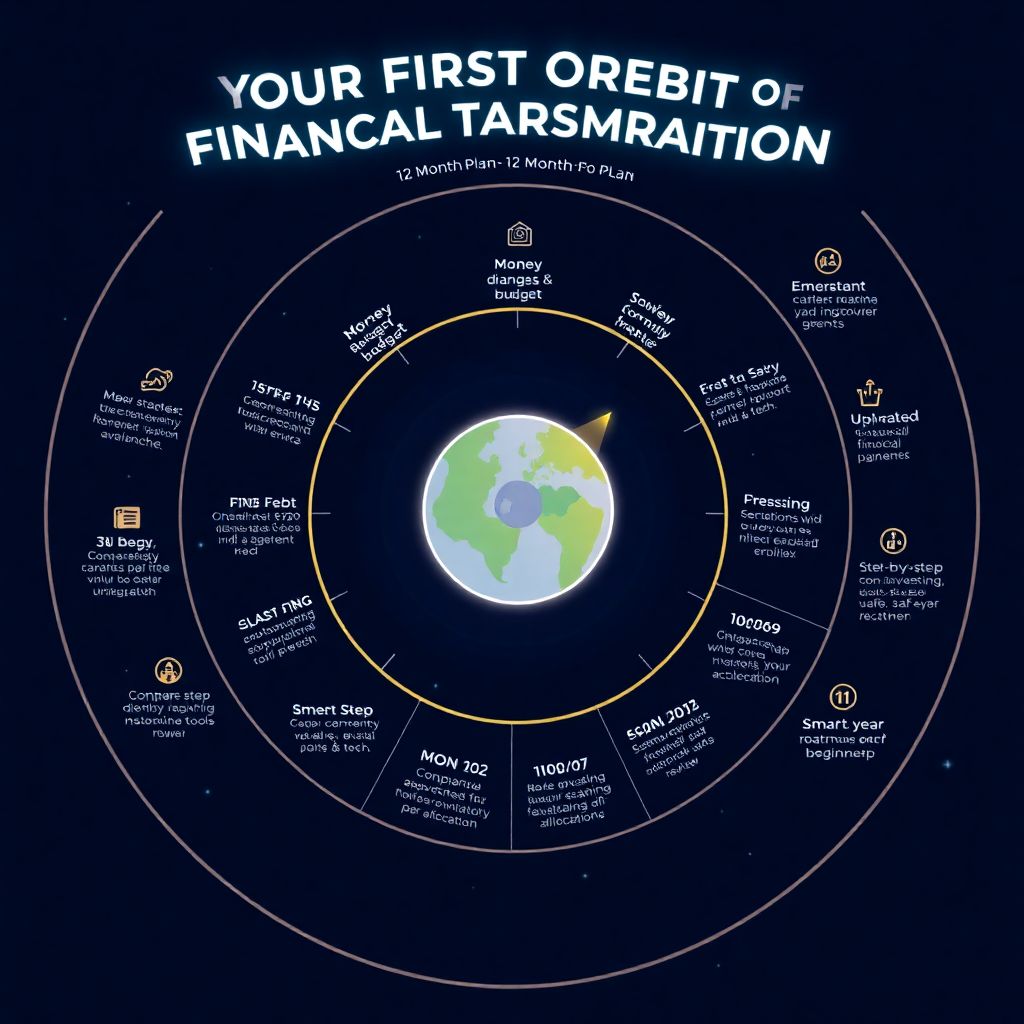
Your First Year of Financial Transformation: Why NoobAstro Readers Need a 12‑Month Plan
If you’ve ever told yourself “I’ll sort out my money later” and then watched another year disappear, this 12‑month plan is your reset button. Think of it as a structured journey—almost like a guided map through your first orbit of serious money management. The idea behind a financial freedom 12 month plan is not to turn you into a Wall Street pro, but to build solid habits, fix expensive mistakes, and set up systems that quietly work in the background. No cliff dives, no magic tricks—just realistic, stacked steps that make your financial life less chaotic and more predictable, even if you’re starting from zero (or from debt).
—
Different Approaches to Your First Year: Slow, Aggressive, and Hybrid
Approach 1: Slow and Steady Habit Builder
One popular route is the slow‑and‑steady approach: you change one core money habit every month, without trying to do everything at once. For NoobAstro readers who already feel overwhelmed by work, studies, or side projects, this method reduces resistance. Instead of revamping your entire life overnight, you commit to smaller, sustainable wins—like tracking every expense for 30 days, or automating a tiny investment. The downside? Progress feels less dramatic. You won’t double your net worth overnight, but you’ll avoid burnout and decision fatigue, which experts say is what usually kills most money makeovers by month three.
Approach 2: Aggressive “Bootcamp” Transformation
The opposite strategy is a financial bootcamp: you attack multiple fronts at once—cutting expenses, increasing income, consolidating debt, and investing aggressively. This approach can work if you have urgent goals (like escaping toxic debt) or a big motivation spike. Some coaches recommend it for people who respond well to challenges and deadlines. But there’s a real risk: you might over‑restrict your lifestyle, lose social balance, and end up snapping back to old habits. Financial psychologists often warn that extreme deprivation tends to trigger “revenge spending” later, especially if there’s no emotional buffer or flexibility built into the plan.
Approach 3: Hybrid, with Quarterly “Power Sprints”
For most beginners, a hybrid model makes more sense: steady habit building with short, focused “sprints” every quarter. You use three months to stabilize your budget, then one intense month to renegotiate bills, raise your income, or clean up old accounts. This creates a cycle of routine plus momentum. Expert planners like this because it mirrors how real life works: seasons of focus, followed by periods of maintenance. It’s also easier to track progress because each sprint has clear before/after metrics, such as reduced interest payments or increased savings rate.
—
Month 1–3: Foundations — Budget, Cash Flow, and Safety Net
Month 1: Money Diagnosis and Reality Check
Your first month is about pure awareness. You’re not trying to “win” yet—you’re just collecting data. Track every cent that comes in and out, manually or with an app. Analyze your bank statements for the last three months. Sort spending into real categories, not vague ones like “stuff.” Ask yourself: What’s actually important? Where do I mindlessly leak money? Many experts say this diagnostic month often provides the biggest psychological breakthrough because it replaces vague guilt with specific numbers you can work with. Without this clarity, any further optimization is just guesswork.
Month 2: Building a Simple Beginner Budget

Once you see where your money goes, you can design a realistic beginner budget, not a fantasy “I’ll never go out again” budget. Here’s where technology helps. Many coaches suggest trying the best budgeting apps for beginners rather than using static spreadsheets. Apps can categorize transactions automatically, send alerts, and sync with your accounts. The trade‑off is privacy: you’re giving a third‑party access to your financial data. If that bothers you, use offline tools or a read‑only connection. The key is consistency, not perfection. Create a basic structure: fixed expenses, true needs, fun money, and a line for saving—even if it’s tiny at first.
Month 3: Emergency Fund Lite
By month three, your first major goal is to build what I’ll call “Emergency Fund Lite” — usually one month of basic living expenses in a separate savings account. Experts differ here: some say immediately aim for three to six months; others prefer a smaller buffer so you can start investing earlier. A balanced view: secure one month fast, then expand over time. This fund is not for concert tickets or last‑minute trips; it’s for losing your job, medical surprises, or urgent repairs. Without it, every crisis pushes you into high‑interest debt, which shreds long‑term progress.
—
Month 4–6: Debt Cleanup and Your First Investments
Month 4: Choosing a Debt Strategy (Snowball vs Avalanche)
If you have debt, the next quarter is about taming it. Two main strategies dominate expert conversations:
– Snowball: Pay off the smallest balances first for quick wins and psychological momentum.
– Avalanche: Focus on the highest interest rate debt first to mathematically minimize total interest paid.
Behavioral economists often favor the snowball method for beginners because seeing accounts hit zero feels powerful and keeps you engaged. Pure math favors avalanche. A practical compromise: start with snowball to get a few emotional wins, then switch to avalanche once your discipline is stronger.
Month 5: Automating Payments and Avoiding Tech Pitfalls
This month, you turn your plan into systems. Automate minimum payments for all debts to avoid late fees, and add extra payments to your current target debt. Use banking tools and reminders so you don’t rely on memory. Technology’s biggest plus is reducing errors and procrastination; its main minus is over‑complication. Too many apps, dashboards, and “hacks” will paralyze you. Experts recommend limiting yourself to one main banking app and one supporting tool for tracking, instead of juggling five different platforms that you’ll stop opening after a week.
Month 6: how to start investing for beginners Without Freaking Out
You’ve stabilized your basics; now you touch investments—carefully. This is where panic usually appears: “What if I lose everything?” To calm that, start by defining your time horizons. Money needed in the next three years should stay safe (savings, short‑term deposits). Longer‑term money is what you invest. The simplest, expert‑endorsed starting point is diversified, low‑cost index funds or ETFs rather than chasing “hot tips.” When you ask how to start investing for beginners, most serious planners will tell you: automate small monthly contributions, ignore the noise, and focus on fees and asset allocation instead of daily price moves.
—
Month 7–9: Skills, Tools, and Education
Month 7: Upgrading Your Earning Power
By mid‑year, you’ve likely squeezed a lot out of your spending. The next lever is income. That might be negotiating a raise, improving your skills, or testing side gigs that match your energy and schedule. This is where structured learning helps. A beginner personal finance course online that covers money mindset, budgeting, debt, and basic investing can compress years of trial‑and‑error into weeks. Just be selective; avoid courses that promise overnight riches, and prioritize those that show real frameworks, not just motivational speeches. Increasing your earning power is the engine that makes later goals—like investing more and retiring earlier—actually feasible.
Month 8: Comparing Tools and Technologies
Not all financial tech is equally useful, and each category has its pros and cons:
– Budgeting apps: Great for visibility, but can nudge you to oversubscribe to paid features.
– Robo‑advisors: Excellent for beginners who want automated investing, but they charge a small management fee that you’d avoid with DIY.
– Neobanks and digital wallets: Fast, intuitive interfaces, yet sometimes weaker on customer support and regulatory protections than traditional banks.
Experts often advise starting simple: one app to track, one platform to invest, one main account for cash flow. Every extra tool increases friction and confusion. If a tool doesn’t clearly save you time, cut mistakes, or reduce emotional stress, it’s probably not worth your attention.
Month 9: step by step financial planning for young adults
By month nine, you’re ready for a more structured, step by step financial planning for young adults framework. This usually includes: defining your short‑term (1–3 years), medium‑term (3–7 years), and long‑term (7+ years) goals; aligning savings and investments with each horizon; and checking your insurance coverage so a single event doesn’t wipe you out. Estate planning might sound far off, but even a basic beneficiary update on your key accounts and a simple will can prevent chaos for your family later. Expert planners stress that real financial planning is ongoing: you review, adjust, and adapt to each new life event instead of setting a plan once and forgetting it.
—
Month 10–12: Long‑Term Strategy, Trends, and Fine‑Tuning
Month 10: Reviewing Wins, Losses, and Emotional Triggers
In the final quarter of your first year, you shift into review mode. Look back at your starting point: savings, debts, income, and your general stress level around money. What worked easily? Where did you resist? Experts pay close attention not just to numbers but to emotional triggers: do you overspend when you’re tired, sad, or celebrating? Do you avoid checking your accounts after a bad week? Identifying these patterns lets you design guardrails—like low spending limits on certain categories, or a 24‑hour pause before big purchases. Your money system should protect you from your worst days, not depend on your best mood.
Month 11: Aligning with 2025 Trends Without Chasing Hype
Financial trends in 2025 include more AI‑driven budgeting, micro‑investing platforms that let you invest spare change, and stronger regulation around digital assets. There’s growing interest in sustainable and thematic investing as well. The smart move is to treat these as optional tools, not necessities. AI can help categorize your transactions or suggest budget tweaks, but you still need to understand the basics. Micro‑investing is great for forming habits, but fees must be checked carefully. With crypto and other speculative assets, serious experts repeat the same message: never invest money you can’t afford to lose, and don’t let hype distract you from boring, diversified core holdings.
Month 12: Designing Your Second‑Year Roadmap
By the end of twelve months, you’ve built a base: clearer awareness, a functioning budget, some safety savings, reduced or better‑managed debt, and your first steps into investing. Now, instead of asking “What’s next?” in a vague way, you design your second‑year roadmap. Decide your focus: ramping up investments, saving for a specific goal (like a move, education, or a business), or accelerating debt payoff. Keep what worked—automations, apps, routines—and drop what felt like noise. Expert planners recommend at least one formal “money day” each quarter where you sit down, review numbers, and adjust. Think of it as your financial checkup, just like you would with your health.
—
How to Choose Your Personal 12‑Month Path
Comparing Approaches and Matching Them to Your Personality
Choosing between slow, aggressive, or hybrid really comes down to your temperament and current life load. If your schedule is already packed and your willpower runs out by evening, a gentle, habit‑focused route is usually more realistic. If you love challenges and have a powerful “why” (such as escaping debt or supporting family), a few intense sprints can be transformative. Psychologists who study behavior change repeatedly show that aligning the strategy with your identity and daily reality almost always beats copying someone else’s “perfect” system from social media.
Pros and Cons of Relying on Tech in Your Plan
Financial technology can be your biggest ally or your favorite distraction. The advantages are clear: automation reduces late payments and missed investing opportunities; visualization tools make your progress feel tangible; and digital platforms allow you to start with tiny amounts of money. But the downsides matter too: subscription creep from paid apps, data security concerns, and the temptation to constantly “tweak” instead of sticking with a simple plan. Experts usually advise conducting a “tool audit” once or twice a year—cancel what you don’t really use, consolidate overlapping apps, and remember that the best system is the one you’ll consistently follow, not the most feature‑rich one.
—
Practical Expert‑Backed Tips for NoobAstro Readers
Core Recommendations You Can Implement This Week
– Set up a separate savings account today and move a small fixed amount there every payday, no matter how symbolic it feels.
– Choose one budgeting method (app or notebook) and stick with it for at least 60 days before judging whether it “works.”
– Automate at least one positive action: bill payment, debt overpayment, or investment contribution, so progress happens even on your laziest days.
What Seasoned Planners Want Beginners to Stop Doing
– Stop waiting for the “perfect moment” to start; it never arrives, and tiny imperfect steps beat permanent planning.
– Stop consuming endless financial content without executing one concrete action from it.
– Stop comparing your timeline to influencers; most only show the highlight reel, not the years of boring discipline behind it.
—
Bringing It All Together: Your First Orbit of Financial Transformation
Your first year of financial transformation isn’t about becoming rich overnight; it’s about proving to yourself that you can consistently make better money decisions with the tools and information you already have. A structured financial freedom 12 month plan gives you checkpoints instead of vague wishes, and each month builds on the last: awareness, stability, safety, debt control, investing, education, and long‑term planning. Combine the clarity of a roadmap with the flexibility to adjust when life throws a curveball, and by this time next year, your finances—and your confidence—will look meaningfully different, even if your income hasn’t exploded yet. The hardest step is the first one, but the most powerful step is the one you repeat.
Комментарии