
Historical context: from single target saving to portfolio thinking

For most of the 20th century, people usually saved “for one big thing”: a home, retirement, or a rainy‑day fund. Bank products were simple, and salaries often followed a predictable trajectory, so parallel goals rarely came up в everyday conversations. With the rise of consumer credit, index investing and flexible careers, households started behaving more like small financial firms, juggling parallel objectives and risk levels. Fintech accelerated this shift: instead of one passbook account, you now see mobile dashboards with travel, wedding, and emergency buckets. This “multi‑goal” mindset borrows concepts from portfolio theory: you match cash flows, time horizons and risk tolerance, rather than treating savings as one undifferentiated pile of money.
Today, even beginners are nudged toward segmentation: apps ask you to name goals, set deadlines and assign contributions, effectively turning your budget into a strategy map. That creates both opportunities and confusion. On one side, clearer goals improve motivation and make trade‑offs explicit. On the other, cognitive overload appears: should you clear debt or invest, fund retirement or a down payment, build an emergency cushion or upgrade skills? The modern challenge is not access to products, but designing a coherent framework for decisions. Knowing this context helps you see that saving for multiple goals at once is not a personal quirk; it is a rational response to a more complex financial environment and product landscape.
Core principles of prioritizing several goals
At the heart of smart prioritizing is sequencing by risk, not emotion. A practical way to think about how to prioritize financial goals savings plan is to classify goals along three axes: time horizon, impact on financial stability, and flexibility. Short‑term, high‑impact and low‑flexibility targets (like rent, medical expenses, or basic emergency fund) sit at the top. Long‑term but critical goals such as retirement come next, because the cost of delay compounds. Only after these anchors are funded do lifestyle or “nice to have” objectives, like luxury travel, step into the frame. This is less about self‑denial and more about preventing one neglected risk from undermining every other plan you have.
To make the logic tangible, you can structure priorities as a simple pipeline:
1. Stabilize: build a starter emergency fund and stay current on all minimum debt payments.
2. Secure: increase the buffer, reduce expensive debt, and begin long‑term investing.
3. Optimize: fine‑tune contributions to individual goals, from home purchase to education or sabbatical.
Under the hood, you’re applying concepts like liquidity management (can I access this money fast?), risk mitigation (what can ruin my plan?) and time diversification (which goals benefit most from compounding?). The order is dynamic; a new child, job loss or relocation can shift a goal up or down the queue, so revisiting the pipeline at least annually is essential.
Digital tools and accounts for multi‑goal saving
Modern infrastructure makes multi‑goal saving far easier than manual envelopes ever did. Many banks and fintechs offer subaccounts or virtual “pots,” and some of the best budgeting apps for multiple savings goals let you tag each transaction by purpose, forecast balances and simulate trade‑offs if you tweak contributions. Underneath the friendly interface, these tools run straightforward allocation algorithms: they split each incoming paycheck across targets using either fixed percentages or rules like “fund emergency first, then divide the remainder.” For a beginner, the main benefit is automation that reduces reliance on willpower and avoids the classic “I’ll transfer what’s left at month‑end” trap.
In addition, you can align account types with goal horizons. For instance, high-yield savings accounts for short term goals like a car repair fund or moving costs provide capital preservation plus modest interest, while brokerage accounts or tax‑advantaged retirement plans house long‑term, growth‑oriented assets. Some platforms bundle automatic savings tools for multiple goals directly into their apps: every card payment can round up, funneling spare change into different buckets by rule. The technical term here is “programmable cash flow segmentation,” but in practice it simply means writing the instructions once so money reliably goes where you said it should, without extra decisions every week.
Real‑world cases: how people balance competing targets
Consider Anna, 29, a UX designer juggling credit card debt, a future master’s degree, and a desire to travel. Initially she paid whatever she could to her card, then sporadically saved for trips, leaving no buffer. A layoff exposed the flaw: she had to use the same card to survive. Working with a financial advisor for creating personal savings plan, she re‑ordered priorities. First, she built a one‑month emergency fund in a high‑yield account. Second, she set an aggressive but realistic repayment schedule on her highest‑interest card. Third, she created a small, fixed travel bucket. The advisor modeled cash flows, showing that skipping all leisure led to burnout and subsequent overspending, whereas a controlled allocation kept her adherent to the plan.
Another case: Sergei and Maya, a couple in their mid‑30s, wanted to buy an apartment, fund kindergarten costs, and start investing for retirement. They used a budgeting app that allowed separate “goals” within one interface. Their initial instinct was to pour everything into the down payment and postpone retirement contributions. After running scenarios, they saw that even modest early retirement investing dramatically changed their projected net worth at 65, thanks to compounding. They compromised: 60% of surplus cash went to the housing fund, 25% to tax‑advantaged retirement accounts, and 15% to a short‑term education buffer. The key lesson was that “multi‑threaded” saving doesn’t mean every goal gets equal weight; it means every critical goal gets a deliberate, non‑zero share of each paycheck.
Step‑by‑step implementation for beginners

When you’re starting from scratch, the sheer number of choices can be paralyzing, so a lean, structured process helps. Begin by inventorying all current obligations and aspirations: note the target amount, rough deadline and what happens if you miss it. Translate vagueness (“I want to feel secure”) into metrics (“three months of essential expenses in cash”). Next, map income and fixed costs to see your true monthly “free cash flow.” Only after this diagnostic step should you define allocation percentages. Here, many beginners overestimate how much they can redirect; a conservative starting point, such as 10–15% of net income split across goals, is usually more sustainable than an ambitious but fragile plan.
Then, you embed the plan into your banking infrastructure. Set up dedicated subaccounts or labeled goals, and create automatic transfers aligned with each payday. Where possible, route employer income directly into the allocation scheme so money never sits unassigned in a general checking account. Periodically, say each quarter, review progress: adjust contributions if a goal is ahead of schedule, or if new information arrives (a promotion, medical diagnosis, or policy change). From a systems perspective, you’re implementing a feedback loop: plan, execute, measure, and tweak. Over time, the mechanics become routine, and your cognitive load shifts from “remembering to save” to higher‑level questions like whether your goal mix still matches your life trajectory.
Frequent misconceptions and how to avoid them
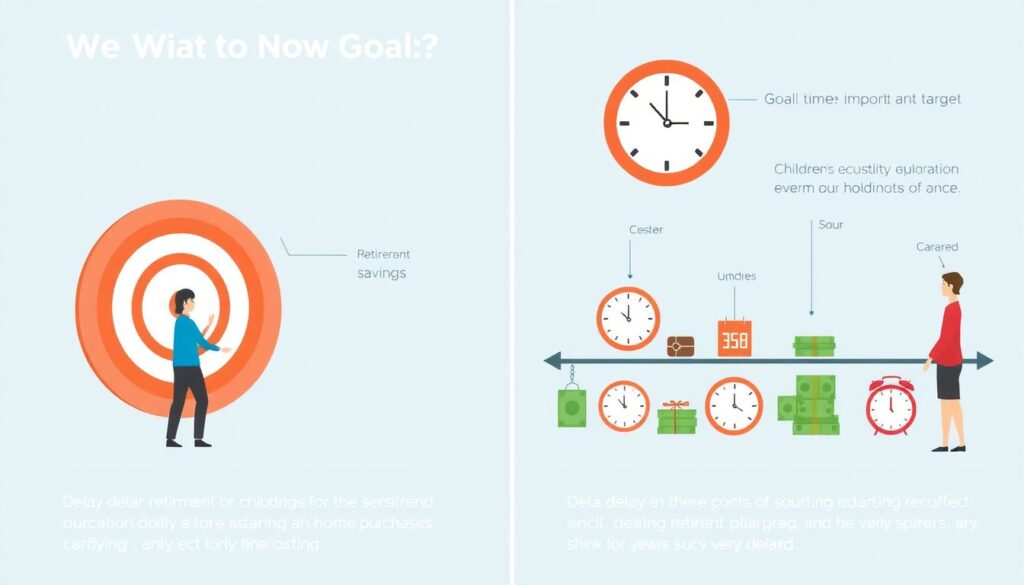
One widespread misconception is that focusing on multiple objectives automatically dilutes results, so it’s “better to finish one goal, then start the next.” In reality, certain goals, such as retirement or children’s education, are extremely time‑sensitive: delaying them by five or ten years costs far more than a temporary reduction in contributions to, say, a home fund. Think of your goals as different asset‑liability streams running in parallel; some lose economic efficiency if started late. Another myth is that you need high income before bothering with goal segmentation, when the opposite is often true: constrained budgets benefit most from precise allocation because there’s less margin for error. Even a small paycheck can be structured intelligently.
Beginners also tend to overtrust tools and underuse judgment. The best budgeting apps for multiple savings goals, or any attractive interface, can create an illusion of control while underlying assumptions remain unrealistic: growth rates too high, expenses understated, or risk tolerance miscalibrated. Another trap is assuming that once automated rules are set, they never require revision. In practice, inflation, interest‑rate shifts, and life events constantly change your optimal allocation. Finally, many people delay seeking human input, assuming that a financial advisor is only for the wealthy. In fact, a short consultation focused on multi‑goal design can correct structural errors early, preventing years of inefficient saving patterns. The smart approach is to pair good tools with periodic expert review and your own evolving understanding.