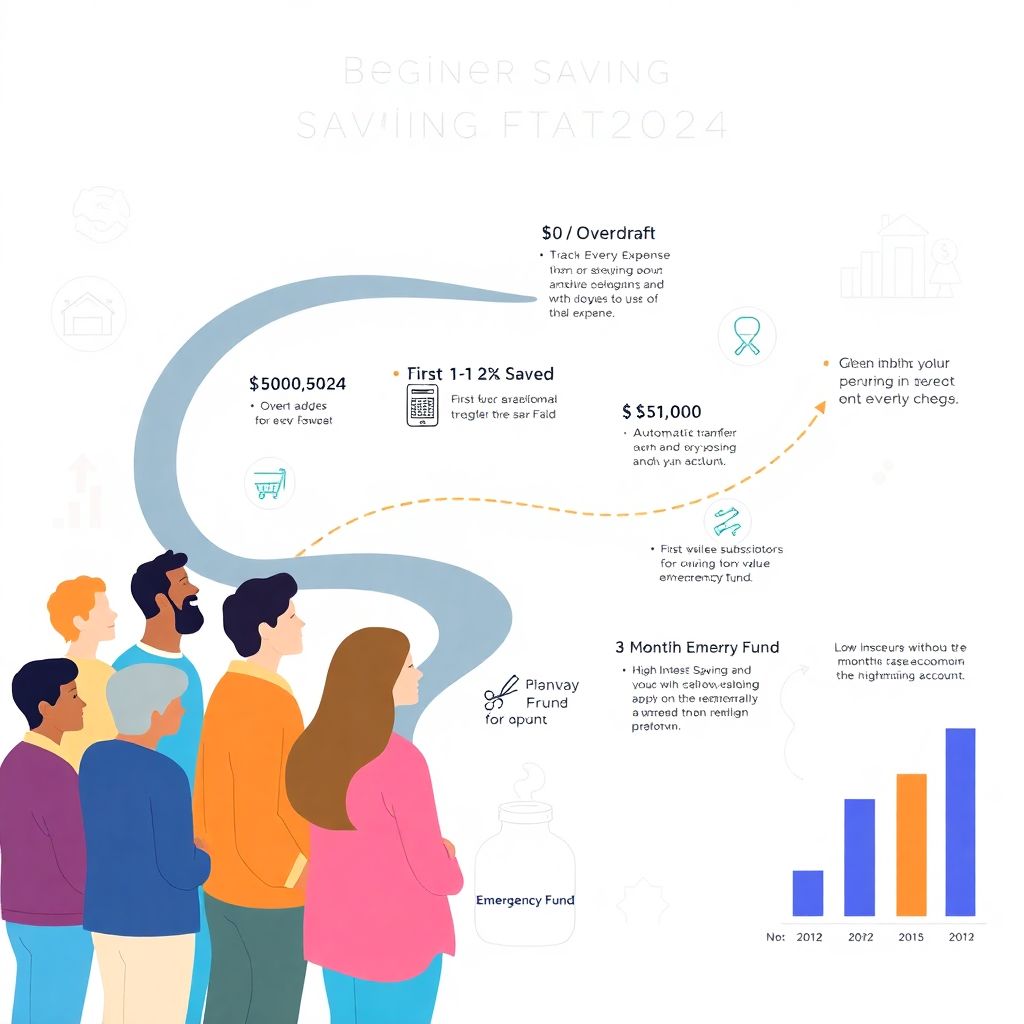
Why a Saving Roadmap Matters More Than Ever
Over the last three years the numbers have been quietly shouting a warning. In the US, the personal saving rate hovered around 4–5% in 2022, slipped closer to 3–4% through 2023 and stayed in roughly the same low range in 2024, according to Federal Reserve data. At the same time, surveys from organizations like the OECD and national statistics offices show that roughly a third of households in advanced economies still lack even one month of emergency savings. Combine that with persistent inflation since 2022, and every unplanned bill cuts deeper into monthly budgets. A clear beginner’s roadmap to saving is no longer a “nice to have”; it is a basic survival tool that shields you from debt spirals and gives you room to maneuver when prices or jobs suddenly shift.
How to Start Saving Money from Scratch When You Feel Stuck
When you are starting from zero, or even from overdraft, the process looks intimidating, but the mechanics are straightforward. First you need to see, in detail, where your money actually goes. Over one month, track every expense, from rent to late‑night food delivery, using a banking app or a simple spreadsheet. In 2022–2024, digital banks reported sharp growth in budgeting‑app usage, precisely because people felt squeezed and wanted clarity. Once you see the leaks, you can redirect even a small amount — say 1–2% of your income — into a separate savings space. The point in the first three months is not to become frugal overnight, but to build proof that you can consistently keep a little aside without wrecking your lifestyle, and then gradually raise that percentage as income or discipline improves.
Mapping Cash Flow: The Foundation of Every Plan
Think of your cash flow as a map: income streams are roads in, expenses are exits out. From 2022 to 2024, central banks repeatedly highlighted that households with a written budget were less likely to fall behind on payments when interest rates climbed. Use that to your advantage. List fixed costs such as housing, transport and debt payments, then flexible costs like food, entertainment and shopping. The goal is to squeeze a surplus by trimming only the weakest‑value items, the things you barely enjoy but pay for out of habit. That surplus becomes your starter contribution to savings. Even if at first it is just the cost of two coffees a week, setting up an automatic transfer on payday locks in the habit so you do not rely on willpower at the end of the month, when money and attention are already stretched.
From First $500 to a Real Emergency Fund
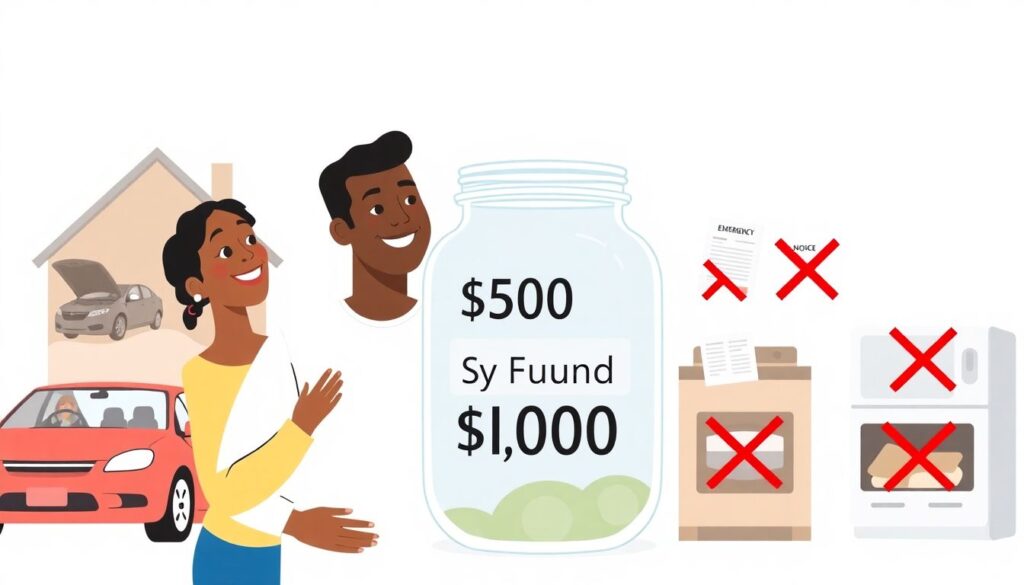
Your initial milestone is modest but powerful: build the first $500 to $1,000 as fast as reasonable. During 2022–2024, consumer‑finance studies repeatedly showed that households with even $1,000 set aside were far less likely to use high‑interest credit cards for car repairs, medical bills or appliance failures. Once that buffer is in place, you can expand toward a three‑month emergency fund. Increase your savings percentage each time your income rises or a recurring bill ends, so progress feels connected to positive events instead of constant sacrifice. Along the way, celebrate thresholds — your first $100, first $1,000, first month of expenses saved — because these concrete markers keep motivation alive when the broader goal still looks distant. Over time, the habit matters more than any single contribution you make.
Picking the Right Accounts: Let the System Work for You
The tools you choose can speed up or slow down your results, so choose carefully. The best savings accounts for beginners share a few traits: no monthly fees, simple online access and a decent interest rate with no complicated hoops. With interest rates elevated through much of 2022–2024, banks and fintechs started competing harder for deposits, which actually benefits new savers. Looking for a high interest savings account for new savers makes sense because compound interest turns passive money into an extra income stream. However, do not chase every promotional teaser rate. Focus on accounts from regulated institutions, check how often rates adjust, and avoid locking all your funds into long‑term products that punish early withdrawals. Liquidity and simplicity are worth more than a tiny extra yield when you are just building up your first layers of security.
A Saving Money Plan for Beginners Step by Step
A practical saving roadmap should feel like a series of small, doable moves rather than a strict financial diet. Start with one month of careful tracking, then automate a small transfer to savings on payday, then grow that transfer every quarter. Those are the bones of any saving money plan for beginners step by step. Layer on a few targeted tactics: channel windfalls like tax refunds or bonuses straight into savings, cap “impulse” categories such as takeout or random online purchases, and review your recurring subscriptions twice a year. These are classic beginner personal finance tips for saving money, but in the 2022–2024 squeeze they turned out to be the difference between sliding into credit‑card debt and staying stable for millions of households, especially younger workers facing higher rents and student‑loan payments.
Economic Context, Forecasts and Why Your Savings Matter to the Bigger Picture
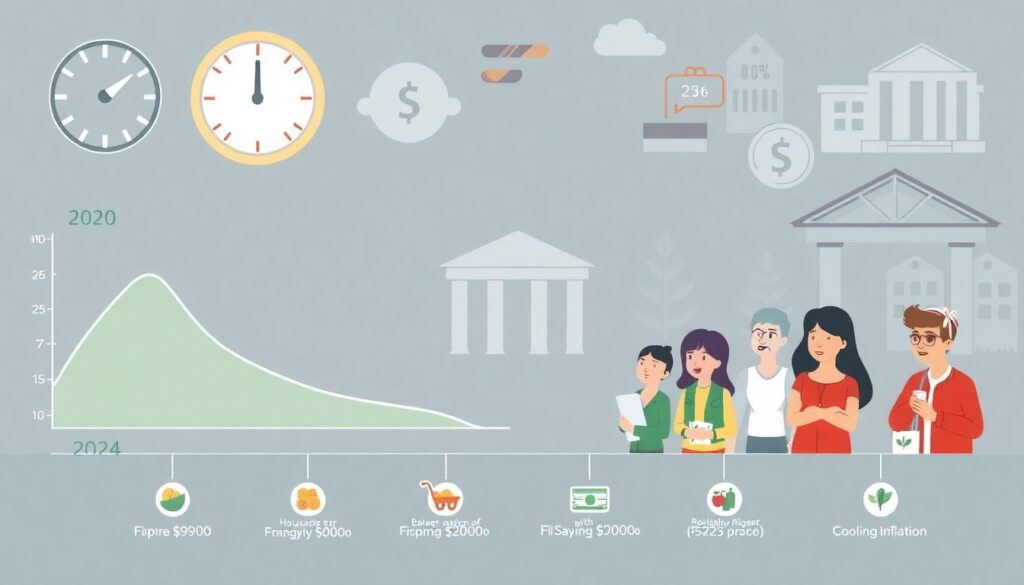
Your personal savings choices sit inside a wider economic story. After the pandemic spike in saving in 2020, rates drifted down sharply, and from 2022 to 2024 many countries saw households draw down their buffers just to keep up with higher prices. Analysts expect that if inflation continues to cool and wages grow modestly, saving rates could slowly rise again through 2025–2027, but only if people rebuild habits, not just wait for “better times.” Higher overall household savings can stabilize economies: they cushion recessions, reduce defaults and give banks a steadier base of deposits. That is why the industry keeps rolling out new savings apps, round‑up tools and goal‑based accounts aimed at first‑time savers. As you follow your beginner’s roadmap to saving, you are not only protecting yourself; you are quietly contributing to a more resilient financial system that is less fragile in the face of the next shock.