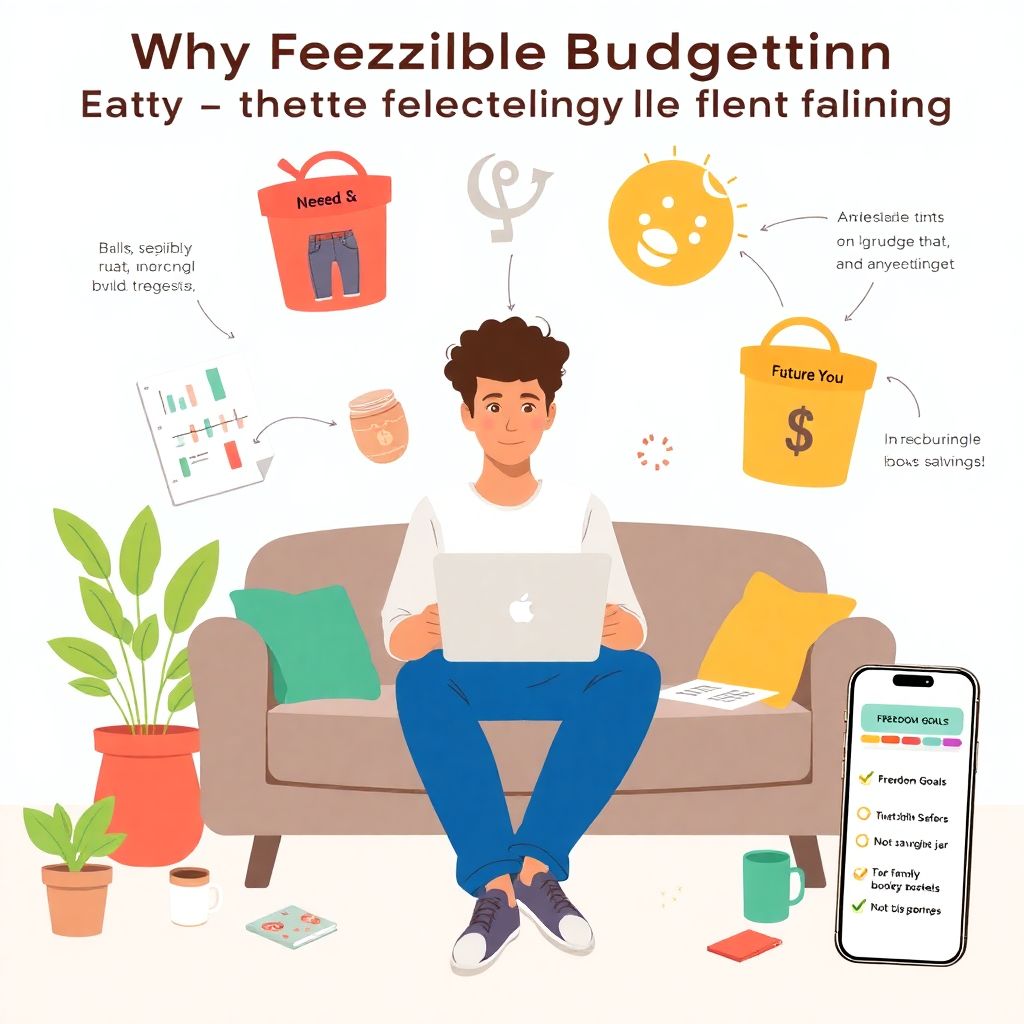
Why “Flexible Budgeting” Beats “Being Good with Money”
If the word “budget” makes you think of saying no to everything fun, you’ve probably met the wrong kind of budgeting. A beginner’s guide to budgeting for flexibility and freedom starts с a different goal: not “spend as little as possible,” but “spend on what matters without panicking.” Instead of chasing perfection, you’re building a system that survives bad days, surprises, and mood swings. Think of it like adjustable jeans: they fit whether you had a salad or three pizzas. Your money plan should stretch when life does — and snap back, without shame, when you drift off-track.
Step One: Define Freedom, Not Just Numbers
Before adding up expenses, get painfully clear on what “freedom” means for you. For one person, it’s quitting a toxic job in two years. For another, it’s traveling twice a year without touching a credit card. Write down three concrete freedoms you want your money to buy. A real case: Anna, a designer, thought her goal was “save more.” Once she defined freedom as “quit freelancing platforms and choose clients myself,” she redirected spending: fewer random subscriptions, more savings cushion. Same income, different target. Your budget becomes a tool, not a prison, when every dollar has a job that matches your version of a better life.
How to Create a Flexible Monthly Budget Without Feeling Trapped
Instead of rigid categories (“$50 for coffee, not a cent more”), try three big buckets: needs, fun, and future you. The core trick in how to create a flexible monthly budget is allowing those buckets to flex week by week while the month’s total stays steady. Bad week and you order more takeout? Fine, but then “fun” shrinks somewhere else — maybe fewer rideshares, more walking. That built‑in swap system makes the budget forgiving. At month’s end, review where reality punched your plan in the face and adjust next month’s bucket sizes instead of judging yourself.
Real Cases: When Flexibility Saved the Month
Take Mark, who started with a classic spreadsheet and quit after two weeks. His expenses were chaotic: overtime meals, random late‑night online buys, sudden family requests. We switched him to a “priority ladder” instead of strict lines. Each payday, he funded categories in order: rent, food, transport, debt, savings, then fun. When an unexpected vet bill popped up, he simply paused “eating out” and trimmed “subscriptions” for that month. No guilt, no drama, just reshuffling. Flexibility didn’t mean chaos; it meant he knew exactly what could be sacrificed without touching non‑negotiables.
Non-Obvious Money Moves That Actually Work
Some of the most powerful money tactics look almost backwards. For instance, set a *minimum fun quota* each month — a small amount you must spend on joy. Sounds risky, but it kills the “I’m always deprived” feeling that triggers big blowouts. Another non-obvious move: schedule a weekly “money meeting” that lasts only 10 minutes and is done with a drink, music, or a walk. No spreadsheets, just checking balances and upcoming bills. These rituals are boringly small yet they’re what keep ambitious plans alive, the way brushing your teeth prevents ever needing a root canal.
Tools: Let Apps and Templates Do the Boring Stuff
You don’t need to track every cent manually. The best budgeting apps for beginners can automatically sort your spending, send soft nudges when you get close to limits, and show trends without you touching a calculator. If apps scare you, start with printed or digital budget planner templates for flexible spending, where you simply fill in buckets and adjust them monthly. The point isn’t to become an Excel wizard; it’s to offload the math so you can focus on choices. Pick tools that feel friendly, not intimidating — if the interface annoys you, you won’t stick with it.
- Choose one primary tracking tool (app, notebook, or simple sheet) and stick to it for 90 days.
- Automate fixed bills and savings transfers so you only “decide” about the flexible part.
- Use color-coding (green, yellow, red) for categories instead of exact subcategories at first.
Alternative Methods: Budgeting for People Who Hate Budgets

If itemized categories make you want to scream, try the “cash flow lane” method. Instead of tracking by category, you track by *time*: what has to be paid before your next income and what can wait. Each payday, you map upcoming dates — rent, utilities, subscriptions — then see what’s left for everything else. That’s your flexible lane. Another alternative: the “pay yourself daily” plan. You move a fixed daily amount into a spending account and use only that for variable costs. It feels like an allowance, but it keeps you from torching your money in the first week of the month.
Online Support: You Don’t Have to DIY This
If you feel stuck, a personal finance coach for beginners can act like a translator between your messy reality and any budgeting method. Many offer short, affordable sessions focused on setting up your first system, not long-term hand‑holding. If 1‑on‑1 help is too pricey, look for online budgeting courses for financial freedom that include community chats or Q&A calls. You get structure, accountability, and real examples from people in similar situations. Think of it like hiring a trainer for three sessions to learn basic form instead of wandering the financial “gym” and hoping not to hurt yourself.
- Join one small accountability group or forum where you post a monthly money check‑in.
- Commit to finishing just one short course or book instead of skimming ten random articles.
- Treat paid guidance as a time-saver, not a luxury — the goal is fewer expensive mistakes.
Pro-Level Budgeting Hacks You Can Use from Day One
Professionals don’t win because they never slip up; they win because their systems self-correct. Borrow these habits early. First, add a “tiny chaos buffer” to every month — even 3–5% of income set aside for nonsense (lost headphones, friend’s birthday, broken kettle) keeps you from raiding savings. Second, tag big expenses months ahead in your calendar: car service, insurance renewals, annual subscriptions. Then start a mini‑sinking fund for them. Finally, practice “decision batching”: instead of reacting to every purchase in the moment, decide *once a week* what gets funded next, based on your priorities and upcoming dates.
Adjust, Don’t Start Over
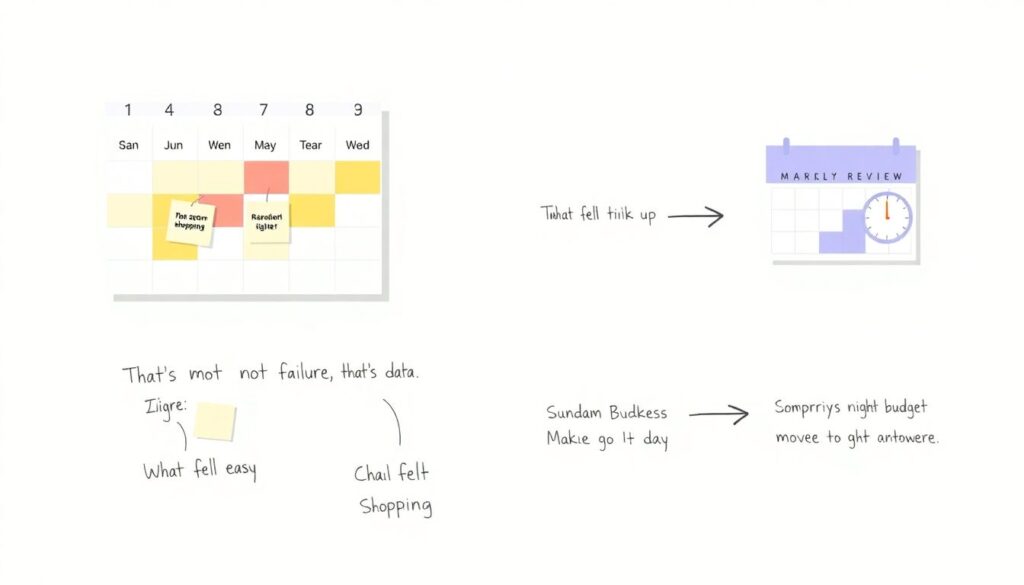
You will overspend some weeks. That’s not failure; that’s data. At the end of each month, ask three questions: What surprised me? What felt tight? What felt easy? Then tweak only one or two elements — maybe increase groceries and shrink random shopping, or move your weekly review from Sunday night (when you’re tired) to Saturday morning. Treat your budget like a living document, not a contract carved in stone. With each small adjustment, the money side of your life stops being a constant background worry and starts feeling like a quiet system that has your back.
From Numbers to Freedom: Your Next Three Moves
To turn all this theory into real flexibility, don’t wait for the “perfect moment.” Do three small things this week: define your top three freedoms, pick one simple tracking tool, and schedule your first 10-minute money meeting. That’s it. As you experiment with methods, apps, and routines, remember the point isn’t to become a finance nerd. The point is waking up knowing your bills are covered, your future is funded, and you can say “yes” to the right things without fear. Budgeting, done right, isn’t about restriction — it’s about building room in your life to actually live it.