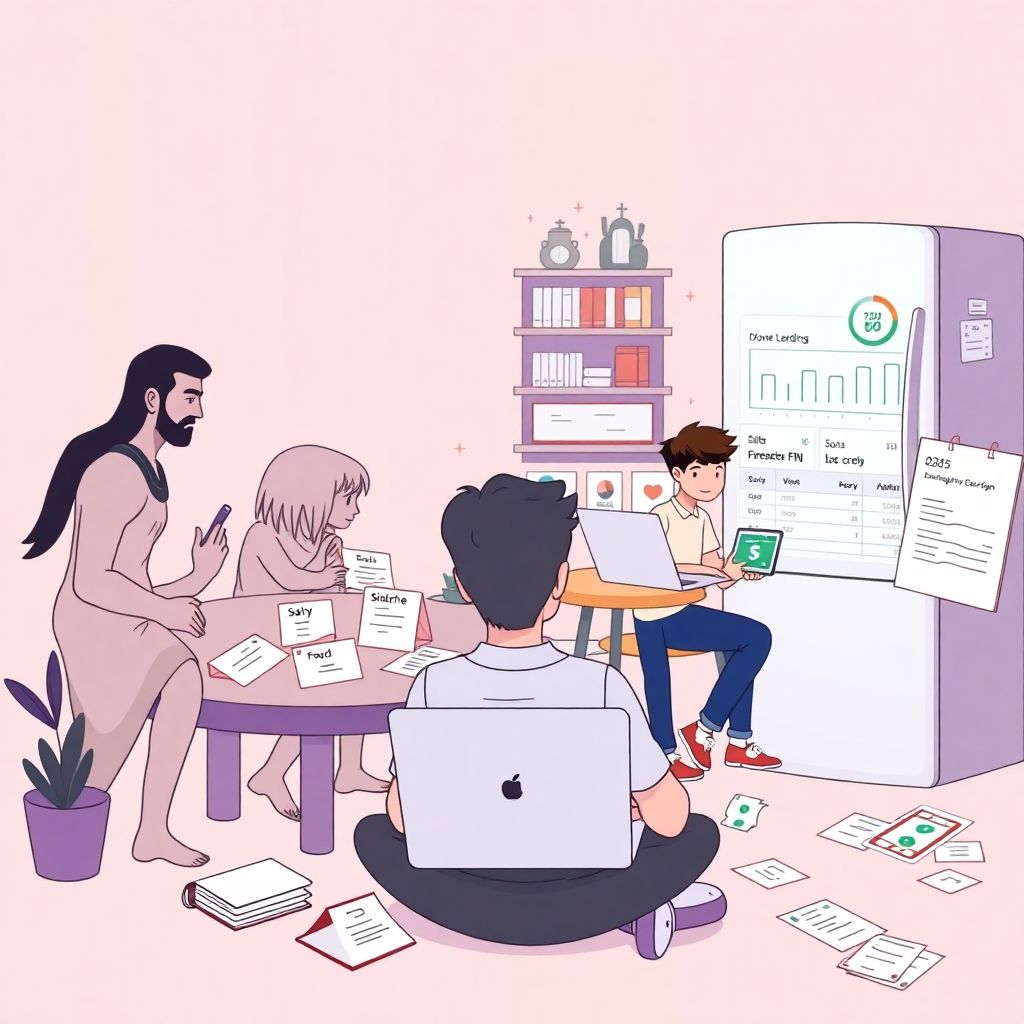
Money used to be simple: you got paid in coins or cash, put some in a jar, spent the rest, and hoped nothing bad happened. In 2025, your income might come from a salary, gig apps, freelance platforms, maybe even a bit of crypto or stock dividends. Bills are on autopay, subscriptions renew quietly in the background, and a single tap on your phone can wipe out a week’s food budget. That’s why learning to budget today isn’t about memorizing formulas; it’s about building a system that keeps up with modern life and still lets you sleep at night.
—
From Clay Tablets to Budgeting Apps: Why Budgeting Still Matters
If you think budgeting is a modern obsession, ancient civilizations would like a word. Thousands of years ago, Sumerian merchants scratched grain inventories into clay tablets to track who owed what. Medieval households kept “household books” to track candles, flour, and rent. In the 20th century, families used paper envelopes to split paychecks into categories: rent, food, savings, church. The tools changed—ledgers, spreadsheets, then apps—but the purpose stayed the same: making sure today’s spending doesn’t steal from tomorrow’s needs. In 2025, with contactless payments and instant loans, that theft just happens faster and more quietly. A budget is your way of saying, “I’m deciding where my money goes before someone else does,” and that mindset hasn’t gone out of style in thousands of years.
—
Basic Ideas You Need Before Touching the Numbers
Before you open any app or template, get a few concepts straight. First, a budget is not a punishment; it’s a plan. It doesn’t exist to tell you “no” all the time, it exists so you can say “yes” to the right things more often. Second, your first draft budget will be wrong, and that’s normal. You are not a robot; you’re learning your own patterns. Third, budgeting is about cash flow, not just totals. You can be “profitable” on paper over a month but still overdraft in week two if bills and paydays don’t line up. Finally, context matters: in a world of rising housing costs, student loans, and subscription everything, a realistic budget has to include joy, buffer room, and flexibility, or you’ll abandon it after two paychecks. Keep these ideas in mind as you build your first system and you’ll avoid most early frustrations.
—
Necessary Tools: What You Actually Need (and What You Don’t)
You do not need a fancy setup to start, but a few solid tools will make your life much easier. At minimum, you want one place to see all your numbers and one method to track what really happens. Some people still love pen and paper; others live in spreadsheets. In 2025, though, you will probably be tempted by the best budgeting apps for beginners, and that’s not a bad thing as long as the tool fits you. Look for apps or templates that let you categorize expenses, set goals, and adjust month to month without a steep learning curve. Add a calculator, access to your bank statements (online banking or PDFs), and a quiet 30–45 minutes a week, and you already have a toolkit that can compete with old-school accountants—for your personal level of complexity.
– A simple notebook or digital notes app for quick expense jotting
– A spreadsheet or app for the main budget and running totals
– Online access to all bank, credit card, and loan accounts for tracking
Don’t underestimate non-digital tools either. A whiteboard on your fridge with just three lines—“Bills,” “Everyday,” “Fun”—can keep your big picture visible. If you constantly switch between tools and never stick to one, your system is too complicated. For many beginners, structured templates or basic budget planner tools for personal finance are enough to get going; you can always upgrade later once you see your patterns and preferences emerge over a few months.
—
Step 1: Map Your Money In and Out
Start by answering two questions: how much actually comes in, and where does it actually go. Ignore what you think should be happening; only real numbers count. Pull the last 1–3 months of bank and card statements and highlight income first—salary, freelance payments, side gigs, benefits, child support, anything. Then look at outgoing money and loosely group it: housing, utilities, groceries, eating out, transport, debt payments, subscriptions, and “mystery” spending like ATM withdrawals or random app charges. If your income or expenses are irregular, take an average but also note the best and worst months. This mapping step is like creating a financial X-ray: it might not be pretty, but it shows what’s actually going on inside your money life right now.
—
Step 2: Define Your Priorities Before You Assign a Single Dollar
Budgeting fails fast when it’s just numbers with no meaning behind them. Take ten minutes and write down what you need your money to do in the next year. Are you trying to move out, build an emergency fund, or clear a credit card that’s stressing you out? You might also be wondering how to start a budget to pay off debt fast while still having a social life. Rank your top three priorities: for example, “1) Don’t be late on any bills, 2) Build a $1,000 emergency cushion, 3) Pay off the highest-interest card.” When push comes to shove and money is tight, these priorities will tell you what to cut first and what to protect. Without them, your budget becomes a random spreadsheet that you feel guilty about ignoring.
—
Step 3: Build a Simple Beginner Budget (Not a Perfect One)
Now translate your reality and your priorities into a first-pass plan. List your net monthly income at the top. Then list fixed costs: rent or mortgage, minimum debt payments, insurance, internet, phone, basic subscriptions you truly use. These are your non-negotiables. Next, assign reasonable amounts to groceries, transport, and essential personal care. Only after that do you set numbers for eating out, entertainment, shopping, and extras. Give savings and debt payoff their own lines, even if the amounts are small at first. The goal for beginners is to make sure every dollar has a job, even if that job is “fun money.” If you like structure, you can loosely follow guidelines like “50% needs, 30% wants, 20% saving and debt,” but treat them as starting points, not commandments carved in stone.
– Start with income, then fixed bills, then essentials, then wants
– Create separate lines for savings and extra debt payments
– Always include a small “miscellaneous” buffer for surprises
At this stage, keep the model simple enough that you could explain it to a friend in three minutes. Complexity doesn’t equal control; clarity does. You’ll refine categories like “fun” into “eating out” and “streaming” later if needed, but in the early weeks you just need a structure you’ll actually open and use.
—
Step 4: Choose a Tracking Method You’ll Actually Use
Your budget on paper is a hypothesis; your tracking is the experiment. If you hate manual data entry, choose an app that pulls in transactions automatically and lets you just confirm categories a couple of times a week. If you’re wary of connecting accounts, a simple spreadsheet you update every few days can work just as well. This is where the best budgeting apps for beginners can shine: they often combine transaction imports, simple graphs, and nudges that remind you how much you’ve spent in each category. Whatever you choose, commit to checking in at least once per week. Think of it as a quick money meeting with yourself: “What came in? What went out? Am I still roughly on plan, or do I need to adjust something before the month blows up on me?”
—
Step 5: Add Learning and Support to Speed Up Your Progress
You can definitely teach yourself budgeting with trial and error, but in 2025 you also have a huge advantage: guided learning and communities. Plenty of personal finance courses for beginners online walk step by step through setting up budgets, automating savings, and tackling debt with real-world examples. These can save you months of frustration by pointing out common traps—like underestimating irregular expenses or ignoring annual bills that sneak up on you. If your situation feels complex or emotionally charged, it’s not a sign of weakness to hire financial advisor for budgeting help for at least a session or two. A professional can help you prioritize, set realistic numbers, and choose tools that match your personality so you don’t abandon the process when life gets busy or stressful.
– Short online courses to learn core concepts quickly
– Budgeting communities or forums for accountability and tips
– Professional advice if you feel stuck or overwhelmed
The idea isn’t to outsource your decisions; it’s to speed up your learning curve and avoid reinventing the wheel. Just like people in the past learned budgeting from family ledgers or community traditions, you’re tapping into the modern version of that shared knowledge.
—
Step 6: Adjust in Real Time, Not Just Once a Month
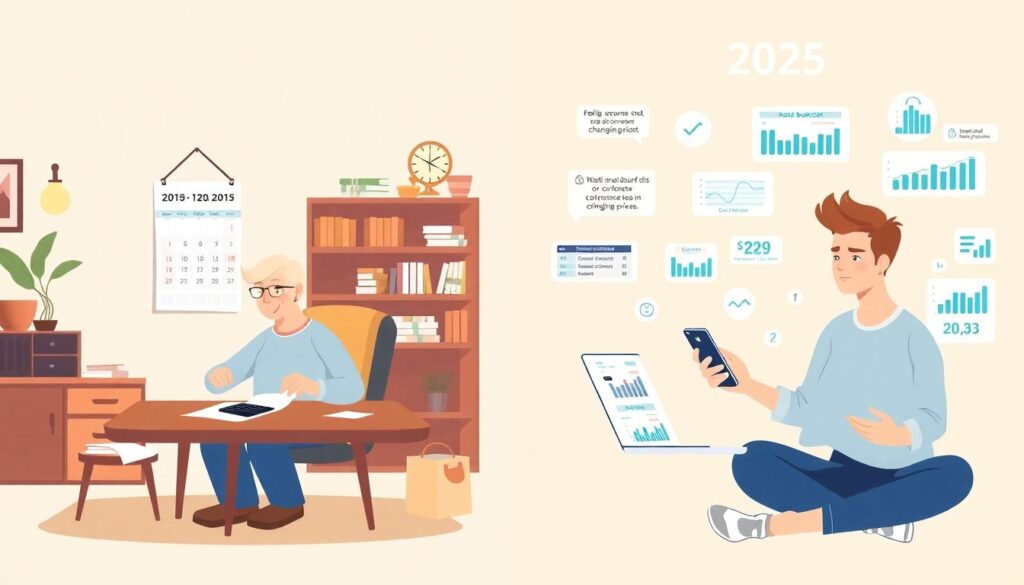
Old-school advice often sounds like, “Set your budget on the first of the month and stick to it.” That was easier when income and bills were more predictable. In 2025, you might get paid weekly, biweekly, or randomly from gigs, and prices can change overnight. So think of your budget as a living document. If you overspend on groceries, don’t label yourself a failure; move money from a flexible category like restaurants or shopping to cover it. If a surprise expense hits, temporarily shrink extra debt payments rather than skipping rent or minimums. The point is to keep the overall plan intact while acknowledging reality. A budget that can’t bend will break, and once it breaks, people tend to stop checking it altogether and slide back into blind spending.
—
Troubleshooting: Common Problems and How to Fix Them
Most beginners run into the same handful of issues, and they’re fixable once you name them. One big problem is irregular income: some months feel rich, others desperate. The workaround is to base your core budget (rent, utilities, groceries, minimum debt payments) on your lowest typical month and treat extra income as a separate “bonus” that goes to savings, extra debt, or planned treats. Another issue is underestimating “small” spending—coffee, snacks, random downloads. If a category constantly overshoots, the problem is not your willpower; it’s a dishonest estimate. Raise the number to something realistic, then cut somewhere less important instead of pretending you’ll suddenly become a totally different person next month. A third issue: forgetting non-monthly expenses like car repairs, holidays, or once-a-year subscriptions. When these hit, people think the budget “failed,” when in reality it just wasn’t complete.
When your system feels clunky, ask three quick questions: Is my tool too complicated? Is my check-in frequency too low? Am I being honest about my habits? If you dread opening your app or spreadsheet, simplify categories or switch to more intuitive budget planner tools for personal finance that focus only on what you truly need. If you only check in at the end of the month, move to weekly. If you’re constantly surprised by expenses, look back over a full year of statements to capture the irregular ones and turn them into small monthly sinking funds. These small tweaks turn a fragile budget into one that can survive real life rather than only existing in a perfect scenario.
—
Making Your Budget Sustainable in the Long Run

The point of learning personal finance basics isn’t to live on the financial equivalent of a crash diet forever. Sustainable budgeting is closer to building a long-term eating pattern than doing a two-week cleanse. That means leaving room for enjoyment, planning for change, and accepting that some months will just be messy. As your income grows, resist the urge to inflate every category at once; instead, channel part of each raise into debt reduction and savings first, then upgrade lifestyle in a controlled way. Revisit your priorities at least once a year: what felt urgent in 2023 might no longer matter in 2025, and your budget should reflect who you are now, not who you were when you opened your first spreadsheet. Over time, the process becomes less about restriction and more about alignment: your daily spending starts to match your actual values, not just your impulses.
—
Bringing It All Together
From clay tablets to banking apps, humans have always struggled with the same question: how do I make sure my resources last and support the life I want? Budgeting in 2025 doesn’t require perfection or advanced math; it requires attention, honest numbers, and a flexible plan. Start by mapping what’s happening, decide what matters most, build a simple outline for your money, and then keep adjusting as reality unfolds. Use technology and education to speed things up, lean on communities and professionals when needed, and expect some trial and error along the way. If you stick with the process for a few months, the chaos of “Where did my paycheck go?” slowly turns into quiet confidence: you know what your money is doing, and more importantly, you know it’s working for you rather than against you.