
Why Managing Money Feels So Hard (And Why It’s Totally Learnable)
Money isn’t just about numbers.
It’s about habits, emotions, and a bit of basic math that anyone can master.
Most people were never taught how to manage money with confidence at school. As a result, even smart adults feel lost when they hear words like “budget,” “investing,” or “retirement plan.” The goal of this guide is simple: give you a step‑by‑step system so you can stop guessing and start making conscious decisions with your cash.
You don’t need a finance degree.
You don’t need to be “good at math.”
You just need a plan and the willingness to stick with it.
Let’s build that plan together.
—
Step 1. Get Clear on Your Money Goals (Before Touching a Budget)
Most beginners jump straight to spreadsheets and apps. Experts in behavioral finance recommend starting somewhere else: with your “why.”
Ask Yourself the Right Questions
Take 10–15 minutes and write (yes, actually write) answers to these:
– What do I want my money to do for me in the next 12 months?
– What would “financially comfortable” look like in 5 years?
– What am I most stressed about when it comes to money right now?
Be as specific as possible.
“Stop living paycheck to paycheck” is clearer than “be rich.”
Professional planners who offer financial planning services for young adults often begin their sessions exactly this way—by mapping life goals first and only then attaching numbers to them.
Turn Vague Wishes into Concrete Targets
Convert your ideas into measurable goals:
– “Pay off $1,500 in credit card debt in 12 months”
– “Build a $600 emergency fund in 6 months”
– “Save $2,000 for travel in 1 year”
Specific goals make future decisions easier: you either move closer to them or farther away.
Common Beginner Mistake
Relying on motivation alone.
Motivation spikes, then disappears. Goals written down with numbers and deadlines are much more reliable than “I’ll just try to spend less.”
—
Step 2. Know Exactly Where Your Money Goes

You can’t manage what you don’t measure.
This step feels boring, but it’s the foundation of the entire system.
Track a Typical Month
For the next 30 days, track every expense—no exceptions. You can:
– Use a notebook and pen
– Use the notes app on your phone
– Use one of the best budgeting apps for beginners if you like tech solutions
Focus on categories, not perfection. Group your spending into:
– Housing (rent, utilities)
– Food (groceries, eating out, delivery)
– Transport (gas, tickets, rideshares)
– Debts (loans, credit cards)
– Subscriptions and entertainment
– “Random” or “miscellaneous”
After a month, you’ll see patterns that are usually invisible day to day.
Expert Tip
A personal finance coach for beginners will often ask new clients to track spending for at least 30 days before suggesting any changes. Why? Because advice without data is just guessing.
Warning Sign to Watch For
If more than 30–40% of your income is disappearing into “I don’t even know where it went,” that’s a red flag. It doesn’t mean you’re bad with money; it means your system is missing, and your brain is trying to manage everything from memory—which simply doesn’t work long term.
—
Step 3. Build a Simple, Realistic Budget (Not a Financial Prison)
The word “budget” scares people because they imagine punishment and restriction. In reality, a good beginner budget is just a plan for how you *want* your money to behave.
Start with the 50/30/20 Framework (and Adjust)
A widely used structure for beginners is:
– About 50% of your take-home pay for needs (rent, utilities, basic food, minimum debt payments)
– About 30% for wants (dining out, Netflix, small treats, hobbies)
– Around 20% for saving and extra debt payments
You don’t have to hit these exact numbers.
If your rent is high, “needs” might be closer to 60%. In that case, your first goal is to slowly shift that balance over time—by raising income or cutting certain costs—rather than trying to fix everything overnight.
Pay Yourself First
Instead of saving “whatever is left,” flip the script:
1. Decide on a specific monthly saving amount (even $20–$50 is fine to start).
2. Move it to savings right after payday.
3. Then live on what remains.
This “pay yourself first” strategy is one of the simplest yet most powerful habits recommended by financial advisers globally.
Beginner Pitfalls
– Making a budget that’s too strict—no entertainment, no coffee, no fun. You’ll rebel against it within weeks.
– Forgetting irregular expenses (gifts, car repairs, annual subscriptions). Experts advise averaging them out monthly so they don’t feel like “sudden emergencies.”
—
Step 4. Create Your First Safety Cushion: The Emergency Fund
Before chasing investments or complex financial products, it’s wise to build a small safety net. Otherwise, the first unexpected bill will send you back to debt.
What Is an Emergency Fund?
It’s a separate stash of money for *genuine* emergencies:
– Medical issues
– Essential car repairs
– Job loss
– Emergency travel to help family
Not for new phones. Not for sales. Not for concert tickets.
How Much Do You Need at First?
Experts often recommend 3–6 months of expenses, but that can feel impossible at the start. For beginners:
– Aim for $500 as a starter goal
– Then $1,000
– Then slowly grow toward 1–3 months of basic expenses
Treat every milestone as a win. Each step makes you less dependent on credit cards and loans.
Where to Keep It
– In a separate high‑yield savings account, so you’re not tempted to spend it.
– Not in cash under the mattress. It’s not insured, and it doesn’t earn interest.
Common Mistake
Starting to invest aggressively before building even a small emergency fund. If you need to sell investments in a downturn to pay a bill, you lock in losses that could have been avoided.
—
Step 5. Tame Your Debt Strategically
Debt isn’t automatically “bad,” but high‑interest consumer debt (especially credit cards) can quietly eat your future.
List All Debts in One Place
Write down for each debt:
– Total amount
– Interest rate
– Minimum monthly payment
Just seeing the full picture already reduces anxiety, because your brain no longer has to juggle scattered numbers.
Choose a Repayment Strategy
Two research‑backed approaches:
– Debt Avalanche: Pay extra on the debt with the highest interest rate first (mathematically optimal).
– Debt Snowball: Pay extra on the smallest debt first to gain momentum and psychological wins.
Many financial psychologists note that the snowball method often works better for beginners because early victories boost motivation.
Red Flags to Take Seriously
– You only make minimum payments and balances keep growing.
– You use new loans or cards to cover old ones.
– You avoid opening statements because they scare you.
In these cases, consider contacting a nonprofit credit counseling organization or, if possible, using financial planning services for young adults that include debt counseling. The earlier you act, the more options you have.
—
Step 6. Make Daily Money Decisions Easier (Systems, Not Willpower)
Relying on willpower alone is exhausting.
Good money managers don’t resist temptation all day; they build systems that reduce temptation.
Automate Whatever You Can
– Automatic transfers to savings on payday
– Automatic bill payments for rent, utilities, and minimum debt payments
– Automatic contributions to retirement accounts if your employer offers them
Automation turns good intentions into default actions.
Use Tools That Match Your Personality
Some people love spreadsheets; others hate them. Choose what you’ll actually use:
– A simple notebook or envelope system for cash lovers
– A budgeting app that syncs with your bank accounts
– A calendar with weekly “money check‑in” reminders
An online money management course for beginners can be helpful if you like structured learning and step‑by‑step video guidance; just make sure you actually implement what you learn.
Beginner Tip
Schedule a 15–20 minute “money date” with yourself once a week. Check:
– What came in
– What went out
– What’s coming up next week
Consistency beats intensity. A short weekly check‑in prevents big surprises.
—
Step 7. Start Investing with Small Amounts (Yes, Really)
Investing sounds intimidating, but the basic idea is straightforward: you let your money work for you over time instead of you working for every dollar forever.
What Investing Actually Does
By owning assets like stocks, bonds, or index funds, you tap into economic growth. Historically, broad stock markets have grown significantly over long periods, despite temporary drops. No one can promise future results, but ignoring investing usually means relying only on your own labor—forever.
How to Start Investing with Little Money
You don’t need thousands. Many platforms now let you:
– Buy fractional shares (small slices of a stock or fund)
– Set up automatic monthly contributions as low as $10–$25
– Invest in diversified index funds or exchange‑traded funds (ETFs) instead of trying to pick individual “winning” stocks
Experts generally advise beginners to focus on:
– Long‑term time horizons (5+ years)
– Diversification (a mix of many companies via index funds)
– Low fees
If your employer offers a retirement plan with a match (for example, a 401(k) match in the US), contributing enough to get the full match is often considered a priority—it’s effectively a risk‑free return.
Big Mistakes to Avoid
– Jumping into complex products (options, crypto speculation, day trading) without understanding the risks.
– Investing money you might need soon (like next year’s rent or tuition).
– Panicking and selling everything during temporary market drops.
—
Step 8. Learn from Experts Without Getting Overwhelmed
The internet is full of opinions. Not all of them are good. Or honest.
Where to Get Reliable Guidance
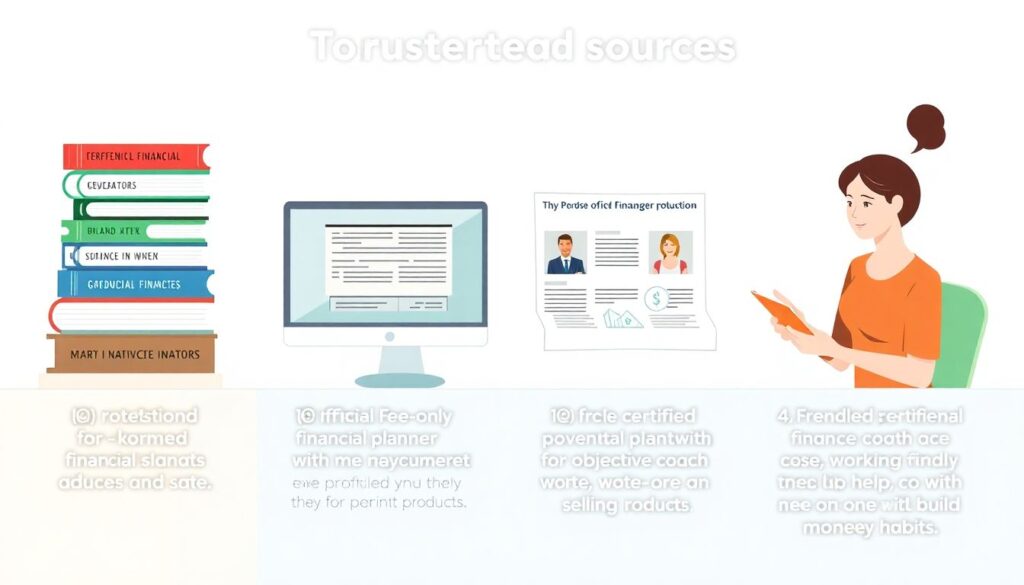
– Reputable books by known financial educators
– Official government or consumer protection websites
– Fee‑only financial planners (who are paid for their advice, not for selling products)
– A certified personal finance coach for beginners if you prefer one‑on‑one guidance and habit‑building support
Look for professionals who:
– Explain things in plain language
– Disclose how they are paid
– Encourage you to ask questions
– Don’t push you to buy products immediately
How to Spot Questionable Advice

Be skeptical if someone:
– Promises “guaranteed high returns” with no risk
– Pressures you to decide “right now” or “before the deal closes”
– Can’t clearly explain what the product actually is and how it could lose money
Healthy financial advice should make you feel informed and in control, not rushed or confused.
—
Step 9. Upgrade Your Money Mindset
Tools and techniques matter, but your beliefs about money shape your behavior more than any spreadsheet.
Notice the Stories You Tell Yourself
Common inner scripts:
– “I’m just bad with money.”
– “I’ll start saving when I earn more.”
– “People like me never get ahead.”
These aren’t facts; they’re untested beliefs. Behavioral science research shows that when people change the story they tell themselves, their actions start to change as well.
Try reframing:
– “I’m learning how to handle money better.”
– “I can start small now and increase later.”
– “I can build my own version of financial stability.”
Build Identity‑Based Habits
Instead of focusing only on outcomes (like “I want $5,000 saved”), think about identity:
– “I’m the kind of person who checks my finances weekly.”
– “I’m someone who saves a slice of every paycheck.”
– “I’m a careful spender, not an impulsive one.”
Identity‑based statements nudge your brain to act consistently with the type of person you want to become.
—
Step 10. Put It All Together: Your Simple Money Confidence Plan
To recap, managing money with confidence doesn’t require perfection. It requires a few solid habits, done consistently.
Here’s a compact roadmap you can start this week:
– Define 1–3 clear money goals for the next 12 months.
– Track every expense for 30 days to see the truth of your spending.
– Set up a basic budget using a flexible framework like 50/30/20.
– Build a starter emergency fund, even if it’s just $100–$500 at first.
– Choose a debt payoff strategy (avalanche or snowball) and stick with it.
– Automate savings and bills to reduce daily decision fatigue.
– Begin investing small amounts regularly, with a long‑term perspective.
– Check in weekly with a short “money date” and adjust as you learn.
– Seek expert help when needed, from trusted, transparent sources.
Confidence with money doesn’t arrive in one big moment. It builds slowly each time you make a conscious choice instead of an automatic one. Every bill you pay on time, every dollar you save, every small investment contribution is proof that you’re capable of steering your financial life.
Start with one step today—tracking spending, opening a savings account, setting up a small automatic transfer. Momentum will do the rest.
Комментарии