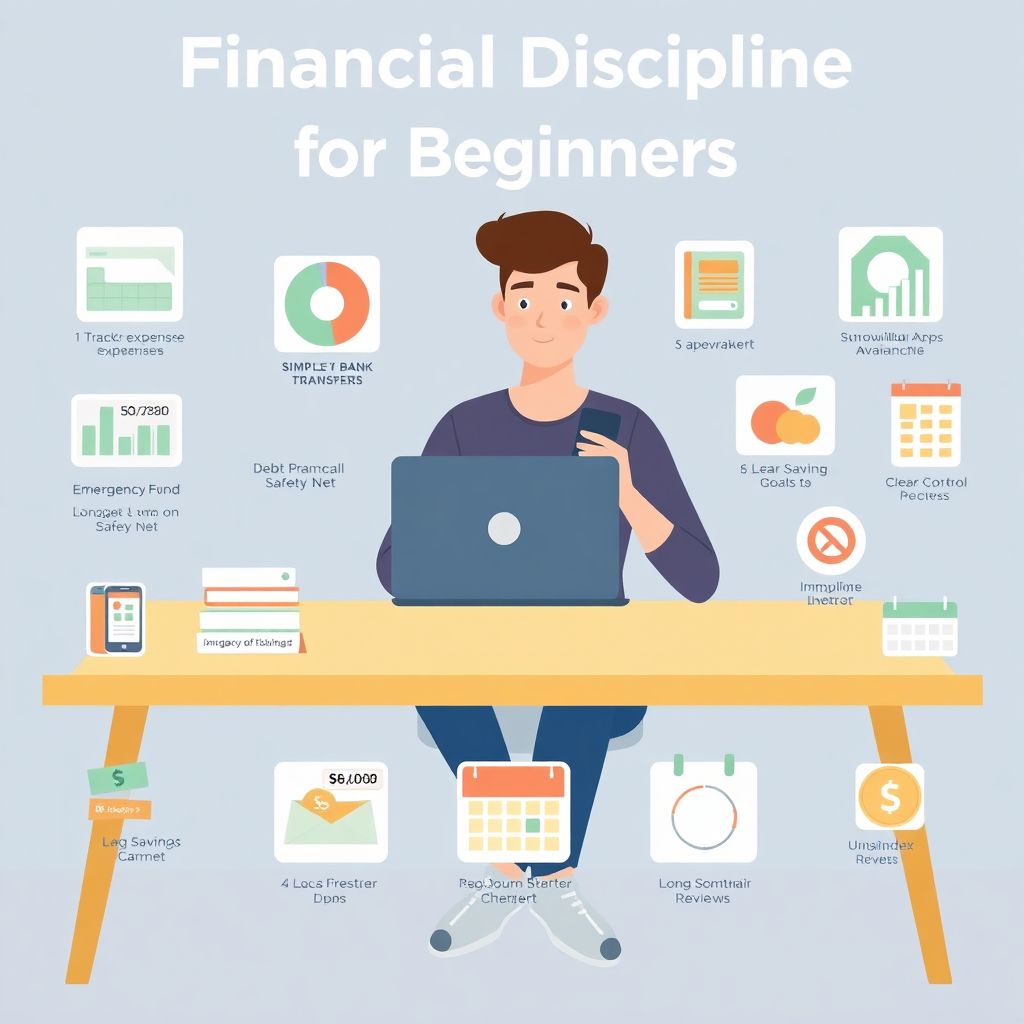
Why Financial Discipline Matters More Than “Being Good with Money”

Most people think financial discipline is a talent: either you’re naturally good with money or you’re doomed to be “bad with finances” forever. That’s a myth.
In reality, discipline with money is a set of small, repeatable actions. You don’t need a finance degree; you need a simple plan you can actually follow. This guide is exactly that: financial planning for beginners, broken down into clear steps with real-world examples and warnings about common mistakes.
—
Step 1. Get Honest: Know Your Real Numbers
Track, Don’t Guess
If you can’t answer “How much do I spend per month?” within a reasonable range, discipline is impossible. The brain hates abstract numbers; it works much better with concrete data.
For 30 days, write down every expense. Coffee, subscriptions, rideshares, snacks — everything. You can do it in a notebook, a simple spreadsheet, or with one of the best budgeting apps for beginners. The tool is less important than the consistency.
Try this simple structure:
– Income: salary, side gigs, any regular inflow
– Fixed expenses: rent, utilities, phone, insurance, subscriptions
– Variable expenses: food, transport, entertainment, “random stuff”
After a month, you’ll see patterns that were invisible before. That’s the starting point for how to manage personal finances step by step.
Typical Beginner Mistakes at This Stage
– Relying on memory instead of data. “I think I spend about…” is almost always wrong. People consistently underestimate small daily expenses.
– Stopping after a week. The first days are enthusiastic, then comes boredom. But discipline is built exactly in this “boring middle.”
– Leaving out “embarrassing” expenses. Hiding them from your notebook doesn’t make them disappear from your bank account.
Tip: If tracking everything forever feels exhausting, commit to doing it thoroughly for 1–2 months. After that, you can switch to checking only the main categories weekly.
—
Step 2. Build a Simple, Realistic Budget
The 50/30/20 Rule (With Real Life Adjustments)
A classic structure for beginners looks like this:
– 50% of income — needs (housing, food at home, transport, basic bills)
– 30% — wants (restaurants, hobbies, travel, streaming)
– 20% — savings and debt repayment
This is not a law; it’s a starting point. In expensive cities, rent alone can eat 40–50%. If that’s your case, the “wants” part will need to shrink for a while.
The goal of a budget is not to punish yourself. It’s to tell every dollar where to go before it disappears.
Frequent Budgeting Errors
– Making a “perfect” but unlivable budget. Cutting everything fun to zero looks great on paper and fails in real life within two weeks.
– Forgetting irregular expenses. Gifts, annual subscriptions, medical visits, car repairs. If you don’t plan them, they show up as “sudden emergencies.”
– Changing everything at once. Radically slashing ten categories at the same time usually leads to burnout, then a big “revenge spending” blowout.
Tip: Start by adjusting just 1–2 categories that clearly stand out — for example, cutting delivery meals by 25% and bar nights by one evening a month. Small, sustainable corrections beat extreme “money diets.”
—
Step 3. Automate What You Can
Let Systems Be More Disciplined Than You
Human willpower is a limited resource. Automation is your way to outsource discipline to technology.
Once you’ve created a draft budget:
– Set automatic transfers to savings the day after your paycheck
– Automate minimum payments on debts so you never miss due dates
– Turn on alerts in your banking app when you cross category limits
When people talk about how to manage personal finances step by step, automation is one of the most underrated tools. It quietly keeps your plan alive even on days when you’re tired, stressed, or simply distracted.
Classic Automation Mistakes
– Automating unrealistic amounts. If you auto-transfer more than you can actually afford, you’ll constantly move money back and feel like you “failed.”
– Setting it and forgetting it (forever). Life changes: salary, rent, priorities. Review automated transfers every 3–6 months.
– Ignoring account balances. Automation is great, but not magical. You still need to check in weekly so you don’t accidentally overdraw.
Tip: Start with small automatic transfers that feel almost “too easy” to maintain — for example, 5–10% of income. You can increase them over time without stressing your lifestyle.
—
Step 4. Build an Emergency Buffer First
Why an Emergency Fund Comes Before “Cool Investments”
Investing sounds exciting. Saving for emergencies sounds boring. But without a safety cushion, every hiccup — a broken laptop, car repair, medical bill — throws you into debt. That’s the opposite of financial discipline.
Aim for an emergency fund of at least 1–3 months of basic expenses as a first target. Not your total spending, but the minimum needed to survive: rent, food, utilities, transport, essential medications.
Park this money in:
– A separate savings account
– Preferably with instant access and no withdrawal penalties
– Not in cash at home where it quietly disappears
Beginner Pitfalls with Emergency Funds
– Calling everything an “emergency.” Sudden concert tickets aren’t an emergency. Nor is a sale on sneakers.
– Keeping it too accessible emotionally. If the money sits in the same account you use daily, you’ll constantly “borrow” from it.
– Skipping this step in favor of investing. Trying to jump straight into stocks or crypto without a buffer usually ends with selling at the worst possible moment to cover a crisis.
Tip: Give the account a specific, serious name, like “Safety Net” or “3-Month Buffer.” It sounds trivial, but a clear label makes you think twice before using it.
—
Step 5. Tackle Debt Without Panic
List, Compare, Choose a Strategy
Write down all your debts:
– Amount owed
– Interest rate
– Minimum monthly payment
Two popular payoff strategies:
– Debt snowball: pay off the smallest debt first (psychological boost)
– Debt avalanche: pay off the highest-interest debt first (mathematically optimal)
For beginners, the snowball method often works better emotionally. Quick wins are motivating, and motivation helps you stick with discipline.
Typical Debt Mistakes
– Ignoring interest rates. Paying only minimums on high-interest credit cards turns them into a long-term trap.
– Taking on new debt “because the rate is low.” If you’re already struggling, another payment — even with good terms — increases your stress load.
– Mixing debt payoff with aggressive investments. Trying to “beat” your credit card’s 25% interest rate with risky investments is more gambling than planning.
Tip: If your situation feels overwhelming, a financial advisor for young adults or a non-profit credit counseling service can help you build a structured payoff plan without judgment.
—
Step 6. Use Tools, But Don’t Worship Them
Apps, Courses, and When to Ask for Help
Technology can make financial discipline easier — if you use it as a tool, not a magical solution.
What can help:
– Budgeting apps that automatically categorize spending
– Reminder apps for due dates and financial check-ins
– An online personal finance course for beginners to understand core concepts like interest, inflation, and investing basics
However, no app will stop you from late-night impulse buying. That part still depends on your decisions.
Common Mistakes with Tools
– Installing five apps and using none. Pick one budgeting tool and stick with it for at least a month before deciding it “doesn’t work.”
– Confusing learning with doing. Watching videos or completing a course feels productive, but discipline is built when you apply what you learned to your actual accounts.
– Paying for expensive tools you don’t need yet. As a beginner, free or low-cost solutions are usually more than enough.
Tip: When choosing one of the best budgeting apps for beginners, focus on two questions: “Will I actually open this daily?” and “Is it simple enough that I won’t avoid it?”
—
Step 7. Set Clear Goals, Not Vague Dreams
Turn “I Want to Be Better with Money” into Something Concrete
Vague goals like “I need to start saving more” don’t help your brain choose between Netflix and saving. Specific targets do.
Examples:
– “Save $500 for an emergency fund in 3 months”
– “Pay off $1,000 of credit card debt by December”
– “Put aside $150 a month for travel next summer”
Attach numbers and deadlines. Then break them into monthly and weekly mini-tasks.
Goal-Setting Traps for Beginners
– Setting goals based on someone else’s life. Your friend’s income, city, or responsibilities are not yours. Comparison kills motivation.
– Chasing too many goals at once. Saving for a house, paying off debt, investing, and funding travel simultaneously can stretch you too thin.
– Quitting after one bad month. Discipline is not perfection; it’s the habit of coming back to the plan after a slip.
Tip: Start with 1–2 primary goals. When one becomes “autopilot” (for example, a stable monthly transfer to savings), add the next.
—
Step 8. Protect Yourself from Your Own Impulses
Practical Tricks Against Impulse Spending
Most financial “fails” happen in a few emotional minutes: you’re tired, stressed, or bored, and suddenly an online cart is full.
To protect yourself:
– Apply a 24-hour rule for non-essential purchases above a certain amount
– Delete stored card details from shopping sites to add friction
– Unsubscribe from marketing emails that trigger “limited-time offer” panic
Discipline often comes down to designing an environment where the default choice is the better one.
Newbie Spending Mistakes
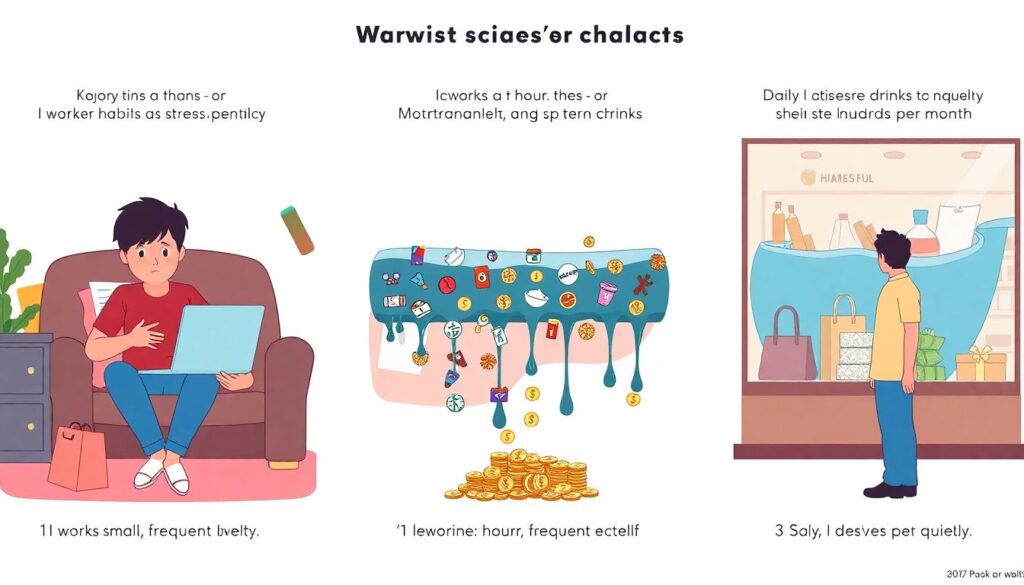
– Using shopping as stress relief. It works for an hour and then creates long-term anxiety.
– Ignoring small, frequent leaks. Daily snacks, drinks, and microtransactions can quietly steal hundreds per month.
– Saying “I deserve it” every time. You really do deserve rest, comfort, and joy — but not at the cost of constant financial stress.
Tip: Create a small, guilt-free “fun money” category in your budget. Knowing you’re allowed to spend a set amount reduces the temptation to blow up the entire plan.
—
Step 9. Learn the Basics of Investing (But Don’t Rush)
When It’s Time to Move Beyond Saving
Once you have:
– An emergency fund started
– High-interest debt under control
– A working budget
…you can start learning about long-term investing. This doesn’t require complex trading. For most beginners, broad, low-cost index funds or retirement accounts (where available) are enough to get started.
At this point, taking a structured online personal finance course for beginners can be especially useful. It helps you understand risk, diversification, and realistic returns — instead of chasing hype.
Risky Beginner Investing Behaviors
– Jumping into complex products you don’t understand. Options, leverage, and speculative crypto without a foundation is like learning to drive on a racetrack.
– Checking investments obsessively every day. Short-term fluctuations are normal; reacting emotionally to them is expensive.
– Treating investing as a shortcut to fix overspending. Investments work best with time and consistency, not as a patch for a constantly negative cash flow.
Tip: If you feel lost, a fee-only financial advisor for young adults (who is not trying to sell you specific products) can help you choose simple, suitable options.
—
Step 10. Review, Adjust, and Forgive Mistakes
Discipline Is Maintenance, Not a One-Time Project
Financial discipline isn’t something you “set up once and finish.” It’s closer to personal health: regular checkups, small course corrections, and realistic expectations.
Build a simple routine:
– Weekly: 10–15 minutes to check balances and recent spending
– Monthly: compare your actual spending with your plan
– Every 6–12 months: review goals, savings rate, and debt progress
You’re not aiming for flawless execution. You’re aiming for direction: more control, less chaos.
Emotional Mistakes That Derail Progress
– All-or-nothing thinking. “I overspent this week, the whole plan is ruined.” It’s not. Start again next week.
– Shame instead of curiosity. Instead of “I’m terrible with money,” ask “What triggered this decision and how can I design around it next time?”
– Waiting for the “perfect moment” to start. A higher salary, less stress, a new year. Discipline starts with one small action today, not with a complete life reboot later.
Tip: Keep a short money journal. Once a month, write down: what worked, what didn’t, and one small change you’ll test next month. That’s how discipline slowly becomes identity.
—
Final Thoughts: Discipline Is Built, Not Inherited
Financial discipline for beginners is not about memorizing complex terms or perfectly predicting the future. It’s about:
– Knowing your numbers
– Giving every dollar a job
– Automating smart habits
– Protecting yourself from your own impulses
– Adjusting after mistakes, not quitting because of them
You don’t need to become a different person to get control over your money. You need a simple step-by-step plan, a bit of patience, and the willingness to learn from your own patterns rather than run from them.
Start with the next paycheck, the next small expense, the next 10-minute check-in. That’s where real discipline lives — not in grand declarations, but in quiet, repeated actions.
Комментарии