
Why “Smart Saving” Beats “Just Saving”
Most people think saving is about willpower: cut coffee, suffer a bit, stash what’s left. Smart saving flips this: your main job isn’t to suffer, it’s to design a system where money quietly grows in the background. Think of it like setting up a bunch of little “money robots” that move cash from your main account into better places before you can doom-scroll it away. For the best savings accounts for beginners, that usually means a separate online account with a decent rate, automatic transfers on payday, and no card attached, so spending it becomes inconvenient by default. Once you get that base in place, every other move — investing, side hustles, debt payoff — starts to feel way less chaotic and way more intentional.
Smart saving doesn’t mean being boring or ultra-frugal; it means building habits that keep working even on your lazy days.
Comparing Approaches: Cash, Investing, and “Half-and-Half”
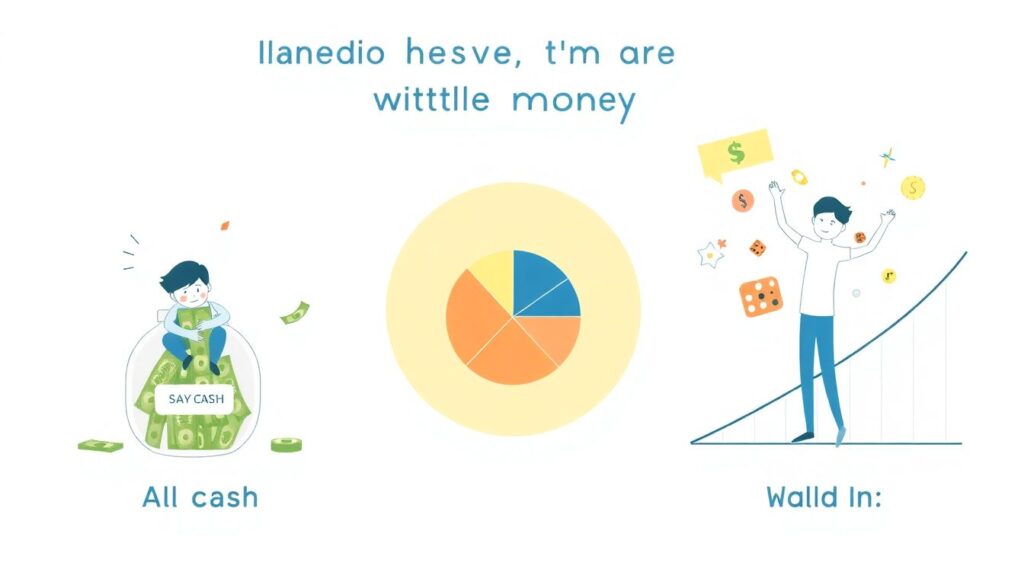
When people google how to start investing with little money, they often smash straight into two extremes: “Keep everything in cash until you’re rich” versus “Throw it all in the stock market and hope for the best.” Both are flawed. All-cash feels safe but loses buying power to inflation; all-investing grows faster but can be a rollercoaster when you suddenly need rent. A simple, underrated middle path is the “half‑and‑half” rule for beginners: for every dollar you set aside, park half in a high‑interest savings account and half in a basic index‑fund portfolio. It’s not mathematically perfect, but it is emotionally balanced: you always see some money that’s totally safe and some that’s working harder, which makes you less likely to panic-sell or give up.
Tech Tools: From Simple Savings to Beginner Investment Apps
Let’s talk tech, because most modern saving mistakes come from using the wrong tools, not from lack of discipline. Traditional banks are comfortable but usually stingy on interest, so any serious high yield savings accounts comparison will push you toward online banks or fintechs with fewer branches and better rates. The catch: some of them gamify everything, nudging you to take risks you don’t understand. On the other side are beginner investment apps to grow money that round up your spare change or auto-invest small weekly amounts. These apps shine for people who hate “finance homework,” but you trade some control and sometimes pay higher fees. The sweet spot is using tech to automate boring tasks — transfers, rebalancing, bill reminders — while you keep big decisions (goals, risk level) fully manual.
In short, the right app should feel like a quiet assistant, not a casino in your pocket.
Pros and Cons of Robo-Advisors and Automation
Robo-advisors are basically investing autopilots: you answer a few questions, they build and manage a portfolio for you. For someone who doesn’t want to pick individual stocks, the best robo advisor for new investors is usually one that keeps fees low, uses simple index funds, and lets you speak to a human when you’re panicking during a market dip. The pros are obvious: automatic diversification, rebalancing, tax optimizations you’d never manually bother with. The cons are more subtle: you might never learn what you actually own, which makes you vulnerable to bailing out at the worst possible time. Also, algorithms don’t know when your life changes — new baby, job loss, moving abroad — unless you log in and update them, and most people only remember during a crisis.
Automation works beautifully, as long as you treat it like cruise control, not a self-driving car.
How to Choose Your First “Home” for Savings
Picking where to keep your first serious savings is like choosing your first apartment: not forever, but it shapes your habits. Start with clarity: is this money for emergencies, near-term goals, or long-term growth? If you’ll need it within a year, prioritize easy access and low risk over returns; if it’s five‑plus years out, tiny interest differences matter less than your investing discipline. As you scan options, mentally run your own mini high yield savings accounts comparison: interest rate, fees, how fast you can move money out, and whether the app makes it too easy to “accidentally” spend. One underrated move is splitting your savings into clearly named buckets — “Oh‑no Fund,” “Freedom Money,” “Next Big Move” — in separate subaccounts, so every transfer feels like you’re funding a story, not just a number.
Short version: if an account makes saving feel satisfying and slightly inconvenient to spend, you’re on the right track.
Non‑Obvious Strategies to Make Money Grow Faster
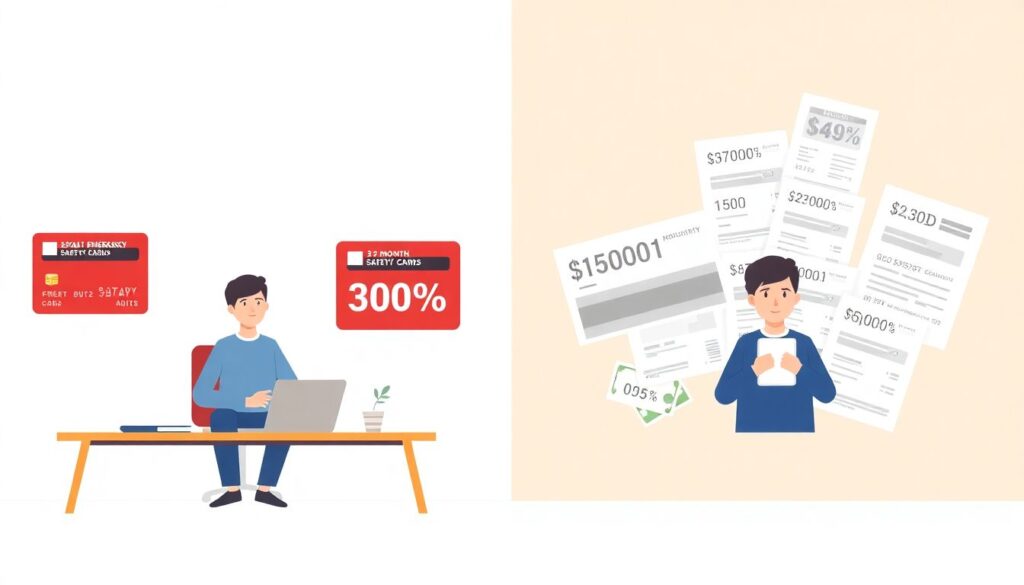
Here’s a twist: sometimes the most powerful way to grow money isn’t a higher interest rate, it’s reducing the situations where you’re forced to borrow at terrible rates. Building a three‑month emergency cushion can quietly “earn” you 20–30% by preventing future credit card debt. Another non‑obvious move is “income stacking”: dedicate every unexpected dollar — bonuses, tax refunds, side‑gig money — straight into investments without upgrading your lifestyle. Set up an automatic rule so that whenever extra cash hits your main account, a fixed percentage jumps to savings or investments the next day. And if your budget is tight, instead of obsessing over cutting $3 coffees, focus on one leveraged skill that raises your hourly rate even slightly; the extra $5–10 per hour, when invested regularly, outruns almost any coupon clipping strategy over a few years.
The goal isn’t perfection; it’s creating asymmetric wins where good decisions compound and bad days don’t sink you.
Micro‑Investing and “Experiments with Training Wheels”
If big numbers freak you out, treat your first year of investing as a paid internship with your own money. Start tiny, on purpose. Put a fixed, almost laughable amount — maybe the cost of one takeaway per week — into a diversified fund or robo‑advisor and watch how it behaves through market ups and downs. This is where small‑scale experiments shine: you get emotional training with low dollar risk. Use app features like “play portfolios” or fractional shares to test different mixes without letting any single bet be more than, say, one month of contributions. The psychology matters: once your brain sees that a market drop didn’t destroy your life, it relaxes, and you become capable of investing larger amounts rationally instead of reactively.
Think of these micro‑experiments as flight simulators before you pilot your full financial life.
Trends in Smart Saving and Investing for 2025
Looking toward 2025, a few trends are reshaping how beginners grow their money. First, saving and investing are merging inside the same apps: you’ll see more hybrids where your emergency fund, short‑term goals, and long‑term portfolio live under one roof with clear dashboards instead of ten scattered accounts. Second, more tools will help you set “guardrails,” not just goals — for example, auto‑pausing risky investments if your cash buffer gets too low. Third, regulation is slowly catching up, nudging apps to be more honest about risks instead of shouting about potential gains. And finally, expect AI‑driven coaching that explains market moves in plain language tailored to you, not generic newsletters, which could make staying invested through volatility a lot less scary for newcomers.
The real trend, though, is control shifting back to you: tech does the grunt work, you keep the steering wheel.
Putting It All Together: Your First 30 Days

In your first month, think “simple setup, not perfect plan.” Open a separate savings account with a decent rate and nickname it something that actually motivates you. Turn on an automatic transfer the day after payday, even if it’s small. Pick one low‑effort investing route — a broad index fund, a sensible robo‑advisor, or one of the calmer beginner platforms — and start with an amount you could lose without losing sleep. For now, ignore complex strategies, hot stock tips, or trying to beat the market. Your only real job is to prove to yourself that money can move from “I earned it” to “it’s quietly growing” without you wrestling with willpower every week. Once that system runs on autopilot, then you can get fancy; until then, boring consistency will beat every clever trick you see on social media.
Комментарии