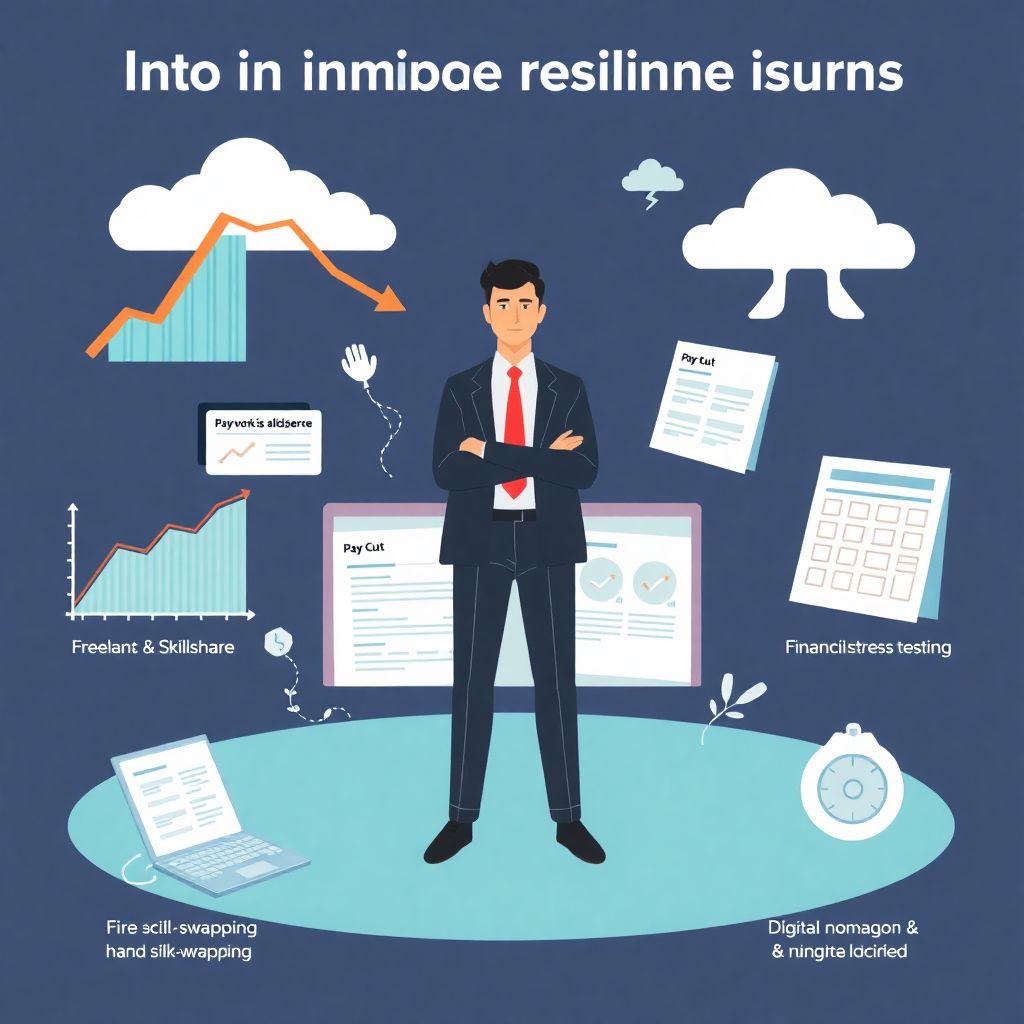
Understanding the Mechanics of Pay Cuts and Income Slumps
Economic downturns, organizational restructuring, or industry stagnation often lead to salary reductions and income volatility. For professionals unprepared for such financial turbulence, the consequences can be destabilizing. A pay cut is not merely a reduction in cash flow—it impacts long-term financial planning, creditworthiness, and psychological resilience. Recognizing the systemic and behavioral implications is the first step in mitigating the damage. According to financial analyst Laura Chen, “The key is to treat a pay cut not as a setback, but as a signal to optimize your personal economy.”
Case Studies: Real-World Adaptation to Income Reduction
Case 1: After a 30% salary cut during the COVID-19 pandemic, marketing manager Daniel K. in Chicago leveraged freelance platforms to offer SEO consulting. Within six months, he matched his original income. Case 2: Software engineer Priya S. in Bangalore faced a hiring freeze and reduced hours. Instead of waiting, she built a SaaS productivity tool, which now generates passive income. These cases demonstrate that adaptability, skill monetization, and proactive engagement are critical survival traits during income slumps.
1. Reassess Fixed and Variable Expenses Strategically
Most individuals instinctively cut discretionary spending, but a more effective approach is to categorize expenses by ROI. For instance, subscription-based software or professional memberships might seem expendable, but if they enable income generation (e.g., Adobe Suite for a freelance designer), they should be preserved. On the contrary, recurring costs with low utility—such as underused gym memberships—should be eliminated. Utilize zero-based budgeting to justify every expense from scratch.
2. Activate Dormant Skills for Alternative Revenue Streams
Many professionals underestimate the monetization potential of their secondary competencies. A civil engineer with graphic design skills can offer CAD visualization services; a teacher can tutor online or create educational content. Platforms like Upwork, Skillshare, and Teachable enable micro-entrepreneurship with minimal overhead. Financial advisor Marcus Reed recommends creating a “skill inventory” to identify monetizable assets outside your primary role.
3. Engage in Financial Stress Testing
Financial stress testing involves simulating various income-reduction scenarios to evaluate cash flow endurance. Professionals should model 10%, 30%, and 50% income drops over 3-, 6-, and 12-month periods. Tools like YNAB (You Need A Budget) or Excel-based cash flow models can help identify liquidity gaps and trigger points for action. This approach is widely used in corporate finance and can be adapted to personal financial planning.
Unconventional Strategies for Income Stability
1. Barter Economy and Skill Swaps

In niche communities, skill bartering is re-emerging as a viable alternative to cash transactions. For example, a copywriter may exchange services with a web developer to build a portfolio site. While this doesn’t generate immediate income, it reduces expenditure and builds long-term capital—both social and professional.
2. Geographic Arbitrage
Remote work has unlocked the potential of geographic arbitrage—earning in a strong currency while living in a low-cost region. A digital marketer earning in USD and relocating to Eastern Europe or Southeast Asia can maintain living standards at a fraction of the cost. This method requires careful tax planning and regulatory compliance but offers significant financial relief.
3. Leveraging Employer Resources
Many companies offer underutilized support programs such as Employee Assistance Programs (EAPs), financial counseling, or tuition reimbursement. During pay cuts, tapping into these benefits can offset personal expenses. HR strategist Elena Morozova notes that “employees often overlook internal resources that can substitute for out-of-pocket costs.”
Expert-Endorsed Lifehacks for Professionals

1. Automate Emergency Fund Contributions – Even during slumps, allocate a fixed percentage (e.g., 5%) of income to an emergency fund via automation. Behavioral economists suggest automation reduces decision fatigue and increases consistency.
2. Negotiate Non-Monetary Compensation – If salary cuts are unavoidable, negotiate for flexible hours, remote work, or professional development support. These benefits can indirectly increase income or reduce expenses.
3. Build a Resilience Budget – Beyond traditional budgeting, incorporate a “resilience category” that funds upskilling, therapy, or networking events—elements that enhance long-term career viability.
4. Use Debt Restructuring Tactically – Instead of defaulting, proactively contact lenders to renegotiate terms. Many institutions offer hardship programs or temporary forbearance options.
5. Invest in High-ROI Certifications – Short-term certifications in data analytics, project management, or UI/UX design can lead to higher-paying roles or freelance gigs. Prioritize credentials recognized across industries.
Conclusion: Building Long-Term Financial Antifragility
Surviving a pay cut is not solely about cutting costs—it’s about evolving your financial architecture to be antifragile. This means creating systems that benefit from volatility: diversified income streams, monetized skills, and adaptive spending. As volatility becomes the norm rather than the exception, professionals who approach slumps with strategic foresight and operational agility will not only survive but thrive.