Understanding the Core Dilemma: Budgeting vs. Debt

For many individuals struggling with debt, the notion of budgeting evokes a feeling of restriction rather than empowerment. But when managed strategically, budgeting becomes a tool of liberation. The critical challenge lies in achieving two parallel goals: keeping current obligations under control while laying sustainable groundwork for financial recovery. According to a 2023 report by the National Foundation for Credit Counseling (NFCC), over 60% of Americans with consumer debt admitted to not having a structured monthly budget. This disconnect often leads to reactive spending and growing interest.
Case Study: Emma’s Shift from Overdrafts to Organized Spending
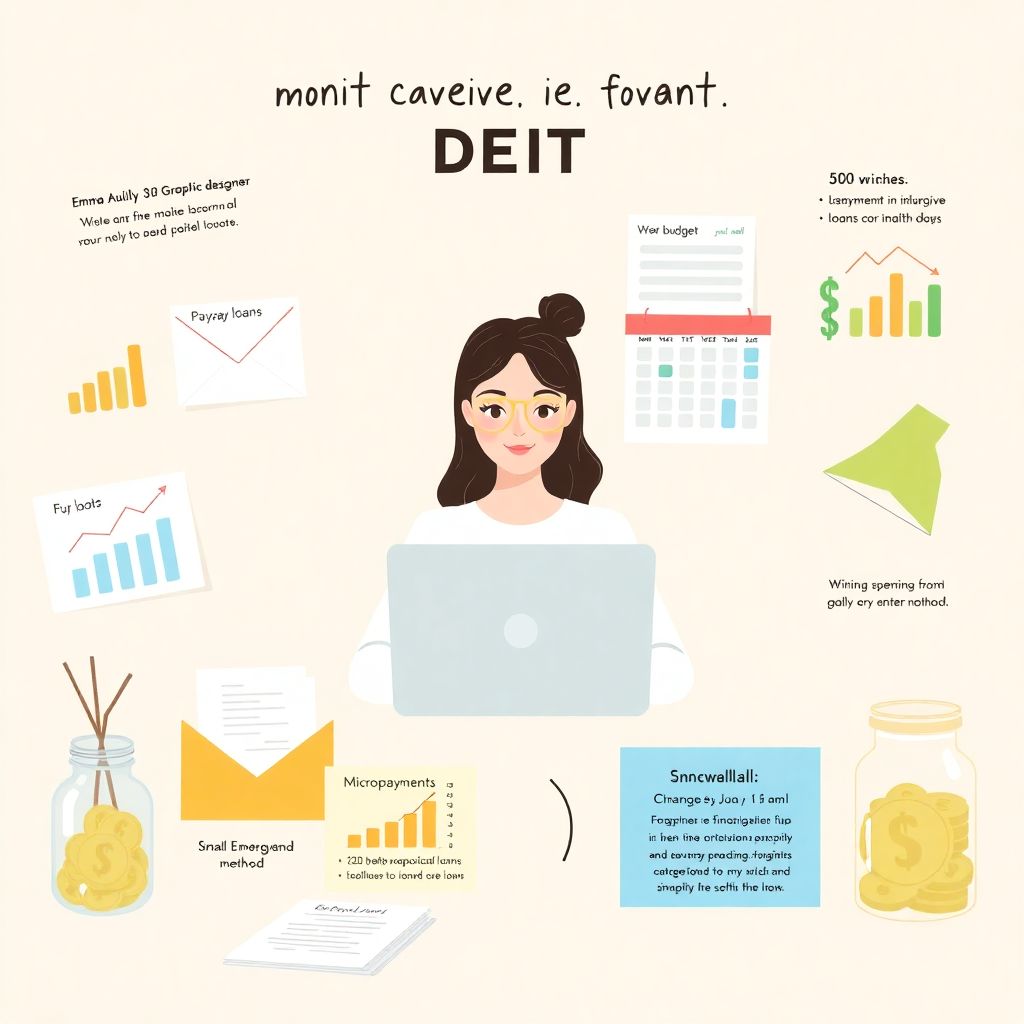
Emma, a 32-year-old graphic designer from Portland, found herself in a recurring loop of payday loans and overdraft fees. By tracking every dollar for one month using a zero-based budgeting approach, she identified “hidden” subscriptions and habitual food delivery charges that consumed nearly $400 monthly. With that awareness, she reallocated those funds to cover her minimum debt payments plus a small emergency buffer. Within six months, Emma paid off two credit cards and negated the need for payday loans entirely. Her story illustrates one key truth: awareness fuels progress.
Counterintuitive Tactics That Actually Work
While conventional advice suggests cutting non-essential spending first, some financial advisors recommend a reversed process: start by calculating your minimum debt obligations, then build your budget around that. This method prioritizes financial survival before lifestyle. Another unexpected tactic? Making micropayments. By breaking your monthly debt payment into smaller weekly or bi-weekly payments, even as low as $20, you reduce interest accumulation and gain better control over your cash flow.
Experts also highlight the psychological benefit of the “debt snowball” method — paying off the smallest debts first to build motivation. Though mathematically inferior to the “avalanche” method (which tackles higher-interest debt first), the confidence boost can make the long-term process sustainable.
Alternative Approaches to Traditional Budgeting
Strict budget templates don’t fit everyone. If spreadsheets and complex apps feel too rigid, consider these alternative frameworks:
– Values-Based Budgeting: Prioritize spending aligned with your core values (e.g., family, education), making it easier to say no to less meaningful expenses.
– Envelope Method – Digital Edition: Use financial apps like Goodbudget or YNAB that simulate the envelope system virtually, dividing cash into digital “pockets.”
– 60/20/20 Rule: Allocate 60% to needs, 20% to debt and savings, and 20% to wants. This flexible structure adapts well as your income or debt load changes.
These models accommodate different personalities and mental workloads, especially for those with inconsistent earnings or ADHD, where rigid systems quickly fall apart.
Expert-Backed Hacks for Debt-Conscious Budgeters
Financial professionals often recommend careful automation—not just for payments but for behavioral control. Setting up automatic transfers to a savings account immediately after payday, for example, ensures you invest in future goals before discretionary spending kicks in. Meanwhile, rounding up transactions to the nearest dollar and saving the difference via apps like Acorns can painlessly build a cushion over time.
Professional advisors also urge a quarterly “debt audit.” This involves:
– Reviewing all interest rates and checking for qualification for refinancing.
– Mapping mandatory vs. optional debt (e.g., student loans vs. retail cards).
– Negotiating with creditors for better terms or hardship adjustments.
Another often-overlooked strategy is leveraging community-based financial literacy programs. Nonprofits and credit unions frequently offer free workshops or one-on-one budget coaching — a resource underutilized by younger adults.
Checklist: Budgeting Priorities When Managing Debt
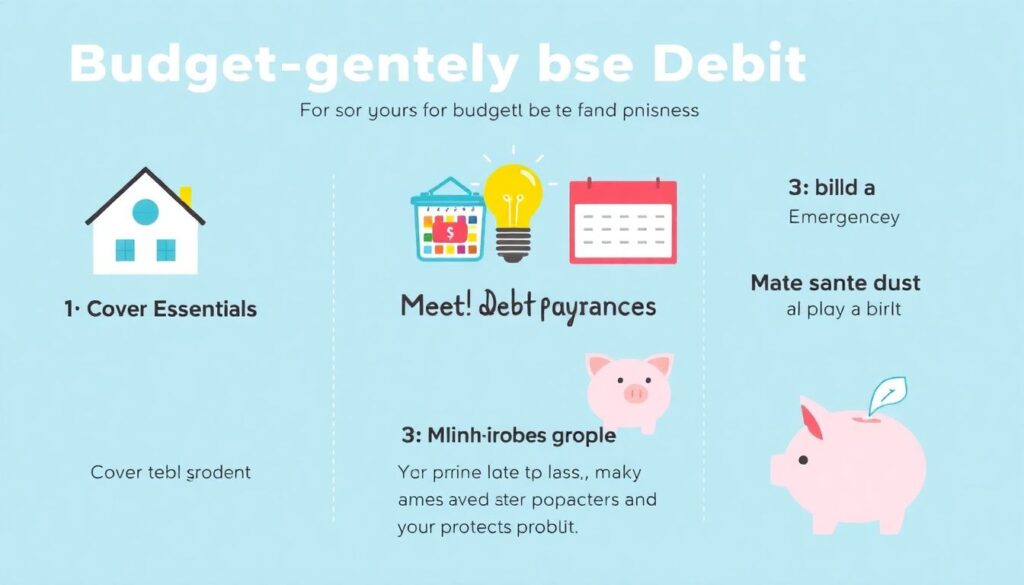
To ensure budgeting aligns with a realistic path out of debt, consider following this structured priority list:
– Cover essentials: Rent, utilities, basic groceries.
– Meet minimum debt payments: Avoid late penalties and credit score damage.
– Build an emergency buffer: Even $20 per month can avert future borrowing.
– Allocate a “life fund”: Modest funds for leisure to avoid frugality burnout.
Conclusion: Budgeting as a Lifelong Skill, Not a Temporary Fix
Learning to budget while managing debt is less about restriction and more about choice. It’s a behavioral shift toward proactive control over your money, not reactive scrambling as bills arrive. The key is to apply a system that is not only numerically sound but emotionally sustainable. With continuous refinement and the right tools, budgeting becomes more than a financial plan—it becomes your personal strategy for freedom.