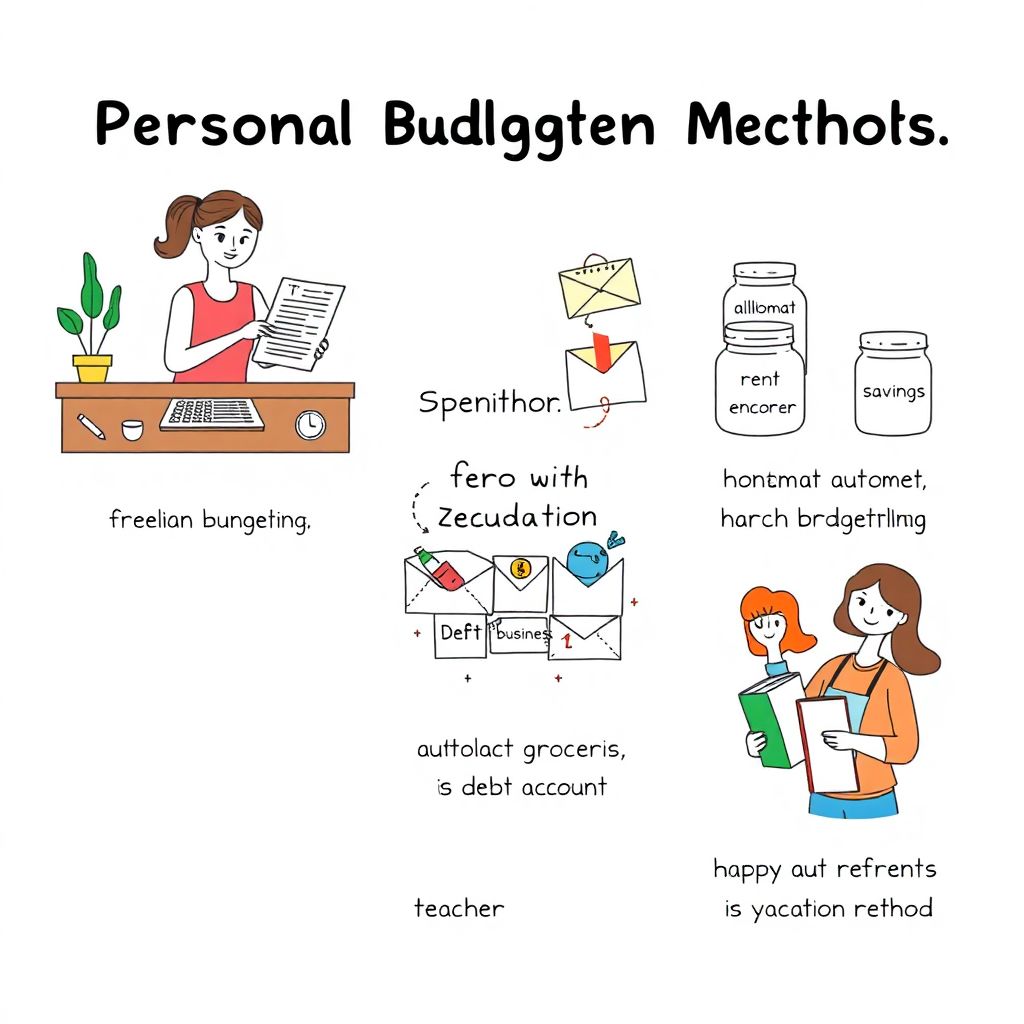
Why Budgeting From Scratch Feels So Hard—And Why You Should Do It Anyway
Starting your first serious budget can feel like standing at the base of a mountain with no trail in sight. There’s a combination of fear, confusion, and maybe even a bit of shame—especially if you’re doing it because of a financial setback or a realization that your money just keeps disappearing. But the truth is, building a budget from scratch is one of the most empowering steps you can take toward financial control. It’s not just about cutting lattes or tracking pennies—though those might be part of it—it’s really about creating a system that reflects what’s important to you.
Understanding Your “Why”: The Purpose Behind Your Budget
Before cracking open a spreadsheet or downloading another budgeting app, take a moment to ask yourself: Why am I budgeting? It might be to pay off debt, save for a down payment, or just stop running out of money before payday. Understanding this deeper motivation helps you stick to your budget when it stops being fun. For instance, if your goal is to build a $10,000 emergency fund over two years, your budget needs to help you find an extra $417 a month. That simple math gives your budget structure and urgency.
Approach #1: The Traditional Line-Item Budget

This method involves listing all your income and creating fixed categories for expenses—rent, groceries, transportation, entertainment, etc. You allocate a specific dollar amount to each and track actual spending against those numbers.
Real-world example: Sarah, a 28-year-old engineer, used this method to move out of her parents’ house. Her monthly income was $3,500. She budgeted $1,200 for rent, $500 for utilities and internet, $400 for groceries, and $300 for savings. Every week, she manually logged receipts into a spreadsheet. It took time, but after six months she had enough data to plan better and automate her savings.
Technical Details: The 50/30/20 Rule
One version of the line-item approach uses the 50/30/20 rule:
– 50% of income on needs (housing, food, insurance)
– 30% on wants (subscriptions, dining out)
– 20% on savings and debt repayment
For Sarah:
– $1,750 went to needs
– $1,050 to wants
– $700 to savings/debt
While this rule gives a solid framework, it doesn’t work for everyone—especially in high-rent cities where housing alone can eat up 60% of income.
Approach #2: Zero-Based Budgeting (ZBB)
Zero-based budgeting assigns every dollar of income a job. At the end of the month, your income minus expenses equals zero—not because you spent it all, but because you’ve planned for every dollar.
Example: Jason, a freelance designer with an irregular income, used ZBB to manage his finances. If he brought in $4,200 one month, he would allocate $1,400 for rent, $600 for groceries, $300 for utilities, $400 for business expenses, $500 for debt, and $1,000 into an “income smoothing” savings account for months when work was slow.
Technical Details: Using Sinking Funds
ZBB works well with sinking funds—mini savings accounts within your budget for specific future costs. For example:
– $50/month toward a $600 annual car insurance bill
– $75/month for holiday gifts
Over time, these small allocations prevent sudden expenses from wrecking your budget.
Approach #3: Pay-Yourself-First (PYF)
This mindset flips budgeting on its head. Instead of saving what’s left at the end of the month, you put savings first. If you earn $3,000 and want to save 20%, you move $600 into savings immediately, then live on the remaining $2,400.
Real story: Lena, a 35-year-old teacher, struggled with overspending. After switching to the PYF model, she set up automatic transfers to a Roth IRA and a vacation fund the day after payday. She says it was like “hiding money from myself.” Within 18 months, she had both her first international trip and a growing retirement account.
Technical Details: Automation Tools

Banks and apps like YNAB (You Need A Budget), Mint, and Simple can automate the PYF method. Set up recurring transfers and alerts to stay on track. According to a 2023 NerdWallet survey, 74% of users who automated their savings reached their goals faster than manual savers.
Which Method Is Best For You?
Each approach has pros and cons—and your ideal strategy may change over time. If you like structure and predictability, go with the traditional budget. If your income fluctuates, ZBB offers better control. If you’re someone who hates tracking every expense but wants to build wealth, PYF is low-maintenance and effective.
Don’t be afraid to combine elements. For example, use PYF to automate your savings, ZBB to handle irregular bills, and the 50/30/20 rule as a big-picture sanity check.
Common Pitfalls and How to Avoid Them
The biggest mistake beginners make? Setting unrealistic numbers. Budgeting $150 a month for groceries when your actual spending is $400 will just frustrate you. Track your spending for a month first—apps like PocketGuard or a simple Google Sheet can help.
Another trap is ignoring “non-monthly” expenses like annual subscriptions, birthdays, or car maintenance. Build them into your budget using sinking funds or a buffer.
Finally, don’t abandon your budget at the first misstep. It’s a living document. Adjust it. Learn from it. No one gets it perfect the first time.
Final Thoughts: Budgeting as a Form of Self-Respect
A well-built budget isn’t a punishment—it’s a reflection of your values in action. It says: I know what matters to me, and I’m willing to plan for it. Whether you’re saving for a house, climbing out of debt, or just trying to breathe easier at the end of the month, starting fresh with a budget is the first step toward financial clarity.
And remember: the most powerful budget isn’t the one with the most categories or the tightest restrictions—it’s the one that actually fits your life.
Комментарии